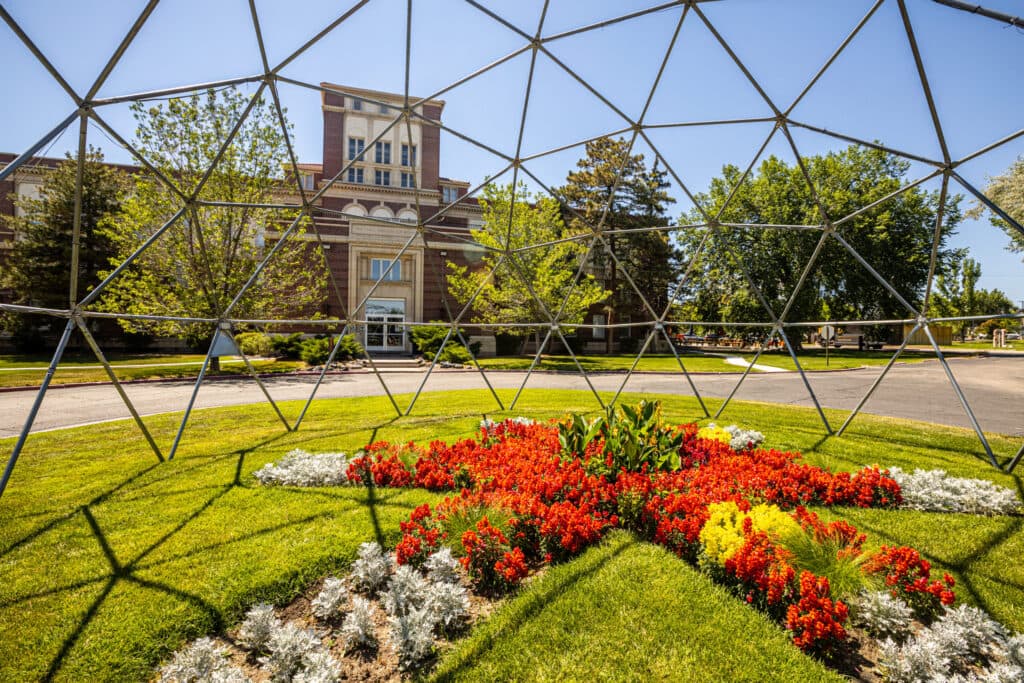
Abstract photography challenges viewers to see the world differently. Rather than documenting scenes literally, it transforms familiar subjects into visual puzzles defined by shape, color, line, and texture. In a world overflowing with recognizable imagery, abstraction invites curiosity, imagination, and emotional interpretation. By stripping away context, abstract photography reveals the hidden beauty within everyday materials and encourages photographers to explore perception itself.
Defining Abstract Photography
What Makes a Photograph “Abstract”
A photograph becomes abstract when it breaks away from literal representation. Instead of showing a recognizable subject, it emphasizes visual qualities – line, color, form, movement – over depiction. The degree of abstraction varies as some images flirt with ambiguity while others completely stray from reality. What ties them together is a shift in intention from capturing what something is to exploring different ways in which it can be seen.
Subject Versus Essence in Abstraction
Abstraction begins with learning to see beyond the object. Photographers typically look for repeating patterns, geometric shapes, or unique textures. Practicing to identify and isolate these patterns in mundane elements opens up an entirely new world of abstraction. A key element to this practice is recognizing that almost any subject can be transformed into something abstract through a variety of techniques and tricks. The subject in abstract photography may be obvious or totally hidden, but the focus lies on conveying movement, tension, calm, chaos, or harmony.
In-Camera Techniques
Abstraction begins with experimentation, and experimentation begins in your camera. After identifying your subject, the transformation of everyday images lies at the intersection of your camera’s setting and your imagination.
Macro, Close-Up, and Shallow Depth of Field
No matter the type of lens you’re using, your camera’s zoom will be your best friend. Macro lenses can help achieve the perfect zoom in situations such as nature photography in which distances can’t be bridged for the sake of a close-up. Macro lenses open up a world of abstraction by magnifying textures, fibers, liquids, and surfaces. Similarly, close-up shots can better isolate patterns and micro-details that the naked eye often overlooks. Depth of field can strengthen this effect as well, blurring the background and focusing a subject or creating a sharper larger image.
Long Exposure and Intentional Camera Movement
Long exposures can blur motion, removing literal detail and emphasizing gesture and motion instead. By slowing your shutter speed, you allow movement to take shape in your photography. Intentional Camera Movement (ICM) is an important distinction within long exposures. Sweeping your camera in a specific direction with ICM creates different outcomes and evokes different emotions based on the movement, subject, and subsequent result. These methods shift photography from documentation to expressive gesture.
Multiple Exposure, Reflections, and Refractions
Multiple exposure opens the door to layered abstractions creating surreal results. Many cameras offer built-in multiple exposure modes – every camera is going to be different in where this setting can be found – that help you preview or align frames for creative control before ever getting to post-production. By combining two or more images, you can build photos with depth and visual complexity.
Reflections and refractions offer another fruitful avenue for abstraction. Shooting into glass, polished metal, water surfaces, or reflective objects can distort reality and create fragmented or repeated shapes. Using prisms, crystal objects, or even everyday materials like plastic packaging can bend and scatter light in ways that produce surreal optical illusions. These techniques require experimentation and a willingness to embrace unpredictability, but they often result in some of the most intriguing abstract images.
Visual Foundations and Design
Abstract photography can be brought to life through a variety of techniques in your camera work. The key is knowing that any subject, no matter how ordinary, can be transformed through foundations such as shape, light, and composition.
Line, Shape, Form, and Negative Space
Strong visual foundations guide successful abstract composition, and knowing which ones to use to your advantage is going to be your key. Lines can direct your viewers eye or create a sense of depth or movement, shapes can add balance and depth to your photography, and repetition can evoke emotions from your viewers.
Negative space, often overlooked in photography, can be a powerful compositional tool at your disposal. Negative space does not literally have to mean a space that lacks any detail or color, but rather is space used to draw attention to a photo’s subject through techniques like background blur or depth of field.
Pattern, Rhythm, Repetition, and Variation
Patterns and repetition are some of the most effective tools for creating compelling abstract imagery. When repeated elements appear in a frame, they establish a visual cadence that feels intentional and cohesive. This repetition can create harmony, tension, or a sense of movement, depending on how elements are arranged. Alternatively, rhythm in photography isn’t just about that same identical repetition, but rather how patterns create a visual flow, movement, and harmony for its viewers.
Variation is what prevents patterns from becoming static or predictable. Small disruptions – changes in scale, color shifts, or unexpected angles – add intrigue and energy to a composition. These subtle irregularities can become the focal point of an abstract image, introducing contrast and surprise.
Light, Color, and Tone
Light is one of the most transformative tools in abstract photography. Whether soft and subtle or bold and direct, light shapes how viewers read form, texture, and mood. Color and tone work alongside it, influencing emotion and guiding attention.
Direction, Quality, and Intensity of Light
The direction of light dramatically affects how abstract elements appear in your frame. Direct light angled from the front or side of an object works to minimize shadows and emphasize detail and textures. Backlight can create silhouettes, glowing edges, or translucent effects that flatten or simplify form.
The quality of light can smooth or define the tone of your image. Softer light – such as overcast weather – creates soft and gentle shadows while lowering the image’s contrast. Hard light introduces sharp contrasts, crisp shapes, and dramatic emotions that can feel bold and stiff. Once again, experimentation is ideal in determining the type of light, the quality, and intensity that will suit your project best.
Color Theory, Contrast, and Minimal Palettes
Color can set the emotional foundation of an abstract image. Understanding basic color theory allows you to create harmony or tension through intentional color choices. Complementary colors, for example, can create energetic contrast, while analogous palettes feel calm and cohesive.
Color contrast doesn’t always require bright hues. Simple monochrome photos are sometimes the best way to accomplish color contrast while achieving your desired tone of your composition. Additionally, more subtle warm and cool tones or muted and saturated tones can help isolate key shapes or guide the viewer’s eye through the photograph.
Minimal palettes are especially effective in abstraction. Working with only one or two key colors simplifies the visuals and emphasizes form, leading lines, and gesture. Limited color choices often make the image feel more deliberate and designed, allowing viewers to focus on the underlying structure.
Materials, Surfaces, and Everyday Subjects
Abstract photography thrives on the unexpected beauty hidden within ordinary materials. By tuning into how light interacts with surfaces, textures, and physical properties, you can transform familiar objects into visually compelling abstractions.
Glass, Metal, Plastic, and Fabric Textures
Common household materials can produce surprising abstract results when isolated from their usual environments. Glass refracts and distorts light, creating prismatic patterns or fluid shapes. All kinds of metal surfaces respond differently and dramatically to light, offering gradients, glows, or graphic reflections.
Plastic objects, especially translucent or colored ones, can produce bold blocks of color or soft, layered diffusion. Fabrics introduce different folds, weaves, and fibers, creating more natural lines and rhythm. These are good materials with which to experiment with macro lenses, side lighting, or intentional blur to push these familiar materials into new visual territory.
Water, Oil, Smoke, and Vapor Effects
Liquids and gases provide endlessly shifting forms perfect for abstraction. Water droplets, condensation, or reflections can create unexpected patterns when photographed with shallow depth of field. Oil on water introduces vibrant colors and swirling shapes unlikely to ever be replicated exactly the same way.
Smoke and vapor add a sense of motion and atmosphere to your photography. With backlighting, smoke becomes a delicate, sculptural subject, while vapor on cold surfaces can produce surreal diffusion. Slight changes in temperature, airflow, or angle can radically alter your results, giving you constantly evolving art.
Architectural Details and Urban Abstractions
Urban cities offer a wealth of geometric and textural inspiration. Architectural elements – windows, facades, staircases, and shadows – are ripe with abstract potential. Photographers typically take advantage of their repeated patterns, mirrored surfaces, or moments of strong contrast.
Workflow Exercises and Prompts
As always, practice makes perfect! Developing the eye and skills for abstraction comes from trial and error. Practicing your photography using different exercises can help hone your craft and your own personal style of abstract photography.
Ten Photos – Ten Abstractions
One exercise to help explore seeing objects in different ways is taking one every day object and photographing it ten different ways. This could be using any of the photography techniques described above, and the more outrageous and unrecognizable the photograph the better. This exercise can be done at home, in a classroom, or waiting at a bus stop. It’s important to limit yourself to no more and no less than ten frames, forcing yourself to choose carefully when capturing different textures, lighting, and motion-blur.
One Lens, One Location, One Hour Constraint
On the contrary, this prompt encourages you to photograph a variety of different objects as much as you’d like, this time confining yourself to a one hour time limit. By picking a single location – this could be one room or one street corner, as long as you are able to set a parameter for yourself – set a timer for one hour, and shoot a variety of different objects and images. The goal of this exercise is not the quantity of photos, but rather how your mind begins to wander as time passes and your initial ideas are exhausted. Pay attention to what objects begin to attract your attention over time and how you might begin to view them differently.
Motion Blur with ICM at Blue Hour
Intentional camera movement (ICM) is a powerful way to create interesting abstractions. During blue hour – just after sunset or before sunrise – ambient light is ideal for longer exposures without harsh highlights. Set your camera to a longer shutter speed – anywhere from 1/4 second to several seconds – and deliberately move the camera in one direction. Testing a variety of techniques is best with this exercise, such as vertical sweeps for architectural lines, circular motions with city lights, or small random movements for energetic tones. Exploring your results can show how these different motions affect the photos visual rhythm and emotional tone.
Bringing Abstraction Into Focus
Abstract photography transforms ordinary subjects into extraordinary visual experiences. Through careful attention to light, composition, texture, scale, and experimentation, photographers can uncover hidden worlds within daily life. Abstraction encourages creative freedom, curiosity, and personal expression – reminding us that art exists everywhere, waiting to be seen from a fresh perspective.
Take Your Vision Further at RMCAD
Rocky Mountain College of Art + Design’s Photography degree includes a carefully curated selection of courses that help students build the technical photography foundation they need to become a working professional photographer or to take their passion to new heights. Students acquire necessary technical skills, learn to develop an efficient workflow with advanced software and flourish under the mentorship of accomplished industry professionals. To learn more about boosting your photography confidence by strengthening your educational foundation in photography (also available online), we invite you to request more information.