
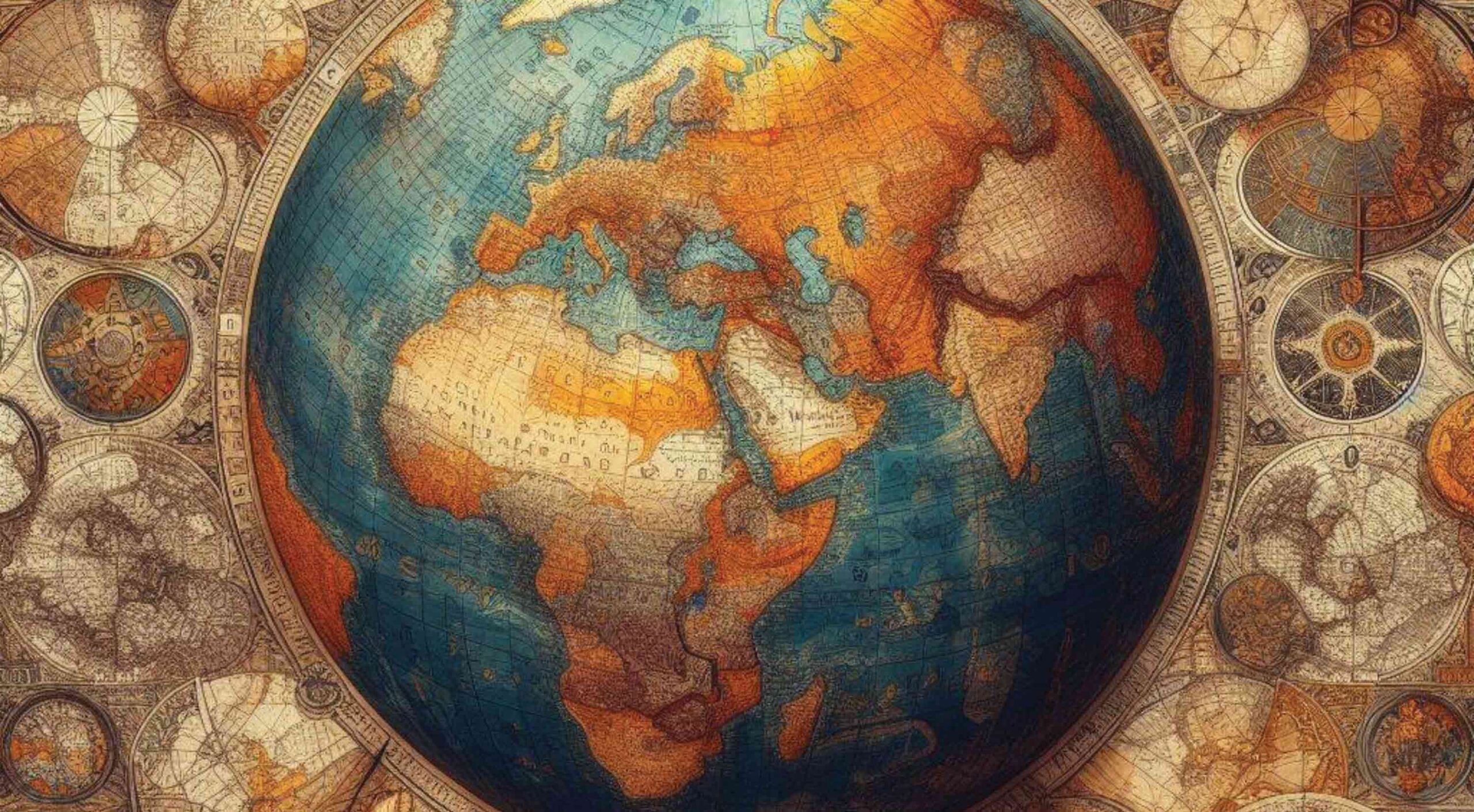
Cartography is the art and science of map-making, used for centuries to create realistic maps as well as artistic renderings. Today, cartographers leverage map drawing techniques to create a variety of maps for navigational purposes, those designed to enhance storytelling and more.
Defining Cartographic Illustration and Its Use Cases
Map illustration has long served as the backbone of cartography. The earliest maps were actually more heavily influenced by artistry than accuracy, and to this day, artistic map drawing techniques are employed to create all types of maps.
Editorial Maps, Fantasy Maps and Educational Infographics
Several common kinds of maps that incorporate cartographic illustration include:
- Editorial maps are used in novels to guide readers through a fictional world.
- Fantasy maps in books, films, games and more offer insight into a fantasy realm.
- Educational infographics in textbooks and educational materials help provide further context.
Accuracy vs. Style: Choosing the Right Balance
Map illustration requires artists to balance creative style with accuracy. Striking the proper balance may vary based on the type of map being drawn.
What “Readable” Means in Map Art
In map art, readable is akin to legible. According to Ordnance Survey, a legible map is one that is recognizable at scale and can be easily interpreted. The map should be clearly outlined with distinguishable icons that allow readers to navigate it smoothly.
Planning the Map: Before You Draw
Before creating illustrated maps, make a strategic plan in advance. A map plan should entail more than just an outline of the map itself; it also must take into account non-map elements, such as the compass rose, title box or decorative elements that may be used to enhance it.
Clarifying Purpose, Audience and Primary Questions
In the initial planning stages, conduct thorough research to better understand the map’s purpose and intended audience. For example, the scope and purpose of a fantasy map in a novel will be distinctly different from a topographic map used for navigation.
Determining Scale, Extent and Level of Detail
The scale of the map will influence the breadth and depth of the drawing. Factors that determine the final scale of the map include the:
- Shape of the geography
- Non-map elements that must be included in the drawing
- Preferred level of detail
Gathering Reference: Real Maps, Satellite Views and Visual Libraries
Reference materials can help you begin to build the map design. Cartographers across specialty areas rely on real maps, satellite views and visual libraries to develop a frame of reference for their illustration.
Visual Hierarchy: The Backbone of Readable Maps
Visual hierarchy is a design approach that strategically guides the direction of viewers. In map-making, visual hierarchy provides the viewer with instant information about which elements on the map are most important.
Establishing Primary, Secondary and Tertiary Information
Visual hierarchy is a natural design approach for map-making. Many cartographic illustrators use elements like colors and lines to establish order. Information is typically ranked by relevance, with map-makers needing to define primary, secondary and tertiary information before they begin illustrating the map.
Using Value, Line Weight and Contrast to Guide the Eye
High levels of visual contrast are necessary in map illustration; this is the best and most natural way to direct the attention of the reader. Higher degrees of contrast let specific elements stand out, ultimately leading to a cleaner, more precise map.
Managing Density: When to Simplify and Omit
Maps can quickly become chaotic when they are too dense. Cartographers have to know when to simplify their maps and omit excessive elements that may distract from its overarching purpose.
Labeling and Typography for Maps
Maps are symbolic representations of a particular place or space, so in order to qualify as a map, several key elements are required. According to the National Geographic Society, map labeling assumes a central role in map design in regard to how specific components must be clearly identified.
Naming Conventions and Text Styles for Places and Features
Typography plays a surprisingly pivotal part in map illustration. These are a few noteworthy lettering conventions:
- Uppercase lettering should be used for featured areas.
- Use only one serif and one sans serif font within the map.
- Cultural and physical features should utilize the serif and sans serif fonts.
- Blue text and italics should designate water features.
Type Placement Rules: Curves, Offsets and Collision Avoidance
In addition to following lettering conventions, cartographers should be aware of type placement rules for map labels. Rather than placing type directly above, below or to the side of a feature, they will ideally offset the placement, such as putting text above the feature and to the right or below the feature and to the left.
Hand Lettering vs. Fonts and Licensing Considerations
In some cases, illustrators have the flexibility to choose between hand lettering or using specific fonts. When choosing a font, be privy to any licensing considerations.
Icon Systems and Symbol Design
Map icons and symbols represent objects or places and are strategically incorporated into the design to make it easier for the reader to interpret and use the map.
Designing a Cohesive Set: Cities, Landmarks and Hazards
Symbols and icons are fundamental communication tools within a map. Icon consistency is necessary for functionality; creating an icon library in advance that identifies cities, landmarks, hazards and other key elements can help you create a clear and concise map.
Pictograms vs. Illustrative Icons: Matching Style to Genre
The actual design and style of map icons can vary based on the type of map you’re drawing. For example, illustrative icons would be used more widely in hand-drawn maps, whereas pictograms may be preferred in a neighborhood map project.
Legends, Keys and Callouts That Reduce Confusion
The legend presents an overview of the symbols and icons used on the map. It’s a crucial element that provides clarity and makes it easier for anyone to begin reading, understanding and utilizing the map.
Limited Palettes and Color Strategy
Color strategy directly impacts the success of your map, as the colors you select possess the ability to draw in readers and capture their attention.
Palette Building: Mood, Region and Story Tone
Map-makers typically use color palettes to set the tone. A gradient of colors allows illustrators to establish visual hierarchy to yield a clear map along with the mood for the piece.
Color for Function: Water, Land, Routes and Priority Areas
Sometimes, it’s best to keep it simple with functional colors (e.g., using blues for water, greens for land and red for routes and other priority areas). The colors you choose will depend heavily on the function and purpose of your map.
Accessibility: Color-Blind Friendly Choices and Contrast Checks
Color accessibility in map-making is essential. Selecting high-contrast colors that are comfortable for the full spectrum of user types, you can create an inclusive map from which everyone can benefit.
Terrain and Texture Rendering Techniques
Terrain rendering is the process of making the terrain on a map appear elevated. For instance, an artist creating a fantasy map illustration may introduce mountains to a landscape to enhance the storytelling within a fantasy novel.
Mountains, Hills and Cliffs: Hachures, Shading and Linework
When adding mountains, hills and cliffs to the terrain, an illustrator may lean on shading and lifework to add depth and elevation.
Forests, Deserts and Biomes: Pattern Systems and Repetition
Forests and deserts may not appear elevated on the map, but repetition allows illustrators to set the scene for the specific landscape.
Water Rendering: Coastlines, Waves and Depth Cues
Water texture illustration can prove less concrete, as illustrators have the creative freedom to work with colors and lines to add depth and movement.
Paths, Borders and Movement Through Space
Paths are incorporated into maps to provide information about how the space can be navigated — either by walking, bicycling or vehicle. In addition to providing direction, paths and borders can become an artistic element as well.
Roads, Rivers and Trade Routes: Line Styles and Directionality
Lines primarily identify roads, routes and rivers, while color is used to help differentiate between these directional elements.
Political Borders and Regions: Dashes, Tints and Overlays
Lines and dashes may help establish borders between regions or political boundaries. This can provide narrative insight into the map while also giving the reader added context.
Scale Bars, Compass Roses and Grids: Using Them Tastefully
The compass rose design can complement the illustration of any map. Incorporating a compass rose requires a strategic and thoughtful approach, however, as this non-map element is prominently displayed and can influence its overall tone and style.
Composition and Storytelling in Map Design
Whether creating a city map illustration or focusing on tourist map design, composition matters. The composition you establish for your map, including all non-map elements, sets the stage for visual storytelling.
Focal Areas, Framing and Vignettes for Narrative Maps
Narrative maps tell a story, which is why illustrators must strategically integrate focal areas into the design. Framing and vignettes are frequently used to highlight the most relevant spaces within the story.
Insets, Zoom Panels and Multi-Scale Story Structures
Insets and zoom panels can bring out specific elements of the map, allowing the reader to zero in on a pivotal area of the story. For example, a zoom panel might highlight a certain street on a neighborhood map where the main character lives.
Decorative Elements: Cartouches, Margins and Illustrative Flourishes
According to the Victoria & Albert Museum, a decorative cartouche is an elaborate framing device that can infuse illustrative interest into a map. These ornamental features have been around since the 16th century and are still incorporated into modern maps (particularly narrative maps).
Workflow, Tools and Production Considerations
Once the plan is in place and all the elements for your map are accounted for, it’s time to create a streamlined workflow.
Sketch to Final: Thumbnails, Roughs and Clean Passes
Map-making tools, such as a world map vector, can help sketch out an initial map for your rough draft. Map-making often entails a collaborative process of editing and revising to ensure the final product aligns with expectations.
Analog, Digital and Hybrid Pipelines
In illustrated or watercolor maps, the first draft may be created by hand on paper. However, digital tools and hybrid pipelines may be used to expedite workflow as the map progresses.
Print and Web Output: Resolution, Bleed and File Formats
Maps being designed for print and digital uses may need to be in different formats. High-resolution digital files are necessary for printing to ensure color accuracy and prevent distortion.
Case Studies: Global Perspectives
Consider these examples of cartographic illustration from around the world:
United States: National Parks Style Maps and Editorial Infographics
The U.S. National Park Service (NPS) publishes maps that not only guide visitors throughout the parks’ terrains but also present cultural insight into the regions they are visiting. Per National Geographic, the NPS partners with Trails Illustrated to create accurate navigational maps that include relevant cultural information.
Japan: Transit Maps and Minimal Information Design Influence
Anchored by a minimalist approach, Japanese cartographic illustrators use lines and colors to create transit maps that are easy to interpret and use. Illustrators in Japan use a different color for each transit line and simple dots to symbolize the stations.
Explore the Art of Illustrated Map Design at RMCAD
Map-making is an ancient tradition that maintains relevance in today’s complex, interconnected world. Those who are interested in cartography may benefit from practical and technical fine arts training.
At Rocky Mountain College of Art + Design, both an on-campus Bachelor of Fine Arts in Illustration and online Bachelor of Fine Arts in Illustration degree offer a comprehensive curriculum covering practical illustration skills, the importance of visual storytelling and the business skills required to become a successful illustrator.
Request more information about our fine arts degree programs today.
FAQs: Cartographic Illustration
Q1: What makes an illustrated map “readable”?
Readability means the viewer can answer the map’s main questions quickly and confidently. This calls for strong hierarchy, clear labels, consistent symbols and controlled detail.
Q2: How do I choose a scale for an illustrated map?
Start with purpose. A city guide needs street-level detail, whereas a fantasy world map needs broader regions. Scale determines what you include and what you simplify.
Q3: How many colors should a map palette use?
A limited palette often works best. Use a few base colors for land and water — plus one or two accent colors for routes and key locations — then rely on value contrast.
Q4: Do fantasy maps need to be geographically accurate?
Fantasy maps need internal logic more than real-world accuracy. Mountains, rivers and settlement placement should feel plausible and consistent, even in imaginary worlds.
Q5: How do I avoid label clutter and overlapping text?
Reduce labels to essentials, establish text tiers and use curved placement rules. Create breathing room by simplifying terrain marks and adjusting icon scale.
Q6: What is the best way to design a map icon system?
Define categories, choose a consistent shape language and test icons at final size. Also, build a legend early so you catch confusion before you finish the full map.
Q7: What should I include in a cartographic illustration portfolio piece?
Show the final map along with a process page: thumbnails, palette, type styles, icon set, legend and a few close-ups that demonstrate terrain rendering and hierarchy.