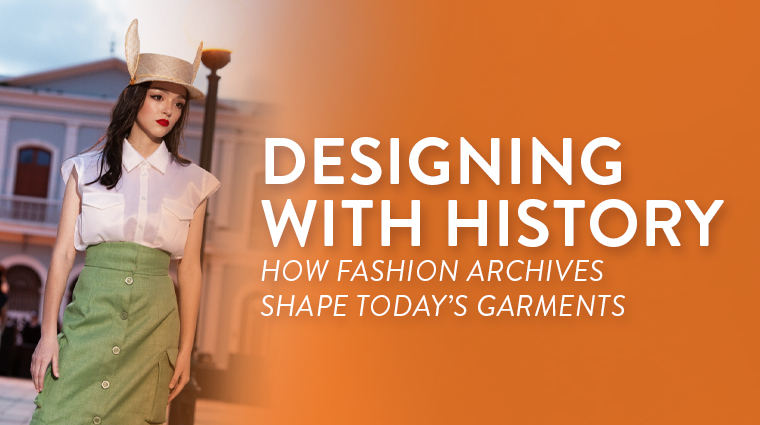
Designing with history in mind is not about recreating the past, it’s about understanding it. Behind many contemporary collections lies careful research – hours spent studying garments, textiles, sketches, and photographs preserved in fashion archives. These collections of historical dress are more than visual inspiration; they are living records of craftsmanship, culture, innovation, and identity. When approached thoughtfully, archival research can shape stronger design briefs, spark new ideas, and help designers build collections rooted in both context and creativity. By exploring how fashion archives inform research, ethics, innovation, and brand development, we can better understand their role in shaping the future of design.
From Archive to Design Research
Fashion archives become most powerful when they move beyond visual reference and into structured design research. Instead of simply collecting images or noting trends, designers can use archival materials as primary sources for their research, creativity, and inspiration.
Developing Research Questions for a Design Brief
Effective archival research begins with intention. Before diving into a collection, designers should define what they are looking for and why. Clear questions prevent research from becoming purely aesthetic. For example, a design brief centered on adaptive fashion might investigate how historical garments incorporated aspects like lacing, different fabrics, or adjustable elements. A sustainability-focused project might examine how garments were repaired, altered, or repurposed over time. By aligning archival exploration with a defined objective, designers ensure their research directly supports innovation rather than imitation.
Reading a Garment: Cut, Finish, and Evidence of Wear
Learning from archives requires close observation. To “read” a garment is to analyze its physical construction and lived history. Designers should look beyond silhouette and surface decoration to examine aspects such as cuts, finishes, alterations, and wear. These elements reveal how a garment functioned in real life. Reinforced areas can indicate durability concerns. Alterations might reflect changing trends, body measurements, or garment reuse. This kind of analysis builds technical literacy. It strengthens a designer’s understanding of construction in ways that photographs alone cannot provide.
Translating Historical Details Into Contemporary Patterns
The ultimate goal of archival research is translation. Designers must reinterpret historical insights in ways that feel relevant to today’s audiences and technologies. Rather than reproducing a garment exactly, they extract principles (proportion, construction logic, structural solutions, etc.) and adapt them. Translation requires balance: honoring the integrity of the original while innovating for current needs. When designers thoughtfully reinterpret archival details, they create work that acknowledges history without being confined by it.
Planning an Archive-Informed Collection
Designing with archival influence requires more than a few historical references – it calls for structure, clarity, and intention. An archive-informed collection should clearly articulate how the past is being studied, interpreted, and transformed. Careful planning ensures the final work feels cohesive rather than derivative. By grounding the creative process in research and documentation, designers can confidently translate historical inspiration into contemporary fashion that feels purposeful and refined.
Setting a Concept With Clear Archive References
Every strong collection begins with a focused concept. When working with archives, that concept should clearly identify the time period, designer, cultural movement, or specific garment types informing the work. Clarity and specifics helps maintain consistency throughout your collection. Designers should articulate not only what they are referencing, but why. What problem does this historical reference help solve? What contemporary conversation does it connect to?
Building a Reference Board: Garments, Details, and Textiles
A well-developed reference board moves beyond aesthetic inspiration and highlights technical insights. Beyond considering only full-garment images designers can include close-up details, textile swatches, or social and cultural influences. Organizing references into categories (silhouette, construction, surface design, and material) can clarify how historical elements will be translated.
Pairing archival imagery with contemporary materials or sketches encourages innovation and prevents direct replication. The reference board becomes a visual research map, ensuring each design decision connects back to the overarching concept.
Documenting the Process: From Research Notes to Lookbook
Documentation is essential when designing from archives. Recording research findings, garment analyses, and material experiments not only strengthens the design process but also communicates intention to collaborators, instructors, or clients.
Designers should keep a detailed record of research notes and sketches, as well as annotating how historical elements were adapted. This process documentation can later inform the collection’s narrative in a portfolio, exhibition statement, or lookbook. Including clear references to archival inspiration, alongside explanations of reinterpretation, demonstrates both creative depth and ethical transparency.
Ethics, Attribution, and Cultural Respect
As designers look to the past for inspiration, ethical responsibility must guide the creative process. Fashion archives are not just collections of garments and images – they are records of lived experiences, cultural identities, craftsmanship, and innovation. When working with archival material, designers must balance creative exploration with integrity, giving proper credit and honoring the communities and individuals behind the work.
Avoiding Copying: Inspiration, Iteration, and Credit
There is a clear difference between drawing inspiration from an archival piece and replicating it outright. Inspiration involves studying silhouette, construction techniques, material choices, or thematic concepts and reinterpreting them through a contemporary lens. Thoughtful reinterpretation not only protects against plagiarism but also demonstrates research depth and professional integrity. In academic and professional settings alike, documenting sources and acknowledging influences signals respect for the creative lineage that shapes today’s fashion landscape.
Working With Indigenous and Community Textile Traditions
Many fashion archives include textiles and garments rooted in Indigenous and community-based traditions. These works often carry cultural, spiritual, and historical significance far beyond aesthetics. Designers must approach these materials with care, ensuring they do not appropriate sacred symbols, traditional techniques, or culturally specific motifs without permission or understanding.
Intellectual Property, Usage Rights, and Image Licenses
Fashion archives also raise practical legal considerations. While many historical garments may be decades old, intellectual property protections can still apply to prints, logos, or signature designs. Additionally, archival photographs, sketches, and documents are often protected by copyright and usage restrictions.
Before using archival imagery or reproducing design elements, designers should confirm whether or not materials are within the public domain, properly cite their sources within academic and published work, or obtain written permission when applicable. Understanding intellectual property laws and licensing requirements not only protects designers from legal risk but also reinforces professional standards.
How Professor Stephanie Carlo is Inspired by the Past
 For almost 10 years Stephanie Carlo, RMCAD’s Chair of Fashion Design, has been researching women and their influence within art and design. She was first inspired by Irene Delano, an artist who moved to Puerto Rico in 1946 and focused on designing and illustrating posters, books, and tourism materials to inform the public. Carlo recounts, “Every time you hear about [Irene Delano] it’s because of her husband Jack and his photography work.” Carlo wanted to know about Delano’s artistic contributions and how they influenced others. Looking to bring more light to one of the many silent voices behind different movements.
When she started researching further for her PhD thesis, she began to focus more on political movements. “I was looking into women’s roles within revolutionary movements, specifically in Puerto Rico, and one of my main subjects was Lolita Lebrón , a Puerto Rican revolutionary”. Lebrón led an attack on the United States Capitol and shot at congressional representatives who were debating an immigration bill. No one was killed in the attack and all four assailants were arrested and tried, Lebrón along with three men.
In Carlo’s research, she found that headlines on the event only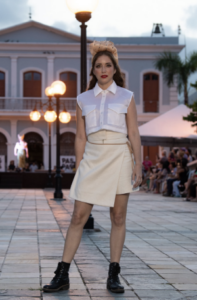 spoke of Lebrón’s looks, what she was wearing, what her makeup looked like, and how she did her hair. Professor Carlo was shocked that despite Lebrón’s leadership role within the movement, she was completely narrowed down to her looks. “I think they were shocked at how this well-dressed, well-spoken, respectable woman had committed this act. As if they were saying ‘how dare she’ ”. This was the inspiration for Professor Carlo’s first collection “Mujeres de la Revolución Puertorriqueña.”
First Collection
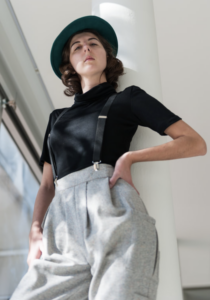
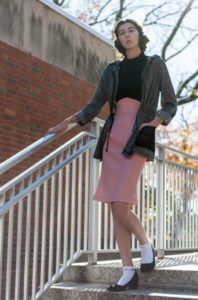
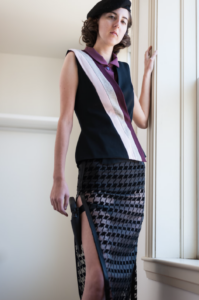
“This idea started my first collection – two different subjects that were very active in the revolutionary movement. What these women were doing and what they were wearing, and merging the ideas of traditionally feminine clothes and revolution, and exploring how those two things can coexist,” Carlo explained. Her collection worked to break the stereotypes of what was expected of a person based on their outward appearance and what they physically presented to the world. Carlo wanted to make it clear that a person’s appearance does not dictate or limit what they can accomplish or what they are capable of. “The collection helps in breaking the idea of what a feminist looks like, and the idea of what a revolutionist looks like. Breaking the patterns, concepts, and symbols of clothes.”
Second Collection
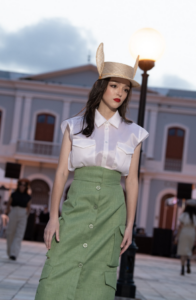
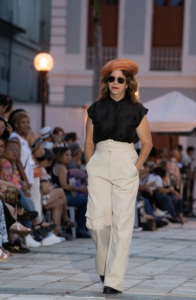 In Carlo’s second collection, “Mujeres de la Revolución Cubana,” which debuted in the Summer of 2024, her attention turned toward the women of Cuba. “I wanted to expand my research into more of Latin America, every Latin American country has a very strong history and fight towards independence and liberation, but everything we hear about is the men involved in these movements. I wanted to change this and start talking about the women involved in the revolutionary movement of Cuba.” Carlo focused on applying a feminine touch to her pieces while keeping many military components of clothing. The collection’s color palette and practical details were inspired by Cuban military uniforms, blending functional design with feminine detail.
Carlo plans to continue exploring different revolutionary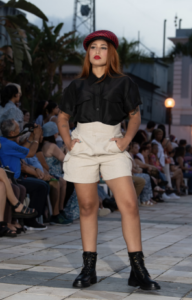 figures in her future work, delving further into other Latin American countries for her inspiration. “It’s crazy the amount of things we don’t know about people who did so much. And I want to break away from that and I want to talk about it and I want people to know their contributions instead of talking about the same topics and people over and over again”.
Honoring the Past, Designing the Future
Designing with history requires curiosity, critical thinking, and ethical awareness. It challenges designers to ask better questions, analyze garments more closely, and translate inspiration into work that feels relevant and responsible. By approaching history as a research tool rather than a relic, designers gain access to a depth of knowledge that strengthens both concept and craft.
Ultimately, archives do more than preserve the past, they expand the possibilities of the future. When designers learn to study, respect, and reinterpret history, they create fashion that is not only visually compelling, but intellectually and culturally informed.
Explore Fashion Archives at Rocky Mountain College of Art + Design
As fashion continues to evolve through past and present inspirations, Rocky Mountain College of Art + Design prepares students to design with both creativity and intention. Through our on-campus and online Bachelor of Fine Arts in Fashion Design programs, students are equipped with the tools to transform inspiration, whether drawn from archives or emerging technologies, into fully realized collections. Learn more about our Fine Arts degree programs and take the next step in your creative journey.
FAQs: Fashion Archives
Q1: What is a fashion archive, exactly?
- It is a curated collection of garments, textiles, documents, and media that records fashion history—often used for research, conservation, and design inspiration.
Q2: Why do fashion brands maintain archives?
- Archives protect heritage, document key looks, and provide reference material for new collections, reissues, marketing campaigns, and collaborations.
Q3: How can students access fashion archives if they are not in a major fashion city?
- Many museums, universities, and brands offer digital collections, virtual study appointments, and open-access image databases that can be researched remotely.
Q4: How do designers avoid copying when using archives?
- By analyzing underlying ideas, proportion, construction, motif logic, then recombining or updating them rather than reproducing pieces stitch for stitch.
Q5: What skills do archivists and fashion researchers need?
- Knowledge of textiles and construction, metadata and cataloging, conservation basics, visual analysis, and clear communication with designers and curators.
Q6: How do archives support sustainability in fashion?
- They encourage repair and reissue, inform better pattern cutting, and help designers understand long-lasting silhouettes and materials that have stood the test of time.
Q7: Can small brands or independent designers build their own archives?
- Yes, by systematically saving key samples, patterns, and digital files, storing them properly, and tagging images so they are searchable as the brand grows.