In his essay “On Fairy-Stories,” J. R. R. Tolkien argued that fantasy is more than a genre but an avenue for creating and experiencing another world. He wrote, “The realm of fairy-story is wide and deep and high and filled with many things: all manner of beasts and birds are found there; shoreless seas and stars uncounted; beauty that is an enchantment, and an ever-present peril; both joy and sorrow as sharp as swords.”
An author’s imagined worlds are hidden between pages, tucked away on shelves. They must await the eye of the reader before their fantastical descriptions can be animated within the theater of the mind. A fantasy artist or illustrator, however, has the power to bring their own fantasies or the machinations of a fantasy writer to life in all their visually stunning glory. Fantasy illustration and visual storytelling techniques bridge the gap between creative dreams and reality. Fantasy artists illustrate the most wondrous ideas, displaying them for all to see, enjoy and immerse themselves in.
Understanding Fantasy Illustration
Studying fantasy art illustration unlocks a limitless world of possibilities where anything you can imagine can be made into an immersive reality.
What Is Fantasy Illustration?
An illustration is a visual depiction that helps to clarify, explain or decorate. In the broader sense, illustrations can accompany text, data, concepts and ideas — and they’re found in magazines and newspapers, advertisements, books and other media.
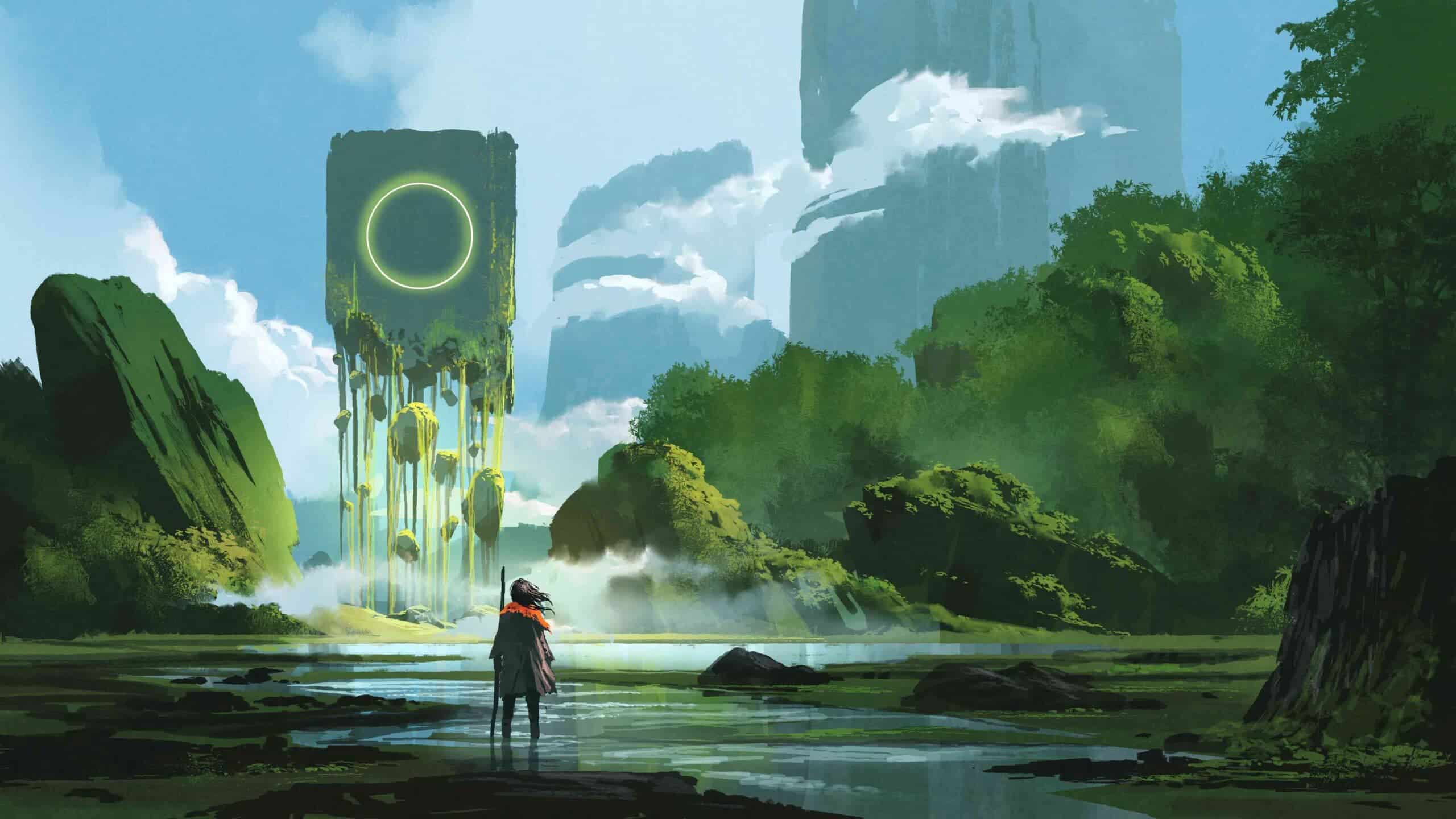
Fantasy illustration is a style and genre of illustrative art that visually depicts imaginary worlds. Inspired by mythology, folklore, fantasy stories and elements of science fiction, fantasy illustrators portray otherworldly landscapes and environments, fantastical objects, impossible architecture, mythical beings and magical creatures.
Fantasy illustration has evolved from depictions of mythical creatures from the Middle Ages and supernatural subjects in the fairy painting of the Victorian Period to illustrations found throughout modern and contemporary media.
The Role of Fantasy Illustration in Media
Fantasy illustration plays a major role in contemporary media. Fantasy art and illustration are featured prominently in the following media sectors:
- Fantasy books
- Graphic novels
- Digital art
- Film and animation
- Video games
- Tabletop role-playing games
- Trading card games
In every type of media, fantasy illustration helps immerse the audience in an alternate reality. It lends identity to fantastical worlds by enriching their narratives, visualizing fictional settings and environments, expanding the universe and bringing fictional characters to life.
Some may assume that fantasy art and illustration serve a niche audience. However, fantasy art is perhaps among the most popular and lucrative genres across all media categories. Consider, for example, all of fantasy’s beloved franchises, such as The Lord of the Rings, The Chronicles of Narnia, Star Wars, Harry Potter and Game of Thrones. Having generated billions of dollars in revenue, their success wouldn’t have been possible without the illustrations and fantasy concept art that led to the creation of:
- Book covers
- Movie adaptations
- Set design
- Character designs and casting
- Video game adaptations
- Action figures
- Toys
- Costumes
- Licensing deals
Techniques for Creating Fantasy Art
Illustrators use a variety of processes and techniques for creating fantasy art. The genre of fantasy illustration consists mainly of conceptual art because the idea or concept behind the art exists before it is created, and this has a significant influence on the artistic process.
Concept Development and Sketching
Sketching is a vital tool that illustrators can use for concept development. The purpose of these processes is to develop an initial idea into a structured, clear and feasible plan for your final design. Illustrators often use sketching as a quick way to explore their visual concepts and composition while defining and refining artistic choices. Thorough concept development ensures the delivery of detailed, successful visual storytelling.
Capturing Composition and Color
Composition (the arrangement of objects and negative space in an image) and color (the palette and use of light) come together to create overall balance and harmony as well as a definitive focal point within a design. Artists should consider the framing of the scene, placement of objects and location of characters within a design, in addition to the brightness, contrast and palette used. Color and composition can be selected and arranged to guide the viewer’s eye, leverage symbolism, evoke emotion, depict a mood, convey ideas and manipulate the impact of an illustration.
Character and Creature Design
Designing a single character requires illustrators to make choices regarding several elements, each of which helps your audience understand the character’s personality, mood, role and the world they live in. These include their:
- Silhouette
- Clothing
- Gestures
- Facial features
- Hairstyle
- Color palettes
Character illustration lends personality to your world, and drawing fantasy characters that are unique will help you create more stunning and memorable designs. Understanding the story behind your characters makes it easier to render them in an authentic manner. Instead of drawing inspiration from stereotypes and clichés, look to your character’s backstory, visual description and personality for design inspiration.
Whether you’re drawing mythical creatures or humanoid figures, a basic understanding of anatomy is key to creating believable, realistic-looking creatures and characters. Even if your creatures are fictional, parts of them will likely be based on real-world animals. Studying the anatomy of various figures helps you achieve realistic proportions, depict movement and capture physical features in a compelling manner.
World-Building and Environment Design
Although audiences focus on characters in fantasy art, the worlds created and depicted around them are just as important. Thus, while remaining imaginative, fantasy illustrators must stay consistent in their depictions of fantasy environments and settings.
In his book Building Imaginary Worlds: The Theory and History of Subcreation, Mark J. P. Wolf identifies three elements of fantasy world-building that are essential across media:
- Invention – This element of world-building answers the question, “How does this fantasy world differ from the real world?” This includes defining biology, zoology, history, geography, objects, artifacts, technology, culture, language, customs, institutions, physics, what’s possible and what’s not possible.
- Completeness – While it might not be possible to consider every single element of a fantasy world, all of the elements contained within it should still feel complete. When an imagined world incorporates enough detail that it feels complete to an audience, then it will also feel true — in turn allowing the viewer to suspend their disbelief and immerse their imaginations within your illustrations.
- Consistency – For an imaginary world to seem real, it must be consistent. In other words, the details and rules outlined in the invention should be feasible and plausible, and they should not contradict themselves. So, in fantasy illustration, artists should do their best to maintain consistency with images and designs that stay true to the original concept.
Fantasy Art Inspiration and Sources for Fantasy Artists
In addition to your own imagination and the story you are illustrating, artists can find inspiration for fantasy drawing ideas in a variety of places:
Mythology and Folklore
Folklore and mythology from all around the world have always been a rich source of inspiration for fantasy art, providing story concepts, descriptions of mythical creatures, fantastical environments and magical characters.
Nature and the Environment
While impossible inventions and details define fantasy as a genre, many fantasy elements are inspired by aspects of the real world. For example, Tolkien’s Ents are based on real-world trees but given the fantastical element of being intelligent creatures. Fantasy illustrators can use similar concepts — like representing lakes as mystical reflecting pools, depicting mirrors as doors between worlds or painting wings on domestic cats to create mythical creatures.
Literature and Popular Culture
Fantasy illustrators looking to be inspired by and learn from exceptional examples can turn to fantasy literature and popular culture. To gain the best insights into the processes of some of the most notable fantasy illustrators, search the archives of movie studios and publishers for concept art. Concept art allows you to see the creative process in action from early beginnings to completion on some of the world’s favorite fantasy universes and studios like The Lord of the Rings, Star Wars, Harry Potter, Disney and Studio Ghibli.
Famous Fantasy Illustrators and Their Work
Viewing the work of the most notable fantasy illustrators can expose aspiring fantasy artists to different styles, approaches and possibilities.
Frank Frazetta
Nicknamed the godfather of fantasy art, Frank Frazetta‘s fantasy and science fiction art appeared on comic books, mass market paperback covers, album covers, film posters, paintings and more. He’s known for his depictions of Ghost Rider, Buck Rogers, Conan the Barbarian and the designs he created for Middle Earth Publishing in the 1970s.
Alan Lee and John Howe
Alan Lee and John Howe are both fantasy illustrators made famous by their artwork inspired by J. R. R. Tolkien’s fantasy novels and characters. They are noted for the concept design work on the serial film adaptations of The Hobbit and The Lord of the Rings.
Brian Froud
Brian Froud is, perhaps, most widely recognized for his conceptual design work on Jim Henson’s films The Labyrinth and The Dark Crystal.
Julie Bell and Boris Vallejo
A power couple in the fantasy illustration industry, Julie Bell and Boris Vallejo have both created famous artwork individually and via collaboration. Bell is best known for illustrating more than 100 science fiction and fantasy book covers, trading cards, video games and several album covers for Meat Loaf. Vallejo is best known for his work on book covers, movie posters, advertising campaigns and collectible cards.
Jesper Ejsing and Karla Ortiz
Both Karla Ortiz and Jesper Ejsing are noted for their fantasy illustration work for Magic: The Gathering and other fantasy games.
Practical Tips for Aspiring Fantasy Illustrators
Cultivating a Unique Artistic Voice
While studying fantasy art for beginners, you will be more focused on learning about art and design principles, media, tools and techniques. All the while, however, you should also be developing your own set of artistic instincts and preferences.
An artistic voice is an artist’s unique style that makes their works unquestionably recognizable as their own. You may find your voice by listening to your inner instinct as an artist. As you become increasingly comfortable working with a variety of media, subjects and techniques, you will be able to tune into your voice more clearly. The choices you make, as a result, will ultimately come through as your distinct visual, artistic style.
Leveraging Digital and Traditional Tools
Aspiring fantasy illustrators should practice using both traditional and digital tools. Traditional media — such as drawing and painting with charcoals, pen and ink, oils, pastels or watercolors — can help you more viscerally explore your ideas while creating physical manifestations of your designs.
While using traditional media, fantasy illustrators must also develop their digital art skills, learning to use a number of digital programs, interfaces and media. Digital tools offer a wide range of effects and functionalities that can enhance and accelerate the design and art creation processes. Additionally, digital illustrations are more easily manipulated, resized, edited and reproduced while having the ability for direct integration into digital media like video games, animation and film.
Portfolio Building and Industry Networking
Along with developing art and design skills, aspiring fantasy illustrators should focus on career development. Two vital aspects of career development for illustrators include portfolio building and industry networking.
A talented artist’s best reference on a job application is their work. Take the time to curate a selection that includes your strongest work and the pieces that best represent your skills, style, voice and vision. Your portfolio should be well-organized and easily shareable, so you’ll want to digitize your art onto a CV-style website or shareable file.
Networking is just as essential as portfolio building because finding a successful career in illustration largely depends on who you know. This strategy will help you gain exposure, make valuable connections, find work and connect with potential employers, clients and collaborators.
The Future of Fantasy Art Illustration
Expanding Career Opportunities
Credentialed fantasy illustrators have a variety of diverse career opportunities — from working for film and animation studios or publishing houses to designing for video game companies, board game companies and marketing agencies.
Hone Your Fantasy Art Techniques and Create a Concept Design for Your Future in Fantasy Art
Fantasy illustrators can further hone their talents, develop traditional techniques and acquire skills in digital illustration through Rocky Mountain College of Art + Design. At RMCAD, we offer both online and in-person degree programs, allowing students to earn a Bachelor of Fine Arts in Illustration. Our programs include classes in innovative storytelling, drawing and composition theory, plus courses in portfolio development and self-promotion to help you transition from a student to an accomplished fantasy illustrator.
Ready to sketch out your future in fantasy illustration? Request more information today.
Popular Illustration Articles:
- The Art of Book Illustration: Bringing Stories to Life
- Typography Meets Illustration: Integrating Lettering Into Visual Art
- What is Illustration? A Guide to the Art of Visual Storytelling
- Scientific Illustration: Combining Art and Science
- Fashion Illustration: The Creative Process of Communicating Design