
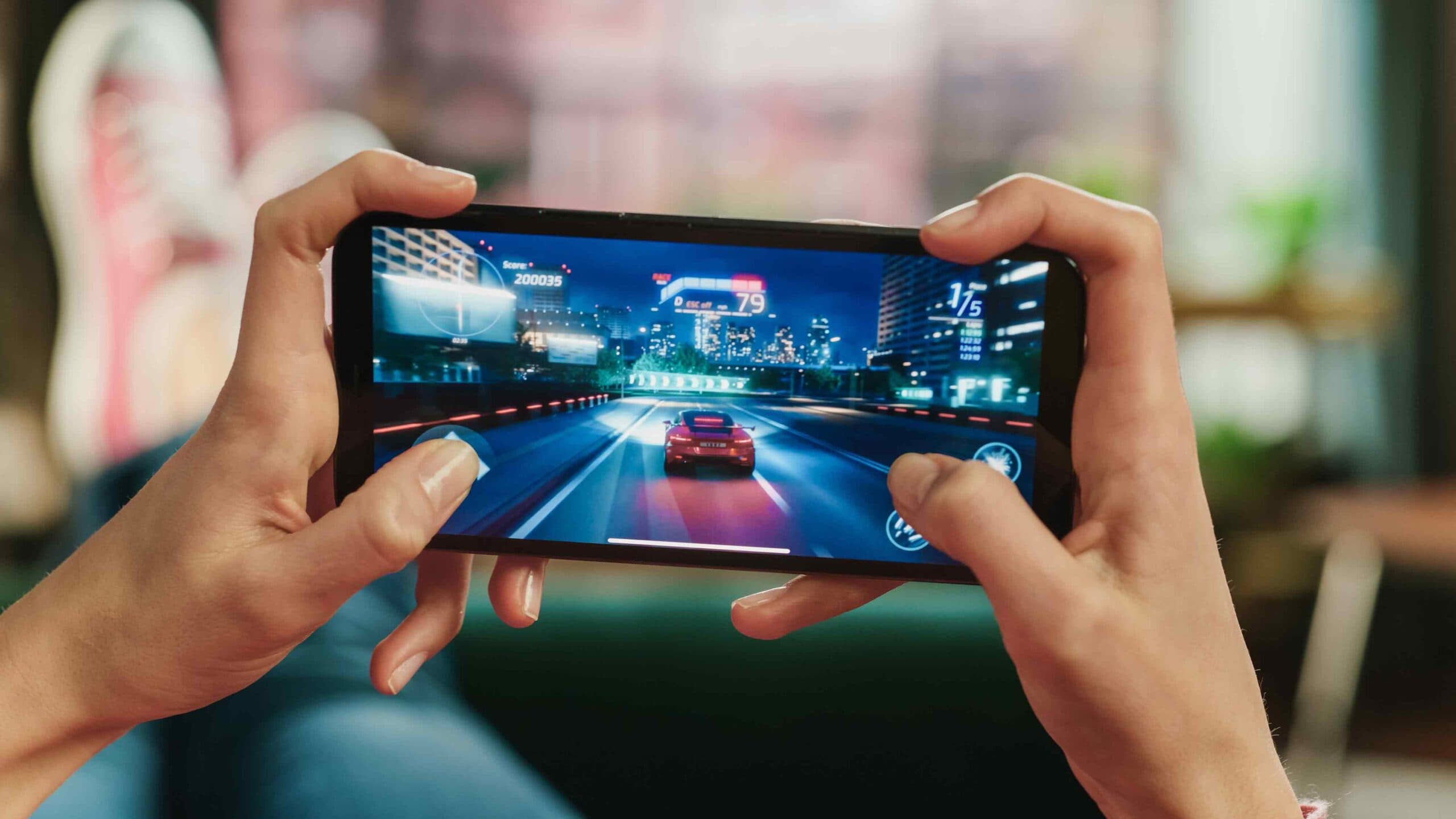
Game art transforms video games from simple mechanics into deeply emotional experiences. These intricate visuals introduce players to new worlds and immerse them in compelling stories.
Often, game art is described in the context of the traditional console or PC game, in which large screens and considerable processing power can more easily create expansive visual atmospheres. These days, however, mobile gamers make up the vast majority of the gaming market — and the inherent restrictions of mobile devices often prevent them from experiencing the true beauty of the on-the-go gaming experience.
The good news? Game art is rapidly improving, driven by exciting technological developments along with evolving artistic trends and techniques. In this new era of game art, the very restrictions that previously held this medium back now contribute to a standout style that gamers find deeply compelling.
As demand for visually evocative game art continues to grow, new opportunities are bound to emerge, alongside an exciting creative push that could uncover new frontiers in game design. Get in on this trend early so you have time to experiment with new technologies and hone your artistic process! We’ll show you how below:
Understanding Mobile Game Art Design
With so many different mobile devices on the market, it’s imperative to craft level designs and art assets that look sharp on all supported platforms. Thankfully, mobile device screen sizes shouldn’t be too much of a hurdle for creative artists who know how to get the most out of their mobile game assets. Most games don’t need to fill the entire screen, after all, so artists can work within the mostly uniform 9:16 ratio. This ensures that games display properly.
Key Differences Between Mobile and Console Game Art
There are many distinctions between mobile and console game art, but these differences all come down to one simple reality: the screens that display mobile game art are far smaller than those that accommodate console art. These smaller screens, while still packing enough pixels to make some mobile games look nearly as good as their console cousins, simply don’t have much screen real estate to spare. With limited screen space and the knowledge that the user’s fingers will also be blocking a portion of the display, UI design for mobile games presents its own unique set of challenges.
Processing power also limits the size and scope of these games, which makes mobile game optimization a top priority. While some console games can be poorly optimized thanks to the brute strength of their processors, mobile games don’t have this same luxury. Designers and artists in the mobile game design space are used to working within these limitations, and many enjoy the challenge of getting their vision into the hands of players around the world.
The Importance of Optimization for Small Screens
The mobile gaming space is crowded and extraordinarily competitive. In this cutthroat environment, poorly optimized games will struggle to make a splash. The first minutes of play are crucialto making a lasting first impression. If players find their experience hampered by a crumbling frame rate or poorly optimized visual effects, they won’t hesitate to move on to the next app. Therein lies the need for small-screen optimization and adjusting visuals for maximum impact across a wide range of devices.
Balancing Visual Quality With Performance
Today’s passionate game artists and designers are increasingly unwilling to compromise visual quality for the sake of performance. With devices becoming increasingly powerful with every new release, animators and designers continue to push the limits of the CPUs that power them. Mobile game animation has improved considerably over the last decade, thanks in large part to developers who can maximize visual quality and fidelity without compromising performance.
Challenges of Designing Game Art for Mobile
Today, over two billion mobile gamers expect amazing visuals and smooth performance. Gamers are no longer willing to tolerate mediocre visuals for the sake of mobile gameplay. Mobile gaming has improved alongside gamers’ expectations, with today’s mobile game art styles running the gamut from extremely simplistic to near-console quality. Each of these mobile game art styles faces its own set of unique obstacles in the development process.
Limited Processing Power and Storage
There’s no doubt that today’s most powerful smartphones are capable of producing incredible visuals. This tantalizing power, when put into the hands of talented designers and artists, can lead to some extraordinary-looking games. Unfortunately, there’s a limit to what can be accomplished on even the most advanced handsets.
Storage is a major factor that limits the size and scope of some games, given the paltry app size limit of just 4 GB on both Google’s Play Store and Apple’s App Store. This lack of space to store assets and other game files means optimization is key. Artists must get the most out of the CPUs that crank out these visuals.
Adapting Art for Multiple Screen Sizes and Devices
Mobile gamers use a variety of devices, including not only various types of smartphones, but also tablet computers and even smartwatches. They want to feel confident that, regardless of the devices they explore, game visuals and functionality will always remain strong.
Responsive design ensures that, across all devices, gamers encounter consistently strong visuals. While this is typically regarded as a technical pursuit, artistic techniques can play into gaming-focused responsive design, bringing a more intentional feel to visuals while allowing them to scale gracefully. This effort may be supported by visual hierarchies, which help users identify critical elements right away, keeping their focus where it matters most throughout the duration of their gaming experience.
Creating Clear Visuals Without Overcrowding
In an effort to bring detail to mobile games, artists risk making small screens feel cluttered. This can be a difficult balance. Oversimplification can make games feel bland or uninspired, but with mobile devices, it’s easy to take detailing to an excess, thereby hampering both performance and player focus. While these challenges exist in conventional console game design, the sheer size of the mobile screen can make such issues inherently more difficult to overcome.
Innovations in Mobile Game Art
Mobile game art has come a long way from the early days of Snake and Tetris on the Nokia — and even from the groundbreaking puzzle games like Bejeweled, which, although visually compelling, was decidedly limited in scope compared to the intricate gaming worlds that are now accessible via mobile devices.
These days, solutions like procedural generation deliver extraordinary efficiency in game development, while headsets expand the immersion of the experience. Several important advancements have formed the groundwork for today’s most advanced mobile games, including:
Stylized Art to Reduce Resource Load
Mobile gamers have often prioritized performance over visuals, but with the right aesthetics, both qualities should be well within reach. Simplified or abstract styles can deliver impressive visuals without requiring considerable memory or processing power.
The minimalist style of Polytopia, for example, belies the complex mechanics that exist beneath the surface. This style actually contributes greatly to the game’s overall charm and whimsy. Meanwhile, Mini Metro makes the most of geometric design, revealing how seemingly simple lines and shapes can contribute to a deeply satisfying gaming experience. These games lean into an appealing simplicity that mobile devices are uniquely poised to pull off.
Advances in 3D Mobile Rendering
Rendering converts digital data into the visuals enjoyed on mobile screens. While 2D rendering (which produces flat, simplified images) has long been a hallmark of mobile gaming, 3D rendering has improved dramatically, bringing a unique sense of depth that makes environments feel more immersive and realistic.
With contemporary 3D rendering solutions, such as shader optimization and physically based rendering (PBR), accurate representations of the interactions between light rays and surfaces are enabled. Meanwhile, the level of detail (LOD) simplifies shapes designed to appear further away, dedicating detail primarily to nearby visuals. This can limit processing load without sacrificing visual quality where it’s most needed.
Dramatic improvements have also brought a fresh feel to 2D art for mobile games, with GPU (Graphics Processing Units)-accelerated strategies revealing how flat graphics can feel remarkably sophisticated.
Integration of AR and Interactive Elements
Augmented reality represents the next big frontier in mobile game art, capable of overcoming many of the limitations that have previously favored console gaming. Pokémon Go represented an early success in this movement, revealing the viral potential that could be achieved when building virtual elements into real-world environments. Scopely’s acquisition of AR mobile gaming pioneer Niantic suggests that these types of games will be prioritized moving forward.
Techniques for Optimizing Mobile Game Art
As the technologies underscoring mobile game art continue to improve, creatives can continue to draw on tried-and-tested techniques to cultivate immersive gaming environments:
Texture Compression and Efficient Asset Creation
In mobile games, compelling textures can occupy considerable storage space. These can be compressed to limit file sizes without significantly compromising the visual appeal of said textures. The lossy technique known as Ericsson Texture Compression (ETC), for example, can dramatically reduce requirements surrounding texture memory without considerably harming visual quality. While this enjoys broad support, Adaptive Scalable Texture Compression (ASTC) takes this to a whole new level, delivering spectacular quality-to-size ratios.
Designing Scalable UI
Scalable user interfaces ensure that, regardless of mobile hardware, game visuals remain excellent across numerous devices. This promotes greater usability for games that rely on tapping or swiping, with pixel density also adapting to reflect device-specific screen characteristics. This approach moves beyond fixed pixels to percentage-based measurements, promoting proportionate adaptations across various screens.
Using Color and Contrast for Better Visibility
Visibility often represents a core challenge when playing mobile games, but this can be alleviated through the simple use of contrast. This could be as basic as using dark text on light backgrounds. Still, it may also draw on color psychology to promptly convey critical information or spark the desired emotional response. Visual hierarchies may incorporate desaturation in the background to ensure that foreground elements are as vibrant as possible. That being said, elements such as distinct shapes should also be added to improve accessibility and adhere to universal design principles.
Case Studies: Successful Mobile Game Art
These days, it is not difficult to find inspiring examples of mobile game art. Titles that stand out from the pack encompass eye-catching visual styles but are also backed by outstanding animation and addictive gameplay.
Monument Valley’s Minimalist and Artistic Style
Presented in an isometric view that’s perfect for mobile devices, the stunning Monument Valley is packed with visual puzzles and impossible objects. The game’s simple premise of getting to the end of the level is enhanced by an artistic style that brings to mind the work of M.C. Escher. This remarkable achievement demonstrates that modern mobile games can create mesmerizing works of art.
Genshin Impact’s High-Quality Cross-Platform Art
When Genshin Impact was released in 2020, players around the world were shocked by the powerful visuals displayed in the iPhone and Android versions of the game. This was arguably the best example yet of a fully-featured, console-style game released on mobile devices with almost no compromises. This continually raises the bar for modern cross-platform design. One of the most notable perks is the ability to progress seamlessly across various devices.
Angry Birds’ Iconic Character and Environment Design
One of the best examples of iconic mobile game character design, Angry Birds took over the mobile gaming space in 2009 with its simple and compelling concept. Who knew launching birds into pigs could be so addictive? Players loved crashing, smashing and otherwise destroying every level with their flying friends. Angry Birds remains an enduring franchise more than a decade later. Secrets behind the game’s success include vibrant colors, evocative emotional expressions and simple geometrics that make characters memorable.
Tips for Aspiring Mobile Game Artists
Interested in joining the mobile gaming movement? Now is the time to develop mobile-specific design skills, allowing you to carve out a niche in this promising industry. Follow these suggestions to enhance your game design skill set and to keep up with mobile gaming industry trends.
Mastering Tools Like Unity and Unreal Engine
Unity and Unreal form the basis for successful design across all gaming platforms and especially in mobile game design. These trusted game engines provide excellent frameworks that support cross-platform development. They also offer exceptional mobile rendering opportunities, including Unity’s Universal Render Pipeline (URP) and an alternate rendering path for Unreal Engine.
Building a Portfolio Focused on Mobile Assets
Game art portfolios should be strategically curated to reflect your unique professional aspirations. If you are intrigued by the world of mobile gaming and hope to bring more evocative game art to the forefront, adjust your portfolio accordingly. This means prominently featuring mobile assets that reveal your ability to create powerful visuals while working within the natural constraints of mobile design.
Staying Updated on Mobile Gaming Trends
Begin by reading peer-reviewed journals, which will introduce you to research-backed concepts and developments. The interdisciplinary Journal of Games, Game Art and Gamification (JGGAG) is a great option, as it covers both the creative and technical sides of game art. Online forums can introduce you to additional perspectives, although you will need to do your own research to confirm any insights you encounter on Reddit threads or Discord servers.
FAQs:
1: What makes mobile game art different from console or PC game art?
Mobile games are heavily influenced by small screen sizes and limited power, which, compared to PCs, can prove to be a challenge. Artists must create compelling designs without sacrificing performance.
2: What challenges do artists face when designing for mobile games?
Game artists struggle to navigate the fine line between enhancing game visuals and promoting seamless performance. Scaling can also prove difficult, especially given the diversity of mobile screen sizes.
3: What tools are commonly used to create mobile game art?
Unity and Unreal Engine are the go-to solutions for creating compelling and high-performing mobile game art, but applications such as Procreate can also amplify game artists’ creative process.
4: How do successful mobile games achieve unique art styles?
The most successful mobile games draw on the power of minimalism to create visuals that are engaging, yet efficient. Abstract styles are also impactful as they focus on critical elements and limit the potential for visual clutter.
5: How can aspiring artists build a career in mobile game art?
Formal game art programs introduce aspiring game artists to mobile-friendly techniques. Other essentials for building a successful career include strategic portfolio development and continued experimentation with new technologies and techniques.
Discover Your Creative Vision and Innovative Aptitude With RMCAD
Discover exciting opportunities in mobile game design with Rocky Mountain College of Art + Design (RMCAD). Our Game Art program is available on campus and online, blending fundamental techniques with advanced technologies to promote adaptability within a quickly evolving industry that calls for creativity and technical proficiency.