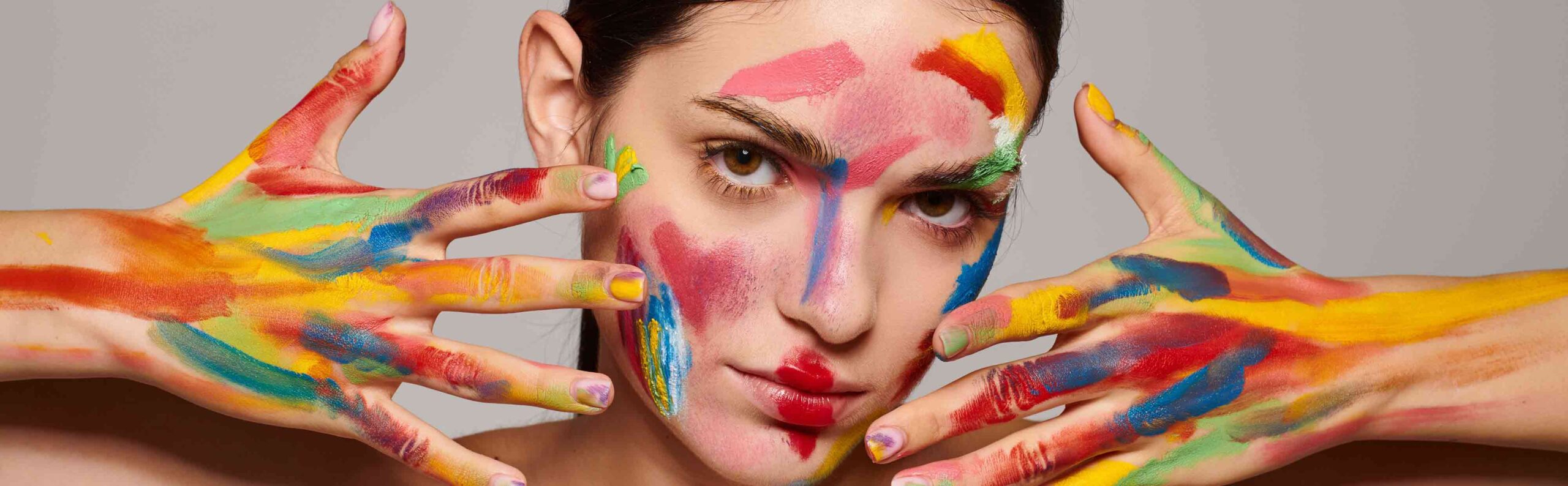
Fashion is artistic by nature. Both mediums emphasize visual communication, after all, and both utilize color and texture to convey fascinating ideas. From the canvas to runway presentation, today’s creative minds are drawn to distinct opportunities within the fashion and artistic communities, but increasingly, their work diverges so that art meets fashion in meaningful and memorable ways.
This fusion of art and fashion reflects a broader co-design movement that uses intentional collaboration as creative fuel. Through high-profile partnerships and grassroots alliances, we’ve seen a meeting of the minds, bringing together the best of art and fashion to broaden horizons and embrace new audiences. Such collaborations should not be confused with fashion illustration, which, while serving a critical purpose in the design process, does not push boundaries quite like purpose-driven art and fashion collaborations.
These collaborations, although inspiring, can be challenging to execute. They call for shared values and priorities, and practical arrangements to ensure that both artists and designers are treated fairly. This is where the business of art and fashion comes into play. To shed light on these opportunities, we will explore both the creative and the commercial aspects of collaborations, using famous artist collaborations as inspiration.
Defining Designer–Artist Collaborations
Designer-artist collaborations drive mutual inspiration through creative partnerships, with designers emphasizing structure or functionality while artists elevate both the aesthetics and the deeper meaning of the project in question. This is a joint creative effort, one in which both designers and artists are expected to bring unique ideas to the table while also drawing on their distinctive, and decidedly different, skill sets.
What Counts as a Collaboration Versus Licensing Agreements
Collaborations and licensing deals are common in the fashion world, but these are not one and the same. Licensing and collaboration differ primarily in the nature of the contribution. In a collaboration, both parties are expected to make comparable contributions in time, effort and skill. Licensing, however, is closer to a financial agreement where a designer pays an artist or another party for the use of pre-existing work, while maintaining complete creative control over the final product.
Why Collaborations Matter for Cultural Brand Equity and Access
The concept of brand equity is highly relevant within the fashion industry, as it references the power of branding to attract attention and inspire loyalty, regardless of product quality. Cultural brand equity, however, goes beyond purely commercial conceptions of brand identity to highlight the deeper emotional connections gained through cultural relevance.
Collaborations prompt cultural brand equity building by bringing together community brands and impactful movements. These collaborations are driven by a shared sense of purpose, conveying genuine passion for specific communities or causes. Through collaborative efforts, culturally focused artists and fashion designers can expand their reach and their perspective, tapping into new audiences and collectively amplifying their voices and their messages.
Collaboration Models and Workflows
There is no one preferred approach to collaboration. This is deeply dependent on the needs and preferences of the collaborators, not to mention, their creative vision and their rapport. The duration of these arrangements is flexible. Some collaborations are brief, ending after a few short weeks once the shared vision is realized, while others extend over multiple projects and potentially several years.
Commissioned Artworks and Capsule Drops
Running the gamut from one-off commissioned pieces to years-long partnerships, collaborative efforts are timed based on community needs, creative ideas and commercial opportunities. Commissioning involves custom artwork designed for specific purposes, such as limited-edition prints. Under this model, the designer tends to hold more creative control. Fashion capsule collection drops may extend the artist’s input, but they also aim to create a sense of urgency, getting audiences invested.
Co-Design Studios and Cross-Functional Teams
Co-design pairs designers with non-designers to produce inclusive, community-driven innovations. As experts at the World Economic Forum point out, these arrangements may involve design studios, in which teams of co-designers meet regularly to discuss their plans. Under a community co-design model, these collaborators may seek input from their communities. Cross-functional teams support this effort by bringing cultural knowledge and technical expertise to the forefront.
From Canvas to Cloth: Translating Media Into Materials
The designer’s role in the collaborative process may emphasize practical or tangible concerns, such as determining how to bring designs that stand out on the screen or page to various fabrics or other materials. Such problems may involve color management or texture compatibility. This can be challenging, as not all materials will readily accommodate all color profiles or other visual dynamics. It is the designer’s role, then, to clarify potential constraints and find creative solutions to overcome them, so that the artist’s original concept continues to shine through.
Materials, Processes and Techniques
Designers and artists work with different materials and use different techniques to bring their visions to life. With collaborations, however, they must find a middle ground that honors both of their creative processes. Thankfully, many fashion-friendly techniques can place artistic beauty fully on display without compromising the functionality or comfort of the garments in question.
Screen Print, Digital Print and Sublimation for Artwork Fidelity
There are many ways to approach fashion print design, with each capturing different aspects of artistic creations. Many designer-artist collaborations use screen prints, which are uniquely capable of preserving the fidelity of artistic projects. Through screen prints, it is possible to capture detailed brushwork or strategic composition.
Fashion inspired by paintings can also incorporate sublimation, a process that uses heat to transfer dye to fabrics, resulting in vibrant and durable garments that clearly reflect artistic concepts. Textile digital printing (known as direct-to-garment) can be useful for capturing artists’ most intricate designs.
Jacquard Knit and Appliqué for Texture
Embroidery embellishment brings intricate details to garments, delivering rich textures and bringing an ornate appeal to these pieces. A “stranded” technique known as jacquard knit draws attention to ornate patterns while offering a distinct take on visual storytelling. This collaborative opportunity emerged when French artist Michel Dubost and Lyonnaise silk weaver François Ducharne worked together in the 1920s. Together, they created haute-couture textiles featuring complex fabrics and metallic threads that The Met describes as “dazzling and luminous.”
Appliqué also prioritizes tactile experiences, but brings a distinct approach by incorporating decorative pieces into base fabrics. Marc Jacobs favored this approach when he was the creative director of Louis Vuitton, with artists such as Richard Prince and Julie Verhoeven bringing layered visuals to unforgettable handbags.
Pattern Placement to Preserve Composition
The three-dimensional realities of garments can make it challenging to maintain the artist’s original composition. Strategic pattern placement can help overcome this challenge, with focal points, in particular, positioned to avoid interference from folds, darts or seams. This limits visual clutter to ensure that fashionable artwork is as balanced and impactful as possible.
Intellectual Property and Ethics
In addition to the tangible challenges that naturally arise when translating ideas to physical materials, co-designers must navigate a variety of ethical complications. Intellectual property is a central concern, with both the designer and artist naturally intent on having their contributions respected and represented.
Cultural concerns must also be addressed, often through the community co-design process highlighted above, or through attributions that acknowledge the origins of the various concepts or stories referenced in the work.
Rights Clearances, Royalties and Attribution
Fashion designers must secure formal permission to use artists’ ideas; otherwise, they risk copyright infringement. This can be murky legal territory, as, strictly speaking, the functional elements of clothing are not protected by copyright. If artistic elements are separable, however, they may be protected. Through attribution, designers demonstrate respect for artists and enhance their industry visibility.
Limited Editions Resale Dynamics and Artist Revenue
Limited-edition fashion releases build excitement through the power of scarcity, dramatically increasing the perceived value of products by creating a sense of urgency. As pieces sell out, partnered artists and designers are viewed as tastemakers, thereby driving up demand for future collaborations. The resale market then extends the value of these collaborations, driving excitement for future drops.
Artists can expand their earning power by extending collaborative efforts beyond simple garment-based opportunities, also to include store displays or murals that form the basis for creative and deeply immersive retail experiences. Gucci, for example, collaborated with mixed media artist Coco Capitán on a capsule featuring sprawling handwriting, and eventually extended the partnership to also showcase Capitán’s distinct prose at Gucci’s Miami flagship store and on the Gucci Art Wall in Milan.
Production, Sustainability and Supply Chain
Sustainability is a growing priority across the spectrum of fashion and fine art, with today’s creatives purposefully selecting materials and techniques that limit their carbon footprint. This movement also influences how creatives seek partners, emphasizing shared values so creative professionals feel confident that the results will reflect not only their aesthetic preferences, but also their ethical priorities. This calls not only for the purposeful selection of sustainable fashion materials, but also a transparent supply chain that promotes minimized environmental impact in sourcing, manufacturing and even distribution.
Fabric Choices, Dye Methods and Chemical Footprints
Fabric selection has a significant impact on fashion sustainability, with certain materials requiring high water use or even releasing microplastics. Collaborators who share a commitment to sustainability may opt for sustainable options such as hemp or may incorporate recycled materials. Dye methods must also be considered, as many techniques rely on potentially harmful chemicals such as azo dyes. Natural dyes and pigments bring an eco-conscious approach to experimenting with color.
Small-Batch Localized Manufacturing and Deadstock Strategies
Designers and artists are eager to find innovative solutions to address the common industry challenge of dead stock. Unsold or discontinued inventory will ideally not be sent directly to the landfill, but rather repurposed or incorporated into new designs. Small-batch strategies employ a proactive approach to deadstock prevention, utilizing short runs to produce limited quantities of items while also enhancing perceptions of exclusivity.
Traceability Certifications and Transparent Storytelling
Ethical fashion certifications verify the origin of materials used in various products, and the production processes. Examples include Cradle to Cradle certification for textiles and apparel, as well as the Global Organic Textile Standard (GOTS). These certifications encourage brand transparency and can even shape sustainable storytelling by revealing the origins of various fibers and dyes.
Marketing, Retail and Audience Engagement
Collaborators are eager to share their ideas with sizable audiences and must also remain mindful of financial considerations. In both areas, marketing can make a significant difference, ensuring that creative visions reach the right audiences and drive profits, allowing designers and artists to continue doing what they love.
Runway, Museum and Gallery Presentations
Museums can be excellent settings for highlighting the artistry of the fashion world, as evidenced in a Louvre collection that we will discuss in more detail later on. This is just one of many museums and galleries that intentionally fuse fashion and visual art. Meanwhile, art can have a similar effect on the runway, where it’s integrated not only into showcased garments and accessories, but also, built into the set design to form a living gallery.
Social Teasers, AR Try-Ons and In-Store Installations
Social teasers get audiences excited by bringing partial reveals to social media. This can be an excellent strategy for highlighting new partnerships. Augmented reality provides an immersive element, such as virtual try-ons and three-dimensional previews. In-store installations can be especially evocative, transforming retail spaces into galleries that draw attention to artists and even create shareable moments for social media.
Pricing Strategy, Drop Calendars and Collector Behavior
Collaborations may lead to premium or value-based pricing, drawing on the cultural cachet of the artist in question. These capsules or drops often undergo small-batch production, resulting in limited-edition markups. Drop calendars must be carefully planned to increase anticipation and avoid over-exposure — but drops must be frequent enough to keep collectors engaged.
Case Studies: Global Perspectives
Many inspiring case studies reveal the magic that is possible when top fashion designers and artists join forces. We’ve highlighted global examples spanning many contemporary art and fashion concepts, all while revealing the beauty of collaboration.
Japan: Fashion Houses Working With Contemporary Artists on Print-Led Capsules
Contemporary Japanese artists often collaborate with iconic designers to introduce their visually evocative concepts to new audiences. In one long-standing collaboration, for example, Yayoi Kusama brings her signature polka dots to Louis Vuitton bags and even to a curated exhibition in Osaka, in which Kusama’s fascination with infinite patterning is on full display.
Another intriguing collaboration sees the elusive Shigeru Otani (widely known as Otani Workshop), who blends kawaii concepts with exquisite craftsmanship to create memorable ceramic pieces. Otani’s monster themes make their debut in the Dior fashion landscape with a capsule menswear collection featuring the miniature monster Tanilla.
France: Couture Collaborations Translating Gallery Art Into Haute Techniques
Designers based in France have long drawn on artistic inspiration to elevate already sophisticated pieces, as evidenced by Elsa Schiaparelli’s collaboration with surrealist artist Salvador Dalí. More recently, however, this impulse has been readily observable in a 2025 Louvre Couture exhibition demonstrating the “close historical dialogue that continues to take place between the world of fashion and the department’s greatest masterpieces.”
Other examples of gallery- or museum-inspired art centers surround specific artists and designers. Louis Vuitton, for instance, again dominates the conversation with a collaboration involving pop art sensation Jeff Koons, who is known for pushing the envelope while revealing what is possible in modern fabrication. A less ornate, but still mesmerizing, collaboration sees Philippe Weisbecker working with the cinema-inspired Lemaire to reveal the inherent beauty of everyday objects.
United States: Streetwear Partnerships With Pop and Graffiti Artists
The streetwear movement has brought some of the edgiest collaborations to the fashion world, and with this concept originating in New York, it’s only natural that the most notable collaborations also stem from the U.S. urban arts scene. These collaborations often draw inspiration from the beautiful chaos of graffiti art, as exemplified in the mesmerizing work of iconic artist Futura. Working with Japanese fashion brand BAPE, Futura brought eye-catching graphics to snowboard jackets and shark hoodies.
Champion draws on street art to demonstrate its brand commitment to helping both artists and consumers hold true to their inner purpose — or, in other words, to “Champion What Moves You.” Highlighting multiple “creators with purpose,” Champion’s curated collections include, for example, contributions from activist Aretha Brown.
Nigeria: Emerging Labels Partnerships Inspire Bold Storytelling
Storytelling is central to the Nigerian fashion experience, and collaborations with artists expand these storytelling opportunities. Nigerian-British designer Tokyo James showcases the diversity of Nigerian storytelling through a collaboration with multidisciplinary artist Yusuff Aina. These Nigerian creatives collaborated to challenge stereotypes during a fashion show in Milan, prominently featuring Aina’s recurring motif, known as The Eniyan.
Mexico: Artisan–Artist–Designer Triads Centering Craft and Heritage
Mexican collaborations demonstrate how multiple creatives can collaborate to merge traditional cultural elements with innovative contemporary concepts. The design practice Mesitz, for example, collaborates with local artisans, displaying their colorful creations in a gorgeous studio within the city of San Miguel de Allende. Founder Daniel Valero explains that this space serves as a “creative sanctuary.” Here, home goods are prioritized, but this artisan inspiration clearly influences Valero’s work with Hermès.
South Korea: K-Pop Era Collabs Using Illustration and Character IP
K-pop is hitting not only the airwaves, but also streaming services and even fashion runways. Amid the massive success of Netflix’s hit KPop Demon Hunters, there is a huge appetite for K-pop-inspired fashion. This impressive global reach even includes partnerships with the NBA.
Increasingly, fans are drawn not only to K-pop’s visual and auditory flair, but also to adorable characters that add extra charm and childlike wonder to the genre. BTS members, for example, had the opportunity to design their own adorable characters for the BT21 by BTS collaboration. Similarly, G-Dragon created an animated version of his cat Princess Zoa, culminating in a Times Square popup, complete with Zo&Friends merch.
Scandinavia: Minimalist Labels Working With Photographers for Monochrome Editions
Scandinavian minimalism demonstrates the beauty of simplicity and functionality, as seen in the inspiring minimalism of Elin Kling and Karl Lindman’s Toteme. This darling of the minimalist movement demonstrates that simple styles and visual art can coexist harmoniously, as evidenced by various photography collaborations.
Steven Meisel, for example, has aimed to evoke the understated luxury of Toteme during multiple campaigns. Speaking highly of Meisel’s work, Kling explained, “There is a traction between the controlled and the free-spirited…With his eye for the perfect composition, Meisel’s portraits reflect that.”
Business and Legal Readiness
Many creatives excel at the imaginative side of collaboration but struggle to navigate the business and legal complexities of these strategic partnerships. Proactive efforts, such as contract negotiations, can promote clear expectations surrounding branding and intellectual property so that artists and designers can protect their respective creative and financial interests. Depending on the scope of the collaboration, cross-border logistics may be prioritized, including not only supply chain concerns but also customs compliance.
Contract Structures, NDAs and Profit Shares
Formal agreements set the stage for a successful collaboration, detailing the roles and responsibilities of the designer and artist, and specific deliverables. Similarly, non-disclosure agreements offer mutual protection, ensuring that various concepts and designs remain strictly confidential. Profit-sharing agreements emphasize the financial aspect of these collaborations, detailing various forms of monetary gain and how they can be fairly divided between the fashion designers and the artists involved.
Exhibition and Legacy
Artists and designers are both eager to bring their ideas to the public. Co-design expands opportunities to inspire and delight audiences, with cutting-edge digital opportunities further extending their already impressive reach. Through collaborative endeavors, creatives must remain mindful of how their work will be presented in the media, in museums and in other contexts — and how this work will be preserved for future audiences to enjoy.
Documenting Process for Legacy and Press
In art and fashion, documentation is crucial to preservation. This reveals how concepts become tangible creations, detailing the creative process and specifically, how collaborative strategies influence it. Documentation can also influence later press coverage, bringing further depth to already compelling narratives by explaining the stories that underscore each creation. This also helps artists and designers gain greater control over how their work is presented in the media, with photographs or notes captured during the creative process ensuring that key sources of inspiration are accurately conveyed.
Museums, Pop-Ups and Traveling Shows
There are many ways to draw attention to fashionable creations beyond retail or the runway. These items may be displayed within museums or highlighted during pop-up events. Such events are not always purely promotional. They aim to draw attention to the cultural significance of artist-designer collaborations, linking fashion and art to historical and cultural conversations. The pop-up exhibition has been a central component of the Louis Vuitton x Yayoi Kusama collaboration, immersing visitors in a polka-dotted world that places Kusama’s interest in repetition and infinity in a new light.
Conservation and Digital Archives
Through conservation, collaborating artists and fashion designers can promote cultural preservation and shape the legacy of their creations. Careful handling can extend the life of these items, although restorations such as re-stitching or re-dyeing may be required. Storage within controlled environments can prevent items from degrading over time.
Tangible items can be digitally preserved through accessible platforms that provide high-resolution images or videos of artistic creations. These also offer a powerful source of inspiration for other designers and artists, demonstrating the power of collaboration and encouraging fellow creatives to pursue their own partnerships.
Explore Artistic and Collaborative Opportunities With RMCAD’s Fashion Design Program
Discover new sources of inspiration through multidisciplinary coursework as you pursue your Bachelor of Fine Arts in Fashion Design with Rocky Mountain College of Art + Design (RMCAD). Our immersive online and on-campus classes reveal how you can transform creative, art-inspired concepts into runway-worthy pieces while also introducing you to the power of artistic collaboration. Request information today to take the next step toward an exciting journey in fashion design.
FAQs: Intersection of Art and Fashion
Q1: What makes a designer–artist collaboration successful?
Successful designer-artist collaborations begin with shared values, but also utilize detailed contracts, NDAs and other plans or agreements that clearly outline expectations from the outset.
Q2: How are fashion and artist royalties typically structured?
Designer-artist collaborations may involve percentage-based revenues, often determined based on net sales. Royalties or revenue could also involve exhibition fees, media rights or custom drops.
Q3: What are ethical pitfalls to avoid?
Collaborators can navigate intellectual property challenges and other ethical concerns by taking proactive measures to ensure transparency and mutual respect. This means avoiding uncredited inspiration or cultural appropriation.
Q4: How can students pitch collaboration projects?
Pitches for collaborative projects begin with briefs that detail concepts and aesthetics. Pitches should reflect business realities, such as branding or revenue, but must also present compelling narratives.
Q5: How do limited drops affect pricing and demand?
Limited drops increase perceived value, heightening customer interest while creating an air of exclusivity. Pricing may be elevated as a result, with these drops also giving way to a strong resale market that further amplifies both demand and brand prestige.
Q6: How should collaborative garments be archived?
Garments created through collaborative processes can be archived via storage in climate-controlled environments, limiting exposure to light and humidity. Archival practices should also involve documentation, including detailed notes about creative processes and insight into the collaborative relationship.