Wellness retreats thrive on thoughtful, calming interior design that soothes the senses, encourages reflection and supports renewal. Every material selection, light choice and spatial decision must contribute to deep relaxation and revitalization.
Defining Wellness-Centered Interior Design
Our surroundings have a major impact on both mental health and physical well-being. Also referred to as holistic interior design or mindful interior design, wellness-centered interior design prioritizes holistic well-being through the intentional creation of spaces that promote calm, well-being, and good health.
What Sets Wellness Retreats Apart From Standard Hospitality
Unlike conventional hotels focused on efficiency, luxury or business, luxury wellness retreats emphasize tranquility and intentional pacing within environments designed to support mental, physical and emotional restoration.
Core Pillars: Restoration, Ritual and Sensory Calm
Wellness interiors provide restorative comfort with spaces designed to accommodate daily rituals (like spa treatments or meditation) and sensory calm achieved through muted palettes, natural textures, acoustics, and controlled lighting.
Mapping the Guest Journey From Arrival to Departure
Thoughtful design guides guests through a seamless journey, from grounding arrival spaces to immersive treatment areas and restorative accommodations. Layouts should ensure continuity, comfort, and emotional ease.
Understanding Context, Culture and Place
Impactful wellness retreat design is deeply rooted in its surroundings and their cultural identity. Considering principles of environmental psychology can make interiors feel more authentic, meaningful, and harmoniously connected to place and purpose.
Reading Climate, Landscape and Local Materials
Design responds to climate and terrain by integrating elements like:
- Local materials
- Passive cooling or warming strategies
- Views that strengthen the connection between interior spaces and nature
Honoring Cultural Wellness Traditions in Design
Interiors reflect regional healing practices, symbolism and craftsmanship. This allows guests to experience wellness through culturally grounded treatments, spatial layouts, and material choices.
Aligning Brand Story With Location and Guest Expectations
Balancing authenticity and brand with comfort, design translates the retreat’s brand narrative into place-specific experiences. This helps meet guest expectations while reinforcing a memorable, location-informed identity.
Arrival, Thresholds and First Impressions
A guest’s arrival experience sets the tone for their wellness retreat. Thoughtful thresholds and sensory cues help them disconnect from stress and ease into a restorative state.
Entry Sequences: Getaways, Transitions and Decompression Zones
From the approach, front walk and door to the foyer, lounge and front desk, layered entry sequences slow the guest’s movement and awareness. Landscaped paths, covered thresholds and quiet pauses can help gently transition guests from the outside world.
Reception as Lounge, Not Lobby: Soft Check-In Experiences
Replacing formal desks with lounge-like settings encourages privacy and hospitality, allowing check-in to feel personal, unhurried and aligned with wellness-focused service.
Scent, Sound and Light Cues That Signal “You Can Exhale Here”
Calming room design considers all the senses — and immediately signaling safety and calm helps the nervous system relax upon arrival. Techniques might entail:
- Subtle aromatherapy
- Soft acoustics
- Ambient soundscapes
- Warm, diffused lighting
Biophilic Design and Connection to Nature
Biophilic design goes beyond nature-inspired interiors to strengthen the bond between people and the natural world, thereby supporting relaxation and well-being. These strategies integrate nature as an active, restorative presence throughout the retreat.
Views, Daylight and Framing the Landscape
Generous windows, skylights and intentional sightlines frame natural scenery, maximize daylight and reinforce circadian rhythms while visually extending interior spaces into the landscape.
Natural Materials, Tactility and Warm Neutral Palettes
Wood, stone, linen and clay introduce tactile comfort and authenticity, while a warm neutral palette creates visual calm and timelessness without distracting from restorative experiences.
Water, Fire and Plant Elements Used With Intention
Fountains, hearths and curated plantings that are placed purposefully engage the senses and symbolize balance. This, in turn, fosters grounding moments throughout shared and private spaces.
Planning Calm Circulation and Zoning
Thoughtful circulation planning reduces stress and supports mental clarity for guests. Zoning strategies help guests move effortlessly through the retreat while preserving privacy and moments of quiet/stillness.
Quiet Corridors, Noise Buffers and Back-of-House Routes
Ensuring guest pathways remain peaceful and uninterrupted, acoustic separation, sound-absorbing materials and concealed service routes minimize disruptions.
Separating Active, Social and Silent Zones
Clear zoning distinguishes energetic spaces from contemplative areas. This way, guests can choose experiences that match their mood without conflicting sounds or activities.
Intuitive Wayfinding With Minimal Signage
Natural landmarks, lighting cues and spatial hierarchy guide movement intuitively in order to reduce reliance on signage and help guests navigate with ease and confidence.
Guest Rooms as Personal Sanctuaries
Guest rooms serve as private retreats within the larger wellness experience. For a restorative retreat, every design choice will ideally strive to support rest, reflection and a sense of calm that feels personal and safe.
Bed Placement, Blackout and Nighttime Safety Lighting
Beds should be positioned with security and views in mind — complemented by effective blackout window treatments and subtle night lighting that supports deep sleep without disrupting circadian rhythms.
Soft Storage, Clutter-Free Surfaces and Tech Taming
Concealed storage, minimal surfaces and discreet technology solutions reduce visual noise so guests can mentally unwind while maintaining functionality and comfort.
In-Room Ritual Spaces: Tea Corners, Meditation Nooks and Desks That Disappear
Dedicated ritual zones encourage mindfulness, offering simple setups for tea, meditation or journaling without introducing work-focused distractions into the space. Additionally, spa-like bathroom design enables guests to continue their restorative experience behind closed doors.
Lighting for Nervous-System Ease
Lighting significantly influences mood, sleep and emotional regulation. Wellness retreats should use gentle, adaptable illumination that supports relaxation from daylight through the evening hours.
Layered Lighting: Ambient, Task and Accent With Warm Temperatures
A combination of an ambient glow, focused task lights, soft accents and warm color temperatures creates a flexible, visually comforting and calming atmosphere.
Circadian-Informed Schemes and Dimming Protocols
Circadian lighting design promotes natural cycles and health. Artificial lighting systems adjust intensity and tone to align with natural circadian rhythms, gradually dimming in the evening to signal rest and support healthy sleep cycles.
Candlelight, Lanterns and Screens as Evening Filters
Low-level light sources and filtered screens soften nighttime environments — reducing glare and blue light while cultivating a sense of intimacy and ritual after dark.
Acoustics, Soundscapes and Quiet
Sound profoundly affects relaxation and focus. Especially important in meditation room design, thoughtful acoustic design combines materials, environmental sounds and operational strategies to maintain calm and reduce stress for enhanced guest experiences.
Sound-Absorbing Materials and Construction Details
Creating spaces that feel soft, private and conducive to meditation or sleep, the following features minimize echoes and unwanted noise:
- Carpets
- Acoustic panels
- Ceiling baffles
- Plants
- Fabric textures
- Wall insulation
White Noise, Soft Music and Nature Sound Integration
Gentle background sounds (like water, wind or curated music) mask distractions and noise pollution. This reinforces relaxation as well as a retreat’s connection to nature and sensory balance.
Managing Mechanical Noise, Footfall and Door Slams
Ensuring operational activities do not disrupt guests’ calm or meditation practices calls for minimizing intrusive sounds through:
- Strategic equipment placement
- Vibration dampening
- Soft-close doors
- Quiet flooring
Spa, Thermal and Treatment Spaces
Wellness treatments are most effective when environments feel safe and serene and are easy to navigate. When it comes to shared spaces and spa treatment room layout, thoughtful spatial planning, materials and inclusive design boost comfort and therapeutic impact.
Sequencing Wet Areas, Rest Rooms and Changing Rooms
Logical progression guides guests from changing areas to wet zones and relaxation lounges to promote hygiene and a smooth, intuitive wellness journey.
Materials That Balance Hygiene, Grip and Warmth
Non-slip surfaces, moisture-resistant finishes and warm textures ensure safety and comfort while maintaining clean, inviting treatment, and thermal spaces.
Privacy, Modesty Lines and Inclusive Design for Diverse Guests
Spatial layouts, partitions, and flexible configurations respect privacy and accommodate cultural and gender needs. This helps foster an environment where all guests feel secure, welcomed and comfortable during treatments.
Movement, Yoga and Meditation Rooms
Spaces for mindful movement and meditation must support focus, freedom and adaptability to host diverse practices and activities that feel both restorative and inspiring.
Proportions, Clear Floor Area and Storage for Props
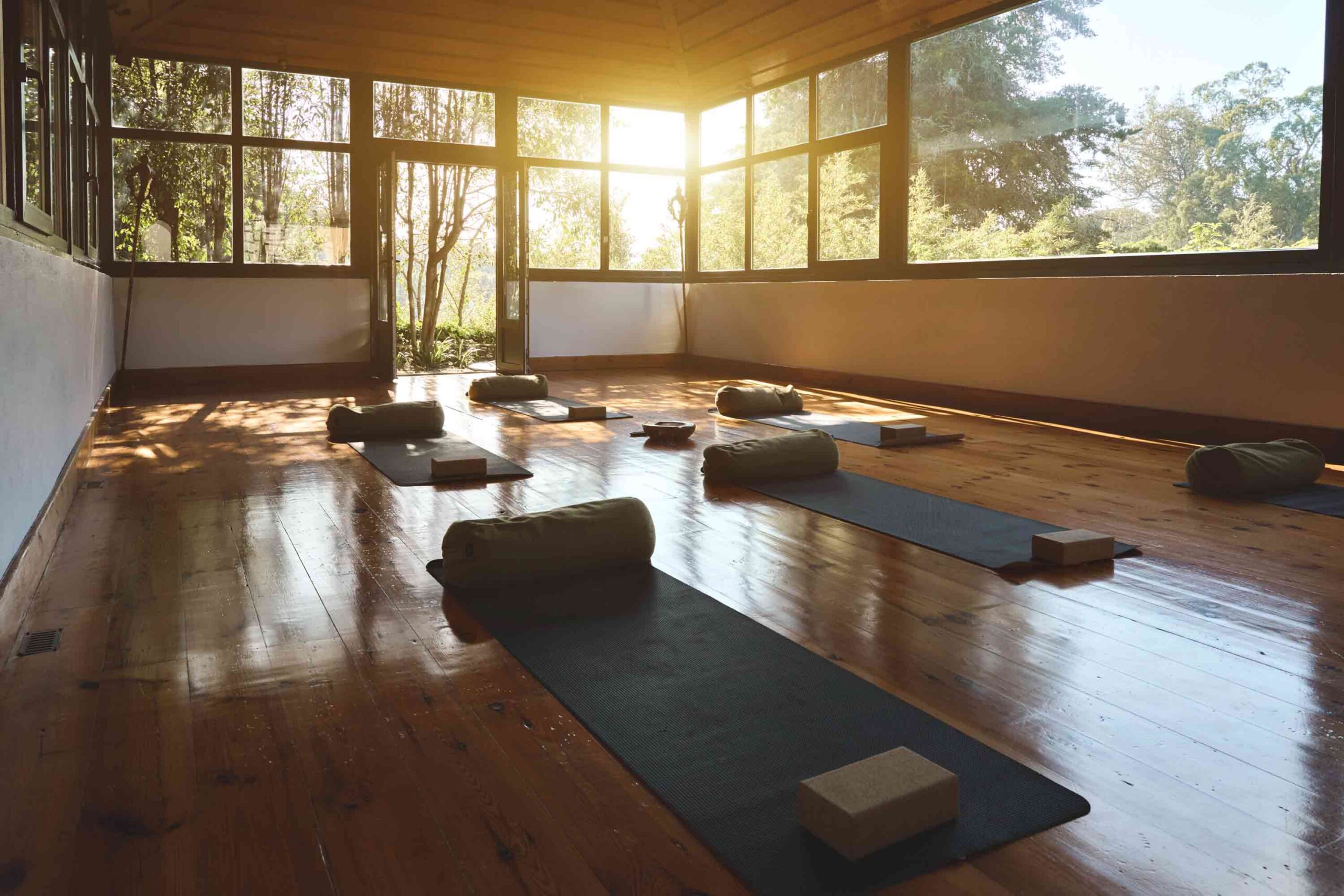
Generous, unobstructed floor space accommodates postures and movement. Additionally, incorporating discreet storage for mats, blocks, cushions, towels and blankets keeps the environment uncluttered and calming.
Visual Calm: Limited Palettes, Art and Graphic Elements
Muted tones and minimal, subtle artwork or graphics reduce visual distractions to make way for concentration, introspection, and a sense of serenity during both group and solo practice.
Flexible Layouts for Group, Solo and Guided Practice
Rooms adapt to different activities to seamlessly support private meditation, guided classes, or small group workshops leveraging aspects like:
- Movable partitions
- Multi-use furniture
- Adjustable lighting
Food, Lounge and Social Zones
Social and dining spaces in wellness retreats balance meaningful connection with calm solitude. Thoughtful layouts, furniture and service points encourage mindful eating and interaction without overwhelming the senses.
Dining Rooms That Support Slow Eating and Conversation
Ample tables, comfortable seating arrangements and acoustics are designed to promote unhurried meals that enhance both nutrition and restorative social engagement through comfortable conversation and sensory awareness.
Tea Bars, Hydration Stations and Snack Libraries
Supporting energy and pauses for reflection or casual interaction, accessible beverage, and light-food stations encourage mindful refreshment and hydration throughout the day.
Furniture Mix: Solo Retreat Spots and Gentle Social Clusters
A combination of single seating and small group arrangements accommodates personal downtime, quiet reflection, and low-pressure socialization, allowing guests to choose their level of engagement.
Materials, Finishes and Sensory Comfort
Tactile experiences impact how guests feel in a wellness retreat. Material choices have the potential to elevate comfort, safety and emotional ease while supporting health-conscious and sustainable design through regenerative interior design principles.
Underfoot: Barefoot-Friendly Floors and Thermal Comfort
Warm, textured, and slip-resistant flooring encourages barefoot movement while reducing fatigue and maintaining consistent thermal comfort. All of this contributes to a calming and (literally) grounded experience throughout the retreat.
Upholstery, Textiles and Layered Softness
Layered cushions, throws, and upholstery in natural fibers create tactile richness that invites relaxation across spaces in balance with durability, hygiene and aesthetic cohesion.
Allergen-Aware, Low-VOC (Volatile Organic Compound) and Easy-to-Clean Surfaces
Non-toxic, low-VOC finishes, hypoallergenic materials and easily maintainable surfaces support healthy indoor air quality and sensory comfort — without compromising visual or tactile appeal.
Wellness Technology and Interfaces
Technology in wellness retreats should enhance comfort and health without drawing attention or detracting from relaxation or atmosphere. Seamless, intuitive systems support well-being while remaining discreet, unobtrusive and easy to use.
Hidden Tech: Air, Water and Climate Systems as Invisible Support
Free of visual or auditory distractions, HVAC, water filtration, and humidity controls operate quietly in the background for optimal comfort, air quality and thermal balance.
Simple Controls for Lights, Shades and Temperature
Intuitive panels or mobile interfaces empowering guests to tailor their environment without complexity by enabling effortless adjustment of lighting, window coverings and room climate.
In-Room Content: Guided Practices Without Screen Clutter
Digital wellness offerings (like virtually led meditation or yoga) may be delivered via minimalist screens, integrated audio or projections to minimize visual clutter.
Sustainability and Regenerative Thinking
Wellness retreats can nurture both people and the planet. Sustainable design strategies lower environmental impact while creating meaningful experiences that connect guests to local ecology and responsible practices.
Local Sourcing, Low-Impact Materials, Short Supply Chains
Using regional materials and ethically sourced products (plus minimal transport) reduces carbon footprint. At the same time, it supports local economies and strengthens a retreat’s connection to nature and place.
Energy, Water and Waste Strategies Aligned With Wellness Values
Retreats can work to protect natural resources while reinforcing a sense of harmony and responsibility throughout, implementing:
- Efficient systems
- Greywater reuse
- Renewable energy
- Waste reduction practices
Storytelling Around Sustainable Choices for Guest Education
Interpretive design elements, signage, and programmatic storytelling inform guests about eco-conscious choices to foster awareness and appreciation for a retreat’s regenerative mission.
Case Studies and Global Perspectives
Wellness retreat design varies worldwide, reflecting local culture, climate, and natural context. These examples illustrate diverse strategies for creating restorative, meaningful environments across regions:
Japan: Onsen-Inspired Retreats With Timber, Stone and Ritual Bathing
Connecting guests to thermal waters and seasonal scenery, many Japanese retreats emphasize natural materials, minimalist interiors and bathing rituals that balance communal experience with personal reflection.
Scandinavia: Sauna, Lake and Minimalist Interiors for Seasonal Recovery
Scandinavian retreats tend to leverage clean, minimalist design along with saunas and lake access to support seasonal wellness along with contemplative simplicity. These experiences can be underscored by thermal contrast and light modulation/patterns.
India: Ayurveda Centers Blending Courtyards, Color and Natural Textiles
Ayurvedic retreats incorporate open courtyards, vibrant (yet soothing) palettes, and tactile textiles to support traditional wellness practices and sensory engagement.
Mexico: Jungle and Desert Retreats With Open-Air Pavilions
Retreats in Mexico often leverage open-air pavilions, regional stone, and lush or arid landscapes to integrate indoor-outdoor flow with climate-conscious comfort.
New Zealand: Nature Lodges With Expansive Views and Warm Minimalism
Lodges embrace panoramic vistas, warm wood interiors, and restrained design to immerse guests in the landscape, which promotes mental clarity and grounded relaxation.
United States: Mountain and Desert Retreats With Biophilic Lodges
Biophilic architecture in U.S. retreats incorporates site-specific views along with natural materials and sustainable features — blending high-end luxury with environmental connection from the mountains to the deserts.
Bali: Indoor-Outdoor Villas With Pavilions for Yoga and Ceremony
Balinese retreats feature open pavilions, seamless indoor-outdoor living, and curated gardens to support yoga and meditation plus various ceremonial practices within a lush tropical environment.
Gain a Better Grasp of Wellness Design at RMCAD
As its benefits become increasingly apparent, wellness design trends and accompanying styles expand beyond wellness hotel design into homes and office buildings. Thus, the demand for knowledgeable, holistic interior designers and decorators is also growing.
At Rocky Mountain College of Art + Design, our online and on-campus Bachelor of Arts in Interior Design degree programs provide students with a solid, well-rounded foundation in design principles for promoting physical health and mental well-being. To learn more about our interior design degree programs, peruse our website or request more information today.
FAQs: Interior Design for Wellness Retreats
Q1: What makes a space feel like a wellness retreat instead of a regular hotel?
This can be achieved through thoughtful sequencing, sensory restraint and quiet, nature connection. This also means fewer visual distractions, softer acoustics and layouts that support slow, intentional routines.
Q2: How important is biophilic design in wellness interiors?
Views, plants, daylight and natural materials all significantly support relaxation and stress reduction. Even in urban settings, small biophilic moves have an outsized impact.
Q3: Do wellness retreats always have to be minimal and neutral?
Not necessarily. Calm can coexist with pattern and color if they are intentional, harmonious, and not overly stimulating. Local craft and culture can guide bolder choices.
Q4: How can designers address different wellness needs in one retreat?
Use zoning; create quiet, tech-light areas alongside more social and active zones. Offer flexible spaces that can shift from group to solo use throughout the day.
Q5: What are simple ways to introduce wellness principles on a tight budget?
Prioritize lighting, decluttering, textiles, and a few strong natural elements (e.g., plants, wood, stone). Rethink layout and noise control before investing in new builds.
Q6: How does technology fit into a wellness retreat without feeling intrusive?
Keep tech mostly invisible and supportive: good air and water systems, intuitive controls, and opt-in digital content. Avoid bright screens and complex interfaces.
Q7: How can students practice designing wellness-focused interiors?
Students can start putting their tranquil room ideas into practice by redesigning a dorm or small apartment as a mini retreat. Map stress points, adjust light and layout and create one clear ritual zone for rest or reflection.