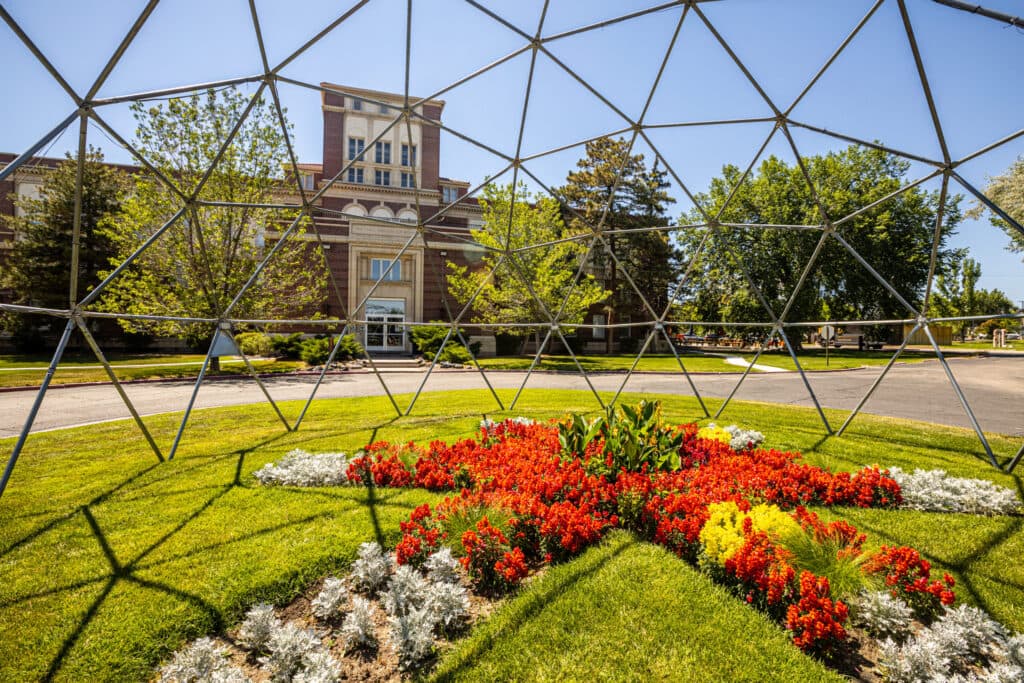

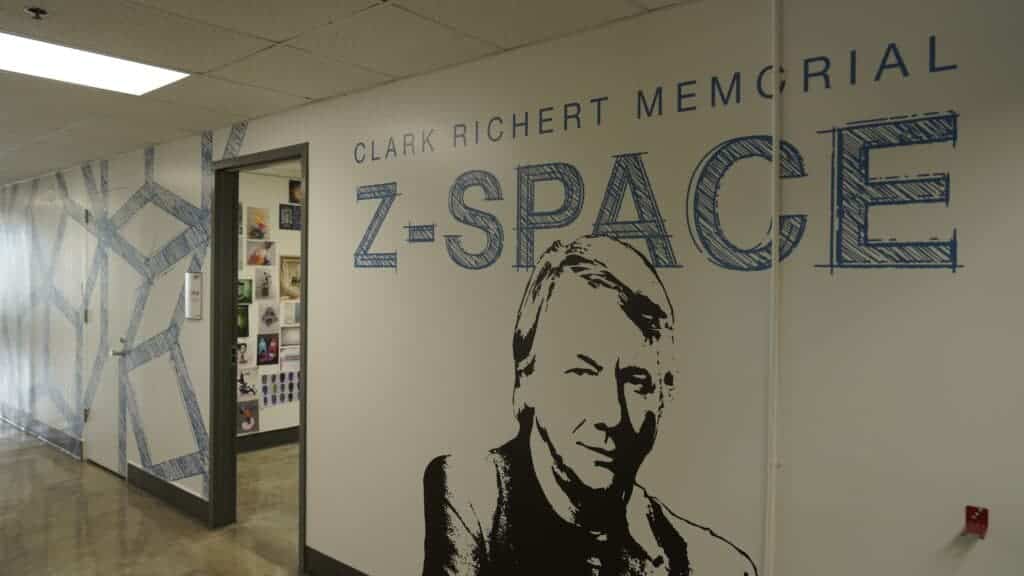
In honor of his contributions to the arts, Richert’s name lives on at the RMCAD campus as part of the fabrication lab, or FabLab. Z-Space and Nth Dimension are two RMCAD art labs named after two solo exhibitions of Richert’s. Each space houses art tools and equipment that are anything but industry standard!
Exploring RMCAD’s State-of-the-Art Facilities
Noah Phillips is an Assistant Professor at RMCAD and the college’s FabLab Coordinator. In Z-Space, he aids students in exploring new creative horizons by using innovative technology. Not attached to any specific class or curriculum, the goal of Z-Space is to encourage all students, regardless of program, to utilize high-tech machinery to advance their creative processes.

Phillips is proud to facilitate the space as students, faculty, staff, and even alumni come to Z-Space for their newest projects. As one of Colorado’s best art school facilities, the lab’s goal is to foster education and creative problem-solving. Phillips shared that he has worked tirelessly to ensure “it’s always a welcoming, accessible, and positive space where there’s someone in the lab to help make your project a success!”
Cutting-Edge Technology and Equipment
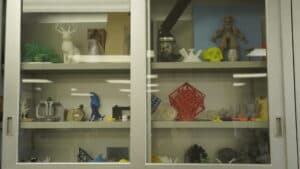
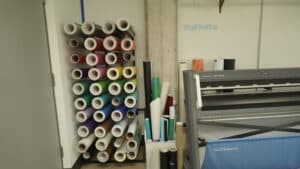
When you think of art supplies, high-pressure water lasers, a sticker maker, and a 3D ceramics printer likely aren’t the first things that come to mind. Between Nth Dimension and Z-Space, RMCAD’s creative spaces are full of cutting-edge technology that encourages artists and designers to push their work to the next level. While many artists prefer the old school methods of expression, Phillips wants them to understand how tech is a tool in their journey. The FabLab aims to get students to consider “how technology relates to their creativity,” shared Phillips.
Planning Your Studio Time Effectively
Phillips is keen to greet all visitors to the Z-Space himself, making sure they feel welcome and get the lay of the land. After which, the first questions he asks are “What are we working on?” and “What’s our deadline?” Many of the students who request his help are working towards an exhibition or class due date. Timelines are particularly important to Phillips because “one of the most important things that happens in Z-Space, I would say, is iterative design.” This is the process of building multiple versions of a project and fine-tuning flaws or failures. As you can imagine, this adds time to any project, but it’s a key part of the learning that the FabLab facilitates.
Learning through these multiple drafts motivates students towards the finish line while encouraging them to continue learning. Phillips says, “We’re not usually going to make the perfect project that first time,” so for passion projects and exhibition entries alike, practice and patience make perfect. The learning curve for many of these projects is particularly steep as students learn new technologies and techniques in the FabLab.
Hands-On Learning Through Workshops and Special Programs
Phillips found that the best way to encourage students to utilize these unique tools on campus is through the success stories of fellow artists. “However, I saw that some of my peers across the Front Range art scene seemed to have aversions to the idea of digital fabrication.”
Phillips took it upon himself to change the community’s mind. As such, he began inviting members of the local art scene to the RMCAD campus, saying, “I was interested in the challenge of convincing them that even if digital fabrication wasn’t useful for their practice, at the very least it could challenge them to expand what they’re doing.” With that challenge, the FabLab Resident Artist (FLxRA) program was born.

Utilizing Equipment and Software Training
The FLxRA program has included the talents of local artists such as Lucy Holtsnider, Ray Muñoz, and even RMCAD alumna and staff member Aura Hucks. Phillips invites these artists to the Z-Space and aids them as they learn about the space’s many pieces of hardware and corresponding software. With the help of Philips, these artists and designers work to not only build original pieces but ultimately expand their creative horizons.
Phillips works with these artists the same way he would a student, helping them achieve their creative goals. He shared that a big part of his job is not only saying yes to an idea, and helping the artist figure out how to accomplish it. “When artists come with a big idea, we may not be able to fully realize their vision. But we’ll get as close as we can, and we can continue to improve it, through iteration.” As creatives grapple with the limits of any medium, they learn how to ideate solutions in new ways.
Visiting Artists and Industry Professionals
After they have completed their artwork in the FabLab, the resident artist then hosts an artist talk. During their talk, the artist shares their artwork and the process of making it with RMCAD community members. The goal of these talks is not only to provide local creatives with the space to showcase their creativity, but also to encourage students to learn from the speaker’s creative problem-solving approaches. Seeing firsthand how industry professionals overcome artistic issues helps students connect similar dots in their own creative practice.
As artists share their trials and tribulations surrounding a project and how they overcame certain creative hurdles, it inspires students to do the same. Phillips credits these artists with motivating these students to push forward towards new horizons in ways that he can’t do by himself. He shared that “showing students working artists that are crossing that bridge and using new tech, invites them across the bridge as well!”
Tips for Maximizing RMCAD’s Art Resources
Phillips makes clear that “digital fabrication is an expanding field,” so the tips that may serve artists today may not be true 50 years from now. However, he believes that the core principles of art always have and always will remain the same, regardless of the technology used. Phillips shared a few key principles that help students not only stay on track when completing a difficult project but also get the most out of the learning experience.
Safety First
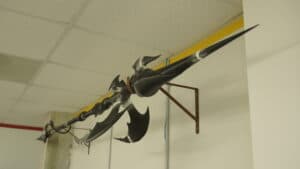
As you can imagine, being surrounded by machinery comes with a degree of danger, but nothing that proper training and caution can’t protect against. Phillips said the Z-Space is “safer than spaces like wood shops,” however, that’s no excuse not to stay attentive. Particularly as multiple students are finishing different projects, it is just as important to have respect and etiquette in the FabLab as you would in any of the other RMCAD studio spaces. Safety is always the number one concern for Phillips, and he ensures each and every student knows the potential risks and how they can be mitigated.
Consider the Production Process
One of the most important things to be mindful of when making the most of art school resources is to consider the whole production process. Many large-scale projects cannot be accomplished with only one machine or technique, so Phillips encourages anyone using creative spaces like Z-Space and Nth Dimension to think of the process in three stages. First, there is pre-production. This is the phase concerned primarily with digital files, and when Phillips is the most involved in helping them build the foundation of their project. Next comes production. This is when artists are actively using tools like 3D printers. Finally, post-production often includes sanding, polishing, painting, and fine-tuning the final product until it’s ready for a student’s class, exhibition, or just personal collection.
Avoiding the Word Failure
As part of his iterative design philosophy, Phillips believes that it’s normal for projects to fall short of the creator’s intentions, but they are still a far cry from failure. He reminds all of the students who come to the Fablab that one of the best ways to learn is through trial and error.
Phillips shared that the process of finding the right mindset is a “really valuable lesson, especially for developing artists. It’s important that they never feel like their project is a failure. Instead, it’s always a learning opportunity.” That is why student access to professional tools is so important for all programs, it promotes repetition and problem-solving.
For educators like Phillips, hands-on learning in art school is the most important way that developing artists can further their creative journey. He shared that the most important part is to always “engage in their idea, no matter what stage it’s at. Whether it’s that first, strange idea, wondering is this even possible? All the way to those last technical steps.” In that way, Noah Phillips is the most valuable resource in the Z-Space. He ensures that Clark Richert’s legacy lives on through the students, looking to find all unexplored permutations of reality to reflect in their work.
Discover More In A Fine Arts Degree Program
For students who want to get the most out of their hands-on learning experience, check out Rocky Mountain College of Art + Design, our Bachelor of Fine Arts degree program. Students will learn about painting, sculpting, printmaking, and using the FabLab’s many exciting equipment and tools.
RMCAD also offers year-round classes in both online and in-person formats, so you can choose the learning experience that works best for you. Request information to learn more about our fine arts degree program today, or take the next step in your artistic journey by completing our online application for admission.