The discussion surrounding painting vs. printmaking has shaped the landscape of art. While these two disciplines are commonly taught in art school separately in studio art programs and academic settings, the contemporary artist will likely tell you that their best work emerges when they incorporate both.
Understanding how these two seemingly individual yet interconnected practices clash or coalesce is essential for any contemporary artist seeking to broaden their artistic toolkit and develop their own unique voice while pursuing a studio art degree.
Start With the Core Difference
To grasp the potential of a hybrid practice, one must examine the core differences between painting and printmaking.
Painting as Direct Image Making Through Surface, Color and Gesture
At its fundamental level, painting is the act of direct image-making using surface, color and gesture. It involves the physical application of pigment — typically fine art materials such as oil, acrylic or watercolor — to a surface. The artist layers applications of color and manipulates them in real time, creating a responsive relationship between the hand and surface. There is a gestural quality that is the hallmark of painting. It’s as if the canvas records a physical moment in the creative process of the artist.
Printmaking as Process-Based Image-Making Through Transfer and Repetition
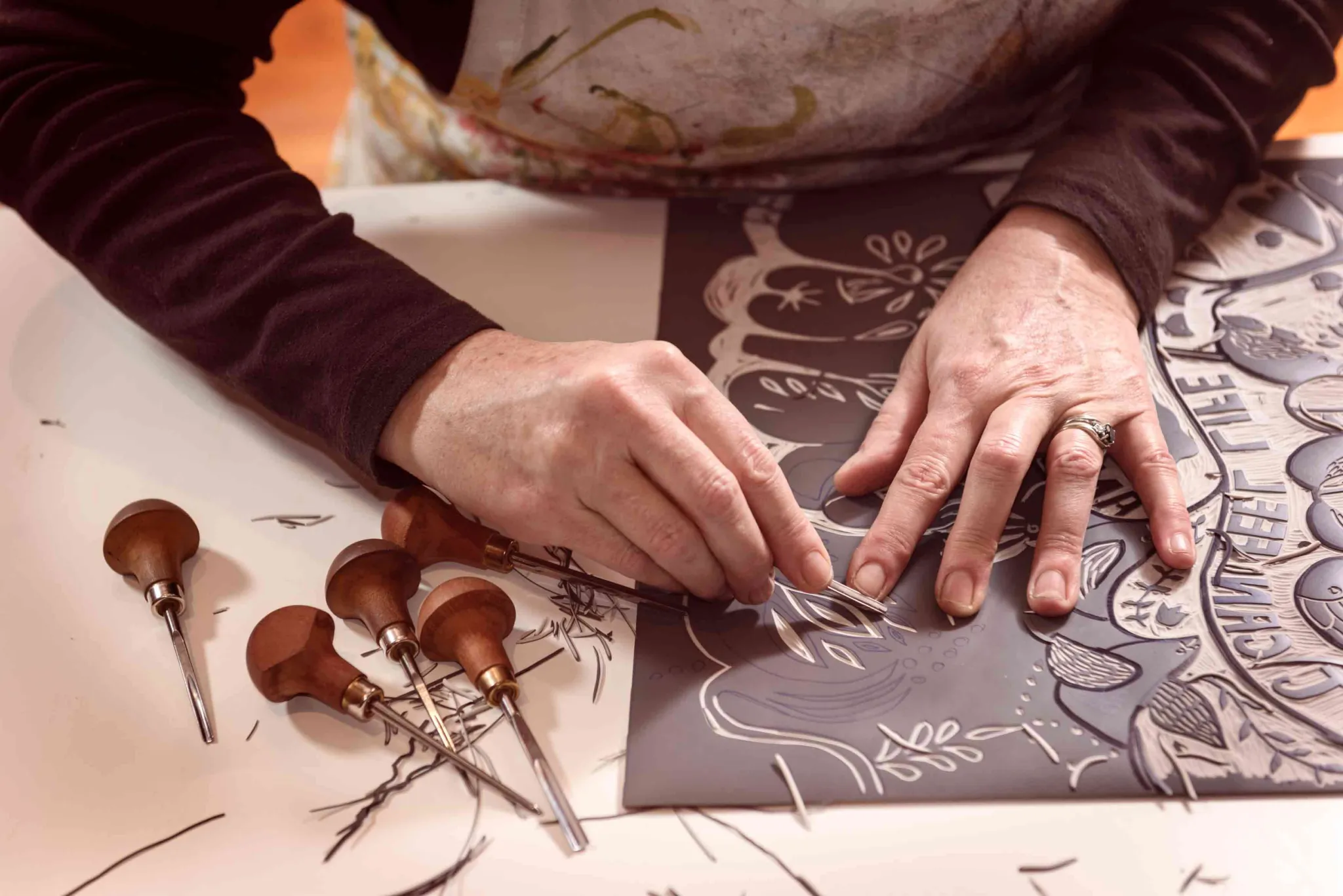
Contemporary printmaking entails the use of transfer and repetition to create an image. Rather than applying pigment directly to a surface, the artist creates a matrix using tools such as a woodblock, metal plate or screen to transfer an image onto it. The art of printmaking, by definition, requires sequence, structural thinking and technical preparation. The artist must plan for image reversals and the medium’s limitations.
Where Painting and Printmaking Overlap
While these two disciplines are different process-based art approaches, they are linked by the fundamentals of art taught in painting classes.
Shared Foundations in Composition, Value, Texture and Visual Rhythm
Both practices rely on the painting fundamentals of visual arts: composition, value, texture and visual rhythm. Both the painter and the printmaker must have a deep understanding of how to organize visual elements within a frame. They must be able to create depth and contrast using light and dark color values. Painters use heavy impasto or glazing to build texture, while printmakers rely on etched lines, aquatint and the grain of a woodblock to achieve that effect. They both strive to create visual rhythm and balance.
How Both Practices Build Stronger Observation and Decision-Making Skills
Both disciplines develop strong observation and decision-making skills. The painter must constantly reassess their work as it evolves, making split-second decisions about color mixing and mark-making. The printmaking techniques (such as intaglio printmaking) require complex decisions about sequencing. They must determine which layer to print first and how to register multiple plates before they even start. These practices call for an artist to think critically from concept to finished product.
How Surface Changes the Creative Process
The choice of painting surfaces directs the trajectory of the creative process in both methodologies.
Canvas, Paper, Panel, Plate, Block and Screen as Creative Starting Points
For both practices, the surface dictates the possibilities of the work. A painter’s canvas offers a textured ground that holds each brushstroke. A printmaker’s choice of surface — like a copper plate or woodblock — influences the resulting aesthetic. In addition, they must choose a print surface such as paper, panel or fabric that changes how the applied ink or paint sits. That decision alters the mood, light absorption and tactile presence of the final image.
Why Material Choice Shapes Mark, Mood and Meaning
Material choice is an active participant in shaping the meaning of artwork. The rigidity of a woodblock yields a different quality of line compared to the fluid movement of a brush. A printmaker must understand how the different materials at their disposal will align with the mood of the subject matter. This process often requires mechanical precision that stands in stark contrast to a painter’s organic brushwork.
Repetition, Variation and the Power of the Multiple
Artists can find deeper narrative potential through repetition and variation in art.
What Printmaking Teaches About Editions, Layers and Iteration
Printmaking teaches the value of the multiple and the power of iteration in a way that differs from what a painter experiences. Printmakers learn to refine their image through repeated attempts, understanding that a simple process can produce an infinite number of outcomes. Variations of ink density, paper choice and overprinting create new iterations of the same basic concept. Layering is fundamental for all artists, but for printmakers, it takes on a different meaning.
How Painters Can Use Repetition to Test Ideas and Build Series
Painters can learn from the printmaker’s mindset of repetition in art. They might create a series of paintings that explore the same core motif, testing different color palettes or textures with each new piece. Additionally, painters can benefit from the same systemic creative experimentation as printmaking, allowing them to move away from the fear of ruining a ‘perfect’ painting and instead treat their body of work as an evolving process.
Experimentation Across Media
The fusion of diverse materials creates a more complex piece of work.
Combining Paint, Ink, Collage, Transfers and Found Materials
The contemporary art studio is becoming a site of hybrid practice. A professional artist with a fine arts degree may combine painting and printmaking by adding image transfers, collage and stenciling to their traditional painting practices. A painter might create and print a complex, textured pattern, collage it into their work and then paint over it to create a new texture. Blending these two methods allows for complexity that is difficult to achieve with a single medium.
Using Monotypes, Relief Prints and Mixed Media to Expand Studio Possibilities
Monotype printing, producing a single unique print, can be an ideal bridge between the modern and traditional art worlds. Monotype printmaking enables the kind of spontaneity seen in traditional painting while utilizing the transfer process of printmaking. By combining relief printmaking with mixed-media art, artists can move beyond the boundaries of a single discipline and, in turn, open new avenues of discovery in their work.
How Process Shapes Artistic Voice
The student working toward a Bachelor of Fine Arts (BFA) in Painting degree can develop a unique voice by making deliberate choices in areas like collage and printmaking as part of their creative art process.
Spontaneity and Revision in Painting
Painting thrives on spontaneity, and revision is immediate. You can scrape off paint or layer over it in minutes. This speed allows the intuitive artist to benefit from the energy of the moment.
Planning, Sequencing and Surprise in Printmaking
Printmaking requires a slower, more deliberate process. Often, the artist only sees the outcome after lifting the press. If painting is a discipline built around spontaneity, printmaking is one of anticipation. The forced delay in the printmaking process may lead to unexpected results. That in itself can be a powerful tool for artistic growth and discovery.
How Students Can Learn From Both Practices
Honing both the spontaneity of painting and the methodical effort of printmaking fosters versatility.
Building Technical Range Through Studio Assignments and Critique
Students working toward a BFA degree can engage in both painting and printmaking to draw upon the best of both and establish a wider technical range. Assignments that require the use of both processes encourage students to think as much about how they do something as about what they want to do. Critiques that analyze the success of an image based on the process, not just the final appearance, will help students better understand their creative choices and build on them.
Developing a Portfolio That Shows Process, Risk and Growth
Successful art portfolio development requires that an artist with a printmaking degree or a visual arts degree is willing to take risks. Showing both the successful finished works along with the process of exploration that created them allows art degree students to demonstrate a more sophisticated understanding of their medium. This is something employers and graduate programs look for when evaluating artists: someone able to merge different skill sets into a cohesive mixed-media studio practice.
Case Studies: Global Perspectives
Examining how global artists use both painting and printmaking demonstrates how the hybrid approach can be a powerful tool.
United States: Mixed Media Artists Combining Painted Surfaces and Printed Layers
In the U.S., it is common for practitioners of contemporary mixed media art to challenge the boundaries of their art by incorporating photographic printmaking in studio practice. Using alternative media alongside traditional painting techniques, they create layered artwork that reflects the complexity of modern visual culture.
Creating compositions of irregular shapes and lines, Suzanne Caporael is a painter and printmaker who frequently merges the two art forms in her work. Lesley Dill is also known for combining text, print and the human form, integrating words and phrases with figural imagery.
Japan: Print Traditions Influencing Contemporary Painting and Graphic Work
Japan’s rich history of ukiyo-e printmaking continues to influence contemporary Japanese art. Painters leverage graphic sensibilities, flattened perspectives and deliberate layering techniques developed in traditional woodblock printing to create stylized contemporary work. Toko Shinoda integrated the precision of traditional calligraphy with modern abstract painting — combining process-oriented printmaking with gestural brush marks.
Mexico: Printmaking and Painting Used for Social and Cultural Storytelling
In Mexico, the legacy of the Taller de Gráfica Popular and the muralist movement exemplifies how printmaking and painting can serve as tools for social and cultural storytelling. Rufino Tamayo, a pioneer in printmaking, incorporated thick impasto with other textures directly on his prints, bridging the gap between two-dimensional graphic art and three-dimensional sculpture.
United Kingdom: Studio Programs Blending Fine Art Practice and Critical Research
In the United Kingdom, many contemporary artists emphasize the use of diverse technical skills. Programs throughout the UK often encourage artists to move between the physical demands of painting and the mechanical, process-oriented nature of printmaking. Artist Bonnie and Clyde (Steph Burnley) creates urban-imaginary works that blend photography, collage and painting into limited-edition screenprints, layering these techniques on various substrates.
South Africa: Contemporary Artists Using Repetition, Pattern and Material History
In South Africa, contemporary artists tend to utilize repetition and pattern to explore the history of colonialism and land. Incorporating both paint and print, they create works deeply rooted in local tradition.
Anna van der Ploeg is an interdisciplinary artist who works primarily in paint, print and wood. Providing a structural counterpoint to the fluidity of her painted surfaces, her process is labor-intensive and often uses the physical weight of materials such as wood to create friction in her work.
Choosing a Path or Combining Both
Ultimately, the choice to embrace the hybrid approach or stick with a more traditional practice is a personal one.
When to Focus on Painting, Printmaking or a Hybrid Studio Practice
Deciding whether to specialize or combine techniques depends on the conceptual goals. Painting may be the primary focus for the student who loves the physicality of gesture painting. For those whose interest lies more in structural or iterative pieces, printmaking might be the best option. A hybrid practice is something that evolves naturally for some artists — those who find that neither medium on its own offers means to express their ideas.
How Both Disciplines Support Contemporary Visual Culture and Art Careers
In a world full of digital imagery, painting and printmaking represent a more tactile approach to art. Developing proficiency in both fields establishes a comprehensive skill set for careers in gallery management, arts education, digital fabrication, exhibition design and professional studio practice.
Earn Your Studio Art Degree at RMCAD
When it comes to printmaking vs. painting, there is a clear intersection between these two approaches to creativity. With that understanding, graduates of a Bachelor of Fine Arts degree gain hands-on practice that equips them to lead the ongoing evolution of the visual arts. If you are ready to get started working toward a degree in art, contact Rocky Mountain College of Art + Design today for more information.
FAQs: Painting vs. Printmaking: How These Studio Practices Work Together
Q1: What is the main difference between painting and printmaking?
Painting usually involves applying color and material directly to a surface, whereas printmaking uses a transfer process from a plate, block, screen or other matrix to create an image.
Q2: How do painting and printmaking work together?
They work together through shared concerns like composition, texture, layering, color and image-making. Artists frequently combine painted surfaces with printed marks or use print processes to explore repetition and variation.
Q3: Is printmaking only about making copies?
No. Printmaking can create editions, but it is also a highly experimental practice that allows artists to test layers, surfaces, textures and image variations.
Q4: Can painters benefit from learning printmaking?
Yes. Printmaking can help painters think more intentionally about sequencing, negative space, repetition, layering and how one image can develop across multiple versions.
Q5: Can printmakers benefit from learning painting?
Yes. Painting can help printmakers strengthen color decisions, gesture, surface treatment and direct mark-making before or after the print process.
Q6: What is a monotype?
A monotype is a one-of-a-kind print made by applying ink or paint to a smooth surface and transferring it to paper. It often blends painterly expression with printmaking technique.
Q7: Is a hybrid painting and printmaking practice useful for contemporary artists?
Yes. Many contemporary artists combine painting, printmaking, collage, digital tools and installation methods to create layered work that reflects modern visual culture.