Art is all about creation and creativity, but teaching creativity in schools can prove challenging in the absence of play. Play and art are closely interconnected — with art being born from play and play born from the practice of making art. Many philosophers consider both art and play as expressions and celebrations of possessing more energy than is technically necessary for basic survival.
Why Play Matters in the Art Classroom
According to play expert and futurist Yeşim Kunter, play contributes to several positive changes in the brain that make space for creative and innovative thinking. Playful thinking activates a variety of cognitive processes — such as experiencing, observing, researching, internalizing, analyzing and discovering — and teachers can successfully leverage play-based learning in art classrooms.
Fun art lesson plans that support play help remove barriers to production and encourage creativity. When teachers use different art games for the classroom, they encourage numerous forms of play (objective, symbolic, active, social and rule-based play) that support well-rounded development in all ages of students.
Supporting Cognitive and Creative Development
Play is integral to development in growing children, particularly for young children whose brains are developing rapidly. Research has demonstrated that play strengthens the brain’s structure and function. It promotes cognitive development and improves children’s ability to think, understand, communicate, interact, remember and imagine.
Creating safe conditions for exploration, experimentation and self-expression, play can stimulate creativity. Creating art through play enables children to solve problems, come up with new ideas and use their imaginations without expectations or limiting constraints. In this way, play helps fuel and enhance a child’s experience with hands-on art projects.
Reducing Fear of Failure and Encouraging Risk-Taking
As Bob Ross, the host of The Joy of Painting, famously said about the artistic process, “We don’t make mistakes; we just have happy accidents.”
When the purpose of art becomes play, the “right” creations, results and techniques do not exist because the purpose of creating becomes having fun, experimenting and learning. This lowers the stakes of every decision that a student makes while creating art. They don’t have to worry so much about color choice, brush size, materials or perspective. Rather, they can simply play with new materials, try out techniques and enjoy what they discover in the process.
Boosting Student Engagement and Joy
Whether exploring materials, working on collaborative art activities or making a game out of art creation, playful learning in the classroom supports art education creativity, increases art classroom engagement and fosters student joy.
Strategies for Integrating Play in Art Education
Using fun, play-inspired art classroom activities, play can be incorporated into a variety of overarching, basic art teaching methods like:
- Choice-based art education (CBAE)
- Teaching for artistic behavior (TAB)
- Project-based learning
- Inquiry-based learning
- STEAM (science, technology, engineering, art and mathematics) education
Other strategies include:
Open-Ended Prompts and Materials
Open-ended prompts help spark creativity through self-directed exploration and play. These kinds of activities offer a wide array of materials to choose from, and the prompts can focus on materials or techniques, interpretation, storytelling and general art exploration. Here are examples of open-ended prompts:
- Experiment with different colors, textures, materials or tools. Observe how the process and results differ.
- Use lines or brushstrokes to create movement or depth.
- Pick an object to draw with a single, uninterrupted line.
- Express your current mood.
- Create an ideal world.
- Explore a specific idea (love, power, money, fun, etc.) through a single medium.
- Use imagery, color and symbolism to tell a story or convey a message.
Collaborative Games and Group Challenges
Art can provide a space for collaborative work, competition and social play. Students can work together to create a large mural or sculpture, each designing their own part. Other challenges include playing games (like “guess the drawing”) or blind drawing, working in teams where one student must draw something the other describes.
Process Over Product Approach
The process-over-product approach to making and teaching art focuses on the experience of creating, as opposed to the end result. This removes any stress or pressure about what the final product will be because it instead emphasizes the process of making the art and using the media. These kinds of lessons are an excellent way to encourage students to explore and experiment while:
- Introducing new techniques or tools
- Using different surfaces and substrates
- Playing with color theory
Playful Practices at Different Age Levels
While some playful art activities are fun and engaging, transcending all age groups, teachers tend to find the greatest success in teaching art through play when they adapt lessons and creative learning techniques to the age and developmental stage of their students.
Early Childhood and Elementary Students
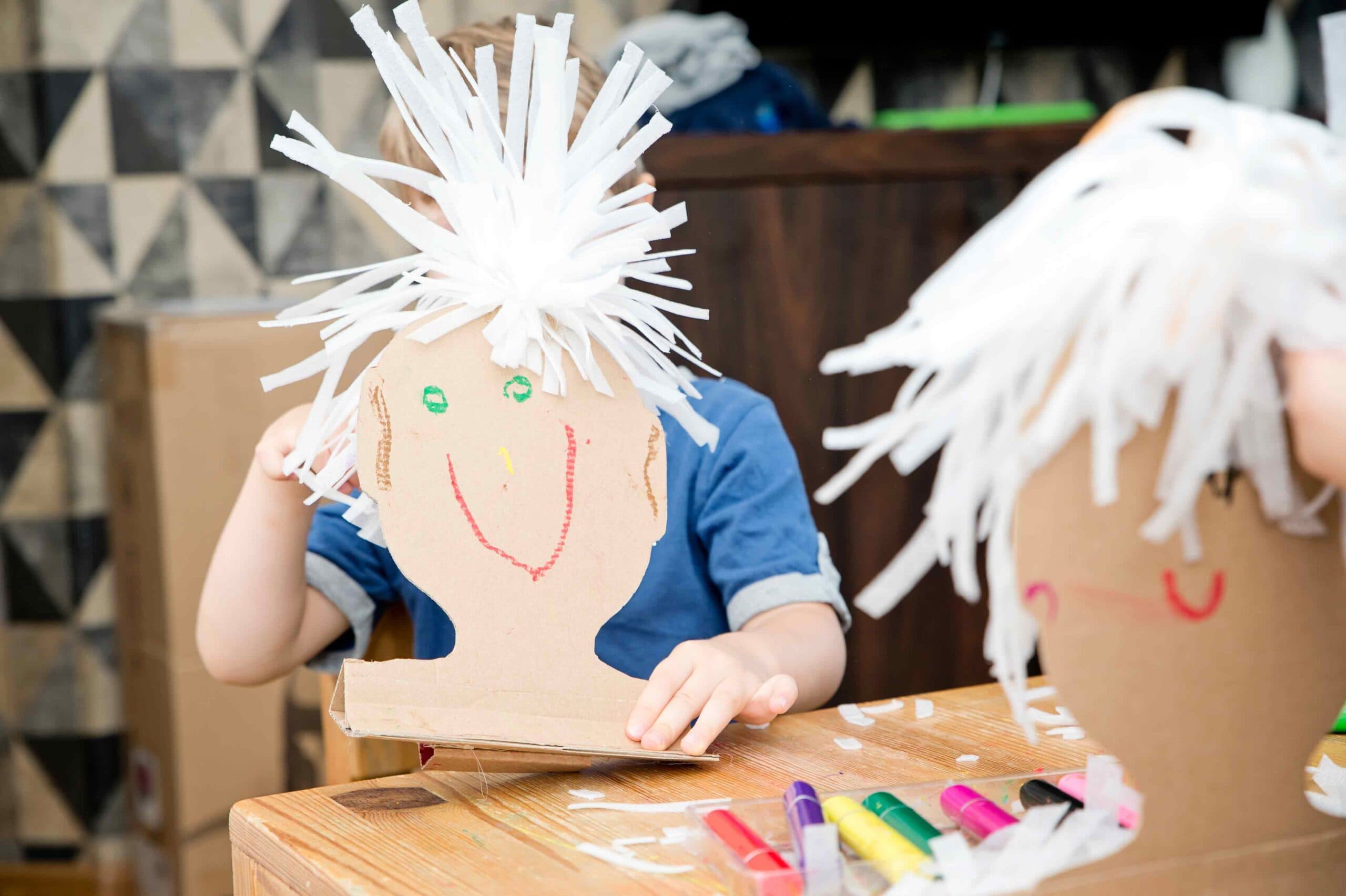
For younger art students, artistic play can present an optimal avenue for exploring and learning about the world. It serves as a safe space for children to develop their senses and motor skills while learning about color, shapes, tools, processes and different media. In early childhood, paint can be paired with toys like marbles or small cars to further infuse play into the experience of making art.
Middle and High School Students
As students develop and learn, they become ready to learn more about art and design principles. However, teaching them in a way that encourages play makes lessons on color theory, perspective, negative space, light and shadow or composition considerably more engaging. Additionally, older children can even be involved in more community-oriented art projects where they adopt a wall to decorate or make signs for their school’s spirit week.
Higher Ed and Adult Learners
Play is typically associated with children, but we are never too old to have fun. Inside the art classroom is the perfect place for adults to feel free to play through art exploration and self-expression. Interactive art lessons can be especially beneficial for engaging adult students. For example, students can learn about art history while playing with the techniques and materials used by famous artists of the past.
Case Studies and Examples
Art and play are so intertwined that even art museums have been striving for decades to incorporate interactive art exhibits designed to allow people to participate in art-play instead of merely spectate.
Successful Play-Based Art Projects
Educators may find success with various approaches to incorporating play into learning and art projects, such as:
- Collaborative projects designed for groups
- Open-ended prompts
- Making use of non-traditional art tools and materials
- Projects that focus on the process rather than the end product
These types of play-based art activities help remove barriers (like wanting the artwork to be perfect or struggling to make choices), allowing students to simply play with the materials, explore different tools and discover what is possible.
Educators Using Play to Inspire Creativity
According to George Szekely, founder of the International Association of Play and Art and expert on teaching art through play, “Art is not lecture. Planning an art class is not planning for a lecture. It is planning for a magical experience. It’s planning for an art room that will inspire children.”
Szekely’s website features not only samples of his own work but that of his students — demonstrating the creative wonders that can emerge when students are free to explore and play with art in the form of fashion design, tool design, media experimentation, storytelling and toy creation.
Cross-Disciplinary Integration
Arts integration can successfully complement lessons in other subjects and increase engagement through the natural play-like experience of making art.
For example, JoAnne Knight, an arts and culture coordinator for Kodiak Public Schools in Alaska, has her students create art tableaus using physical art materials or even interpretive dance. Through art integration, they demonstrate scientific understanding of biological or chemical processes, such as caterpillar metamorphosis and bread-baking.
Tips for Art Educators
When educators think about combining art and play, they might envision chaotic scenarios of classrooms covered in splattered paint or students lacking focus. To create the best possible experience for your students, you should provide guidelines, goals and instructions for your activities within a set of clear classroom rules.
Creating a Safe and Playful Environment
Ensuring that your students are using safe, age-appropriate materials and tools is crucial. A playful environment where students are free to explore is also a safe environment where they are not at risk of getting hurt.
Balancing Structure and Freedom
Sometimes, too much open-endedness can be overwhelming and block the flow of creativity. Thus, teachers should strive to strike a balance between providing guidelines and instructions for activities while still leaving room for play and experimentation.
For example, you might provide a subject but leave the choice of media up to your students — or vice versa. Be sure to explain what students should be thinking about or noticing throughout the process so that they understand what the activity is supposed to help them learn, observe or discover.
Reflecting on Play as Part of the Process
As professionals trying to meet curriculum standards within the limited time and resources of a given school year, it can be easy to forget that art is supposed to be fun. Teachers can remind themselves how to play with art by reflecting on the ways in which play helps inspire art as well as talking with students about using play to boost their own creativity.
Choosing Play as Your Profession: Study Art Education at Rocky Mountain College of Art + Design
If you are passionate about creativity in the spirit of play, you may have considered becoming an art educator. At Rocky Mountain College of Art + Design, we offer an in-person and online Bachelor of Fine Arts in Art Education. These degree programs are designed to teach artists how to share their passion with students through learning tried-and-true art education methods in addition to developing their own approaches to art instruction.
To learn more about earning your degree to prepare for a career in art education, request more information today.