Technology pushes creative expression into new territory. The digital world has democratized art, bringing both exposure and instruction to people from all around the world.
With digital opportunities come caveats. For one, artists need to develop even more skills and need to keep their work feeling emotionally authentic. The classic studio makes this possible; it’s a vibrant space that encourages risk-taking and provides a stark reminder of the most human aspects of expression. Sketching, painting, calligraphy and monotype printing all still matter. These living practices keep today’s artists feeling both grounded and inspired.
Why Traditional Studio Art Still Has Power Today
Humans have expressed themselves through visual art for tens of thousands of years, which begs the question: with this in mind, what exactly qualifies as “traditional”? Our concept of tradition changes over time but tends to describe long-established art forms. Traditional studio art is generally taught in Bachelor of Fine Arts painting classes or other formal settings, where students receive guidance as they work directly with diverse tools and materials.
Contemporary art, by contrast, refers to art produced in the present day, often characterized by a focus on conceptual ideas, experimentation, and the use of unconventional or emerging mediums—such as digital media and immersive installations—that push the boundaries of traditional creative expression. These contemporary opportunities expand beyond the studio to challenge our perceptions, but ideally, they do not replace traditional studio art entirely. Even among aspiring digital artists, classical materials and techniques still hold great value.
What Hands-On Making Offers That Screens Cannot Fully Replace
Artistic screens have come a long way. Today’s creative programs capture intricate brushstrokes and showcase beautiful blending. They serve as a powerful complement to traditional art but cannot supplant it completely; even 2D drawing and paintings offer spatial and sensory qualities that the most advanced devices still lack. The drip of the paint or smudge of the graphite adds a hint of unpredictability.
Why Traditional Skills Still Shape Contemporary Creative Practice
While the tools of artistic creation continue to evolve, the foundational principles of visual communication—such as composition, color theory, value, and perspective—remain constant. These concepts provide the structural framework that gives art its meaning, whether that work is realized in a physical studio or a digital workspace.
Traditional, material-based practices act as an essential gateway to mastering these fundamentals because they ground the artist in the physical logic of the world. When you paint on canvas or sculpt with clay, you are forced to contend with the immediate, “inescapable” physics of how light hits a surface, how form occupies space, and how materials react to gravity and pressure.
Through this direct, hands-on observation, you internalize these principles in a way that theoretical study alone cannot achieve. This deep, tactile understanding becomes a form of “muscle memory” for the eye and mind. Once these core principles are internalized, they transfer seamlessly to digital mediums. Rather than being hampered by software or technical constraints, the artist who has mastered traditional fundamentals can focus on creative intent, using digital tools to amplify their vision with the same sophistication, depth, and spatial awareness that defined the masters of the past.
The Lasting Value of Studio Foundations
There’s something enchanting about the art studio. It remains a valuable environment when pursuing a painting degree. Art critic Michael Glover explains that the studio “shapes everything that an artist is and does”,(Glover, 2022) adding that the environment itself can be “a work of art, even an act of self-portraiture” (Glover, 2022). The Bachelor of Fine Arts (BFA) introduces this unique space, showcasing the possibilities for expression while also helping students refine their craft, one step at a time.
Observation, Material Awareness and Visual Decision-Making
Placing inspiration and materials physically in front of aspiring artists, studios encourage direct observation and interaction. Tangible exploration is key to moving from abstract ideas to concrete visual creations. In this space, students are free to experiment, observing firsthand how materials or equipment interact with ideas — often leading to real works that surpass anything the burgeoning artist could have imagined.
How Process Builds Patience and Problem-Solving
Process reveals the inherent value in the act of creating as opposed to the final product. Each artistic sequence delivers one of the most crucial creative skills: patience. Fine art students quickly realize that their most intriguing ideas often take days or even weeks to bring to life. Setbacks ultimately become part of the core studio workflow, even inspiring new ideas or solutions to perceived problems.
Traditional 2D Media Still Opens Creative Possibilities
Creative possibilities abound within the digital world, but there’s still an important place for traditional two-dimensional creations. In drawing and painting, each mark brings a sense of finality that demands intention above and beyond what exists in digital media. After all, digital tools provide the chance to immediately erase or refine what’s been created. Meanwhile, traditional media forces creativity through constraints.
Painting, Printmaking and Mark-Making as Physical Experience
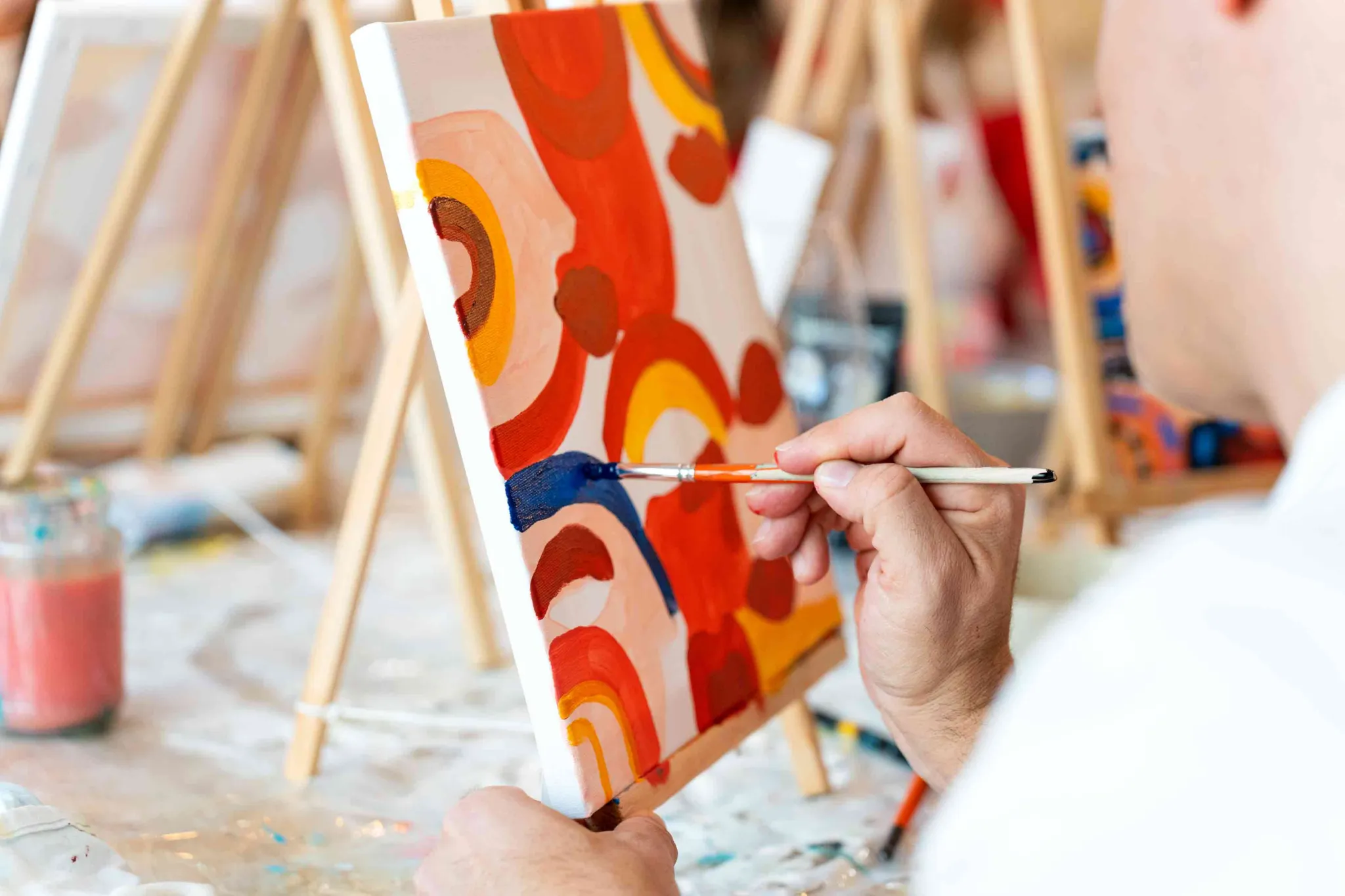
The sheer physicality of traditional media creates a uniquely immersive form of engagement that digital alternatives do not yet fully capture. Physically holding and manipulating tools or materials can be a meditative act, as the tools and motions channel sensory focus to create grounded experiences that show up in the final product.
Relief Printmaking and Intaglio Contemporary Work
Printmaking techniques demonstrate the creative potential in transferring images onto other surfaces. Long before screen printing’s commercial opportunities came to light, artists used relief printing for bold storytelling. This removes negative space and applies ink to the remaining areas. Bold shapes and powerful contrast bring a contemporary feel to this long-held artistic tradition.
Intaglio printmaking etches or engraves images onto plates, where ink can settle into recessed lines. Contemporary artists such as Ian Chamberlain show the abstract or even architectural appeal of contemporary intaglio — using rich details to create intricate yet atmospheric imagery. Hybrid techniques like photographic printmaking further expand our concept of what it means to create prints.
How Traditional and Digital Tools Work Better Together
Traditional artwork need not feel like it boxes out digital exploration. Far from separate, these spheres complement each other while helping artists build both confidence and community.
Scanning, Layering and Reworking Handmade Surfaces Digitally
Hybrid creative processes begin with physical creation in the studio but then incorporate digital techniques. The transition from physical to digital typically involves scanning, with pieces then divided into layers and edited accordingly. Depending on their vision, artists may adjust for composition or texture. Some even add distinctly digital elements to digitized versions of physical pieces.
Using Digital Tools to Extend, Document and Distribute Studio Work
Works created in the studio can be shared through digital channels. This expands audiences well beyond what the average artist could otherwise reach. Digital tools support documentation, too, encouraging reflection through process photography or time-lapse videos, for example. Some artists use these practices to connect with audiences. This could be as simple as sharing behind-the-scenes footage from the studio on social media.
Materiality Still Matters in a Digital World
Materiality in art emphasizes physical properties, which determine how the work is perceived or experienced within real spaces. Contemporary artists argue that materiality still applies within virtual spaces; for instance, Tabita Rezaire speaks to the “racialized materiality of the internet” (Stahl, 2022)
Texture, Imperfection and Surface as Meaning
Visual texture is far more than a decorative choice; it is a primary vehicle for depth and narrative. In two-dimensional art, the physical surface serves as a tangible record of the creative process, offering the viewer an intimate look at the artist’s hand, the resistance of the medium, and the evolution of the work over time.
While advanced software can simulate the appearance of brushstrokes, digital tools often struggle to replicate the nuanced, unpredictable irregularities found in traditional media. There is a specific, inimitable energy held within the physical world—the way pigment drags across a textured canvas or the subtle, uneven accumulation of impasto.
This is where the concept of the “happy accident,” popularized by artists like Bob Ross, becomes vital. In a traditional setting, imperfections are not merely technical failures to be erased; they are unique occurrences that arise from the interaction between the artist’s intent and the physical medium’s autonomy. When an artist embraces these unintended shifts, they often discover new directions for the work that are far more compelling than their original plan. By valuing these imperfections, the artist transforms a controlled process into a collaborative act with the material, resulting in a depth of character that remains the hallmark of authentic, physical art-making.
Why Physical Prints and Objects Create Different Viewer Experiences
Regardless of whether they’re small or two-dimensional, physical prints establish immersive environments in which viewers feel transported to new worlds. Physical pieces exist in real space, after all, and they have an immediacy that sometimes feels a bit obscured by screens. With physical pieces, textures and colors are observed and experienced directly and not impacted by pixels. Even when subtle, tangible details encourage viewers to slow down and get lost in the moment.
Traditional 2D Studio Art in Professional Practice
The traditional studio can be an inspiring place for an art student, but its value extends to a variety of professional applications as well. Digital skills certainly hold value these days, yet the real showstopper is the artist who feels at home in both spaces and can blend these elements with ease.
How Artists Use Analog Methods in Illustration and Design
The value of physical art exists beyond traditional practices (such as painting or printmaking) to encompass forms of expression often viewed as commercial or primarily digital. In illustration and design, traditions play out in hand-rendered typography or sketch-oriented concept development. Traditional methods add a burst of personality and help keep illustrators or designers grounded in visual thinking — utilizing composition and proportion appropriately even when moving from sketchpad to screen.
Why Employers and Audiences Still Value Craft, Originality and Process-Based Art
In a digital era, audiences are still drawn to traditional works of art. If anything, the vast volume of digital media has prompted a clear craving for the charm of traditional expression. The very imperfections that cause some art students to worry can actually make art feel more real and compelling to the contemporary audience. The secret lies in knowing how to make an imperfection visually intriguing, intentionally building it into the story of the piece.
Teaching Traditional Studio Art in a Technology-Rich Era
Art education has evolved through the years alongside art itself. Currently, there is demand for visual arts degree programs that prioritize both tradition and novel techniques. Today’s BFA degree programs increasingly incorporate tech-forward expression. Additionally, art schools can introduce traditionally-focused students to digital portfolios while helping them build a presence on social media.
Why Students Benefit From Learning Both Analog and Digital Workflows
Like professionals in many industries, today’s artists are expected to build digital skills while maintaining the core competencies that have served them for years. This learning curve may seem intimidating at the outset, but in reality, digital and traditional practices support each other, inspiring growth across the spectrum of artistic expression.
Building Flexible Creative Skills for Evolving Art Careers
Contemporary artists continue to push the envelope, blending traditional and digital media in unexpected ways. Meanwhile, the spaces in which their work is presented evolve, too. Diverse, blended skills help artists make waves in emerging niches like interactive illustration and hybrid publishing. This unique mix of skills can also open doors in fashion concept art or experiential marketing.
Case Studies: Global Perspectives
Even as they explore exciting digital opportunities, passionate artists around the world are building traditional media into their processes. These examples demonstrate the enduring need for traditional techniques in a digital era:
United States: Artists Using Traditional Media for Contemporary Expression
U.S. artists may be at the forefront of digital trends, but they continue to find innovative ways to express compelling ideas through strictly visual techniques. Kara Walker’s thought-provoking cut paper silhouettes confront stereotypes head-on, while Derrick Adams draws inspiration from Cubism in contemporary painting and large-scale installations. Adams relies on “visual culture and visual language” to “hijack the conversation,” (Stillwell, 2026) emphasizing more toward “visual images of empowerment and self-reflection of the Black experience” (Stillwell, 2026).
Japan: Traditional Print and Contemporary Graphic Experimentation
Japan’s creative culture places a deep reverence for traditional techniques alongside a fascination with innovative artistic technologies. Traditional techniques such as calligraphy and woodblock printing exemplify the power of minimalism and restraint: Each brush stroke and carved line carries deep meaning. Still, there’s a place for contemporary experimentation, and with the right mix of traditional and modern elements, the results can be striking.
Shizuko Greenblatt re-imagines Japanese calligraphy through works that fuse tradition and innovation. Her display at the Japanese Friendship Garden & Museum uses contemporary abstraction to “explore the essence of female energy” (2026)while building a fresh perspective into the “elegant simplicity of Japanese aesthetics” (2026).
Mexico: Printmaking Traditions Shaping Contemporary Visual Culture
Mexico has a rich history of printmaking, with the country’s initial press established in 1539. Used through the centuries for political expression and cultural connection, printmaking remains evocative because it captures the current cultural zeitgeist.
Chicano printmaker and mixed media artist Kelvin Lopez draws inspiration from family members in Oaxaca, including his aunt, Mama-Mari. Through both traditional and innovative techniques, he explores his cultural background and invites viewers to do the same.
Why Traditional Studio Art Will Keep Evolving
Traditional studio art is undergoing an evolution as profound as new forms of expression are unleashed through digital media. Practices are reinterpreted within both classic studios and virtual environments. Mixed media and contemporary printmaking uncover the potential for innovation within long-held traditions.
How Artists Preserve Craft While Adapting to New Tools
It is increasingly common for the professional artist to view handcrafted tradition as a form of preservation, capable of maintaining techniques and cultural practices. Still, they recognize the value of digital tools, which offer their own form of preservation: an easier approach to documenting process and archiving work. Artists employ traditional studio processes to feel connected to the numerous inspiring figures who have come before them — plus digital tools to connect within today’s inspiring artistic community.
What Students Should Take Away From Both Worlds
Fine arts degree programs seek to broaden students’ horizons through diverse experiences, along with exposure to many different media forms and techniques. Increasingly, this breadth of artistic experience encompasses both digital and traditional media.
Both areas have much to offer. Traditional media builds patience and inspires creativity through constraints, while digital media promises the ultimate in experimentation. When both are explored in the studio, art students gain a deeper appreciation of what it means to create contemporary pieces and how they can combine multiple approaches to create distinct visual styles.
Embrace Tradition and Innovation: Study Fine Arts With RMCAD
Explore the traditional and tech-forward sides of creative expression. Both are key sources of inspiration at Rocky Mountain College of Art + Design (RMCAD). The Bachelor of Fine Arts Degree in Fine Arts program highlights the value of craft in contemporary art. Classes promote painting fundamentals but also encourage experimentation.
This art degree program offers well-rounded preparation for traditional art careers along with fields such as illustration and design. Get in touch today to discover how traditional and contemporary practices and ideas can transform creative expression.
FAQs: Why Traditional Studio Art Still Matters in the Digital Age
Q1: Why does traditional studio art still matter when so much art is digital?
In a digital era, traditional studio art remains relevant because it captures the deeply human side of artistic expression. It builds foundational skills in observation and process that are helpful across creative media.
Q2: Can traditional and digital methods work together in one practice?
Traditional and digital methods join forces to mix physical authenticity and cultural practices with virtual conveniences and expanded opportunities for connection. Many artists now create by hand but use technologies to refine or distribute their work. There is also substantial demand for hybrid and mixed media art that simultaneously showcases the best of traditional and digital practices.
Q3: What makes traditional printmaking still relevant today?
Traditional printmaking remains relevant in a digital era because it represents a uniquely deliberate, tactile-oriented approach to creation. Handcrafted processes carry a presence that digital or alternative media may not fully capture.
Q4: Is studio art a good fit for students interested in modern creative careers?
Studio art training can be highly relevant to the digital side of the creative economy. This builds visual thinking and brings fundamental artistic concepts to life. Students trained in the studio thrive in illustration, animation, branding and digital fabrication.
Q5: What do students gain from learning both analog and digital processes?
Students gain far-reaching creative fluency as they experiment with both analog and digital techniques. Physical practices boost material understanding and visual instincts, while digital tools encourage experimentation and abstract thinking.
Q6: Are handmade imperfections still valued in professional work?
Small imperfections make art feel distinctly human while adding visual interest. Irregularities create distinct textures that often prove more memorable or special than highly polished counterparts.
Q7: Which 2D traditional techniques are especially useful today?
Painting, relief printing, intaglio and monotype printmaking remain valuable amid digital opportunities because they add depth and texture while providing an appealing handcrafted quality. These are used in fine art and professional illustration, signaling originality.