If you work with three-dimensional (3D) art — be it traditional sculpture, throwing ceramics, plastic arts or other forms — you may be able to find work within more sculpture and ceramic art creative careers than you might expect. Your skills help you think through how objects are formed in space; you know chemistry to combine materials and make glazes, you’re skilled in testing materials and you have the ability to create something that stands up to life in the real world.
With these competencies, you can certainly support a studio art practice. However, you might also opt to work in public art, move into fabrication work or be a part of arts organization boards or staff of arts organizations. Read on to discover more about the potential of these paths, plus how you can deepen your practice through college studies.
Why 3D Makers Have More Career Paths Than They May Think
3D makers, categorized under “craft and fine artists” by the U.S. Bureau of Labor Statistics (BLS), possess a unique skill set. Being able to visualize an item in space is a real benefit to business and other types of commercial operations, and this artistic background can be leveraged across various types of roles and work environments.
How Sculpture, Ceramics and Object-Based Practice Build Transferable Creative Skills
A 3D maker has transferable creative skills. As one, you do more than create objects like mugs or toys. You learn how to take an idea from a sketch into a physical form, such as a textile sculpture or 3D-printed object. That process takes patience and years of study, along with a real understanding of how materials behave.
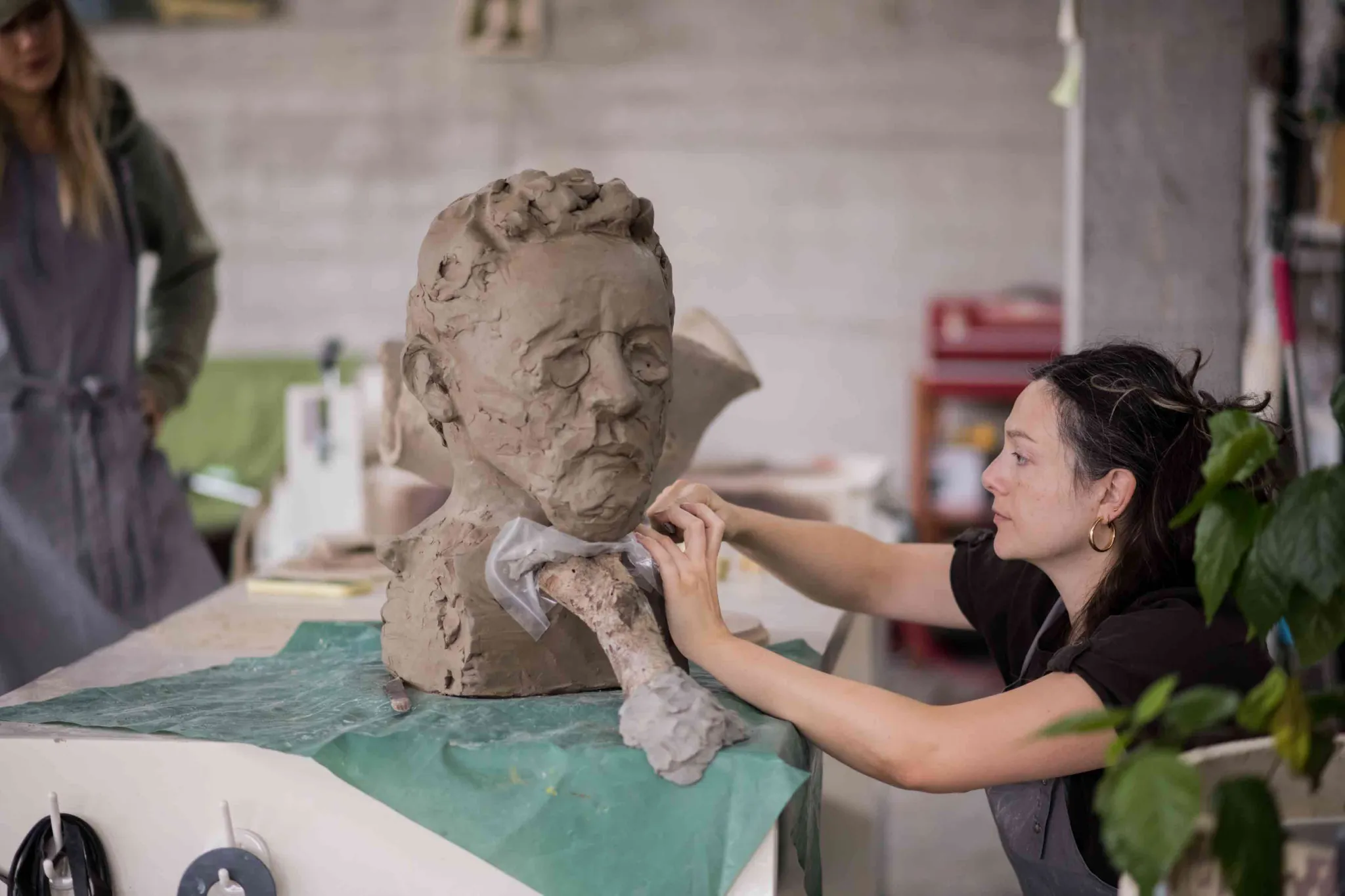
For example, a sculptor learns about armature building, and a ceramicist learns about heat, surfaces, glazing and how to time everything so it comes out of the kiln looking the way they expected. These skills in sculpture art are important for fine arts careers in prop making, for instance, or even in public art exhibitions.
Why Material Knowledge, Spatial Thinking and Craft Still Matter
Digital tools have changed the way that artists design and create items. 3D printers make it easy to make the actual sculpture, but a thorough understanding of the computer and what makes objects have proper balance and structure matters. Hands-on and material knowledge are key, including how materials work together and how they can form an object that exists in space. Spatial thinking shapes the way you experience art, too, whether you make miniature designs or installation art pieces. For those interested in working in contemporary art roles, getting to know 3D technology can be a great place to start.
Fine Art, Gallery and Studio Practice Careers
Artists have numerous skills that can be applied in different fields, but a career in fine art, gallery work or studio practice can be one that fills your cup and allows you to express yourself freely.
Building a Practice Through Exhibitions, Commissions and Collectors
A studio practice is built over time, typically beginning with student exhibitions or local shows. You’ll establish a portfolio of work, such as one in abstract sculpture. Then, collectors may come through shows or galleries to form a relationship with you. While some artists sell their pieces, others focus more on exhibitions (many of which offer monetary prizes). There are also artists who opt to sell by working on commission, which is common for those who like to make items for others and are pushed to create another person’s vision alongside their own. Sculpture commissions can range from hundreds to thousands of dollars — making them potentially lucrative.
Selling Work Through Galleries, Art Fairs, Online Shops and Studio Events
Gallery representation can help an artist reach collectors, but there are other ways to get your work out there, such as:
- Take it to art fairs.
- Set up an online shop.
- Hold a private studio event either for the public or exclusively for those interested in your work and who have purchased in the past (such as collectors).
Public Art, Installation and Site-Specific Work
If you love to see sculptures out in public, your installation could be next. Consider a role where you’re working with the community to bring art to everyone.
Creating Work for Civic Spaces, Campuses, Parks and Community Sites
Public art installations can be a path for those who want to make site-specific art, work designed for a particular location with an interrelationship to that place.
A career in public art lets artists work with city staff, fabricators, assistants, interns or selection panels (among others), as they collaborate to come up with an idea for a sculpture or other 3D item to mark a space. Clear communication proves integral to the work.
Managing Proposals, Budgets, Fabrication, Permits and Audience Safety
For public art, artists may need to submit proposals, budgets, timelines and maintenance or safety plans. Selection panels often want to know whether an artist can finish the work on time and on budget.
If you are preparing for public art opportunities, practice proposal writing before you need it. Learn how to explain materials in plain language as well as how to bill accurately.
Fabrication, Production and Creative Industry Roles
Getting creative in making usable props and other items can be invaluable for some 3D makers. Here are some ideas of how that could play into your career:
Working in Prop Shops, Fabrication Studios, Museums and Design Builds
Not all artists want to sell their personal artwork, and many don’t want to do so full-time, even if they do sometimes. A solid fit for those who still want to use their hands could be to work in prop shops or museum fabrication departments. Roles might range from working with the theater to putting together exhibitions.
Using Skills in Mold Making, Casting, Digital Fabrication and Surface Finishing
3D makers’ technical skills can often transfer directly to production settings and all kinds of industries, from medical device manufacturing to jewelry design. Such skills include:
- Mold making and sculpture welding
- Kiln work
- Surface finishing
- Digital modeling
With an understanding of finishes and how materials interact, you might consider digital fabrication. If you become someone who understands both clay and 3D printing ceramics, you’ll be able to work with traditional studio practice and newer production tools. A career in computer numerical control (CNC) fabrication could also be an option, making functional, sculptural items for everyday use.
Teaching, Community Arts and Arts Organizations
Those passionate about bringing art to others and watching them blossom can find their place in a teaching role.
Teaching in Schools, Workshops, Studios and Community Programs
Teaching is a common path for artists, but that doesn’t mean you have to do so in the traditional classroom. Some artists teach in schools after completing the required education and licensure. Others lead workshops or community classes, which may not require a license. You might opt to teach something like handbuilding ceramics or kiln safety in formal or informal settings and with one-on-one or multi-student setups.
Supporting Arts Nonprofits, Residency Programs, Galleries and Cultural Organizations
If you like being close to art but do not want every income stream tied to selling your own work, arts administration could be a suitable route. Even if you’re not making work in the studio, this presents an opportunity to coordinate arts programs and work with the community.
Residencies, Grants, and Graduate Study
When it comes to furthering your education, you might consider residencies, grants and graduate studies.
Using Residencies to Build Time, Space, Networks and New Bodies of Work
Art residencies give you both the time and space to create, and you’ll be able to meet other artists, too. Ideally, a residency should be in your preferred art form; for example, look for a ceramic residency if you do ceramics.
Preparing for Graduate School, Research and Advanced Studio Development
Not every artist goes on to graduate school, does research or works on advanced studio skills. However, it can be a wise choice for those who want to teach or research more deeply into their craft.
A Master of Fine Arts (MFA) is the first step toward this. It provides a place to work, the tools you need to do your work, plus professional guidance and educational support. If you are thinking of pursuing an advanced degree, look for grants for artists — which can help cover your schooling, travel, materials or even additional studio time.
Case Studies: Global Perspectives
Below is just a quick snapshot of how art careers show up around the world.
United States: Public Art Commissions and University Gallery Networks
In the U.S., many sculptors build careers through exhibitions and public commissions. University galleries can serve as another potential space to test out ideas or have your first real gallery showing. On the other hand, public art programs often ask artists to think about community and durability. A sculpture in a plaza has different responsibilities than a piece shown inside a gallery. Still, both can offer great opportunities to create and showcase art to the public.
Japan: Ceramic Traditions Connected to Contemporary Studio Practice
Japan offers an example of how centuries-old ceramic traditions continue even in today’s faster-paced world. For instance, Jōmon means “cord pattern,” referring to the surface patterns made with twisted cord. Traveling to Japan, understanding older traditions and delving into the differences between Eastern and Western design can help strengthen and inspire your own art — keeping you grounded and offering an opportunity to grow your practice from a solid base.
Mexico: Community-Based Sculpture, Craft and Public Art Projects
Mexico has a deep history of public art and community-based making, with sculpture and ceramics often connecting art to public life. Murals may be the most widely discussed examples in many Western art history conversations, but object-based practices also matter. These traditions reach back millennia. Among the Olmec, one of Mesoamerica’s earliest major cultures, potters at San Lorenzo produced sophisticated ceramic vessels from white clay, including globular containers known as tecomates. Such objects reflect how craft, technical skill, and communal life have long been intertwined in the region, offering a foundation that continues to inform community-based making in Mexico today.
United Kingdom: Fabrication Studios Supporting Theater, Museums and Design
The UK has a strong production culture around theater and museums. Fabrication studios support exhibitions, stage sets, props and immersive environments. Those who like building but don’t want to work alone all the time may appreciate the collaborative processes of the theater and props departments. In addition, the props or items designed could be used as part of a production (e.g., a musical or play), meaning they are not only showcased but also provide utilitarian value.
Australia: Regional Artist Residencies Supporting Installation and Land-Based Practice
Australia’s regional residency culture can be especially relevant for artists interested in land-, place- and installation-based work. Some residency opportunities invite artists to work in relation to ecology or local communities, which can be an exciting way to explore while also being creative. One such residency is “The Farm,” located in Western Australia.
How to Build a Career Plan as a 3D Maker
When pursuing any of the aforementioned career paths, it’s necessary to build a portfolio and career plan. Below is what to keep in mind, starting with building a body of work and choosing the right opportunities.
Developing a Portfolio That Shows Process, Scale and Finished Work
A strong 3D art portfolio should be professionally photographed and show your body of work from multiple angles. You may also want to include information such as the name of the piece, the size, a short blurb about the concept and where it is currently located. Some people include the potential price as well, though not all intend to sell their portfolio pieces.
This kind of portfolio development is especially important for students building a sculpture portfolio or ceramics portfolio.
Choosing Opportunities That Match Your Materials, Values and Long-Term Goals
When comparing opportunities, consider the required materials and the time involved. Additionally, think about what you want to be known for and exercise your discernment; not all opportunities are ideal for helping you grow.
Discover Where a Fine Arts Degree Could Take You
A career as a sculptor, ceramic artist or 3D maker can be a fulfilling and versatile one. Studio work is usually part of it, but as you learn more, you could also move into public art, fabrication, teaching or arts organization work.
Founded in 1963, Rocky Mountain College of Art + Design offers undergraduate programs on campus and online. RMCAD’s Bachelor of Fine Arts in Fine Arts gives students room to explore media such as sculpture and ceramics while building technical skill, creative thinking and a stronger sense of artistic direction.
If you are looking for an art school where you can study 3D work, RMCAD is proud to offer paths that support various goals. Consider a BFA degree, a sculpture degree, a ceramics degree or a broader art degree connected to your long-term creative goals. You can also read more about experimental approaches in fine arts, site-specific installations or how exhibitions shape the fine arts experience.
Ready to take the next step? Request more information today.
FAQs: Creative Careers for Sculptors, Ceramic Artists and 3D
Q1: What can sculptors and ceramic artists do besides sell gallery work?
Sculptors and ceramic artists can pursue public art, commissions, teaching, fabrication, museum work, community arts, residencies or arts administration. Gallery sales are one option, but they are not the only professional path.
Q2: Is sculpture or ceramics a practical career path?
It can be. Many artists build practical careers by combining studio sales with teaching, fabrication work or grants. The path usually takes planning and flexibility, and multiple income streams are often crucial.
Q3: What skills do 3D makers bring to creative industries?
3D makers often bring the value of spatial thinking and material knowledge. They may also have digital fabrication experience, project planning skills or a strong understanding of scale.
Q4: How can students prepare for public art opportunities?
Students can practice proposal writing and budgeting to prepare for opportunities in public art. They should also learn how to document work clearly and explain their ideas to people outside the art field.
Q5: Are residencies useful for sculptors and ceramic artists?
Yes. Residencies can provide studio access, equipment, mentorship, exhibition opportunities or professional connections. The best fit depends on the artist’s materials and goals.
Q6: Do sculptors and ceramic artists need graduate school?
Not always. Graduate study can support teaching goals and advanced research. Many artists also build careers through portfolios, exhibitions, commissions and experience.
Q7: What should a 3D maker include in a portfolio?
Include finished work, process images, scale references and installation views. The portfolio should showcase how the artist thinks as well as what they make.