
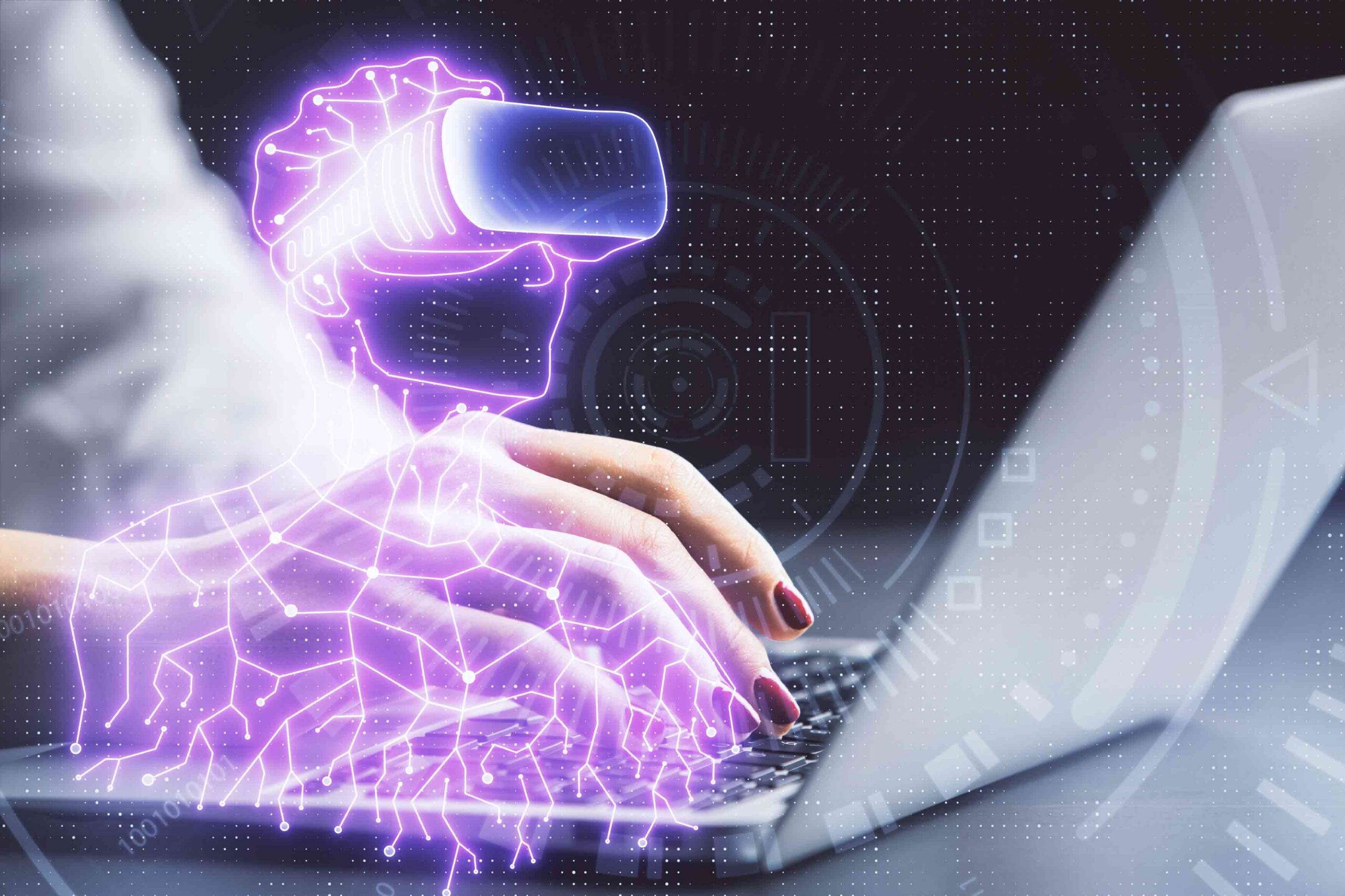
Contemporary media is experiencing a push-pull effect, dominated by a competing desire for nostalgia and familiarity alongside the drive to explore cutting-edge concepts or technologies. Readers crave the tangible appeal of physical media but also enjoy the interactivity of the digital experience.
Augmented reality (AR) offers the best of both worlds: the chance to embrace the sensory appeal of physical books and magazines, plus the excitement of immersive environments and animated characters. While there are many ways to build augmented reality into literary works, rich illustrations make these technological integrations feel seamless by transforming each book into a truly immersive environment. More than merely digital publishing trends, these interactions represent a clear shift toward digital integrations — demonstrating what is possible in the future of illustration.
Defining AR-Enhanced Books
Augmented reality integrates physical items or environments with digital information in real time. Rather than replacing reality with fully digital spaces (as in virtual reality, or VR), AR keeps users connected to their current environments while also enhancing those spaces or experiences.
Books qualify as AR-enhanced if they feature technological integrations that activate digital content by scanning pages with mobile devices. AR enhancements are then layered over print, extending illustrations, diagrams or other visual elements without actually replacing the physical book.
What Augmented Reality Adds to Traditional Print
From shopping malls to museums to live events, AR brings interactive elements to numerous experiences, overlaying physical materials or experiences with digital elements. This powerful technology also can play a major role in shaping literacy by adding more engaging elements to the page. Augmented reality introduces tech-driven advantages to physical media, blending tactile appeal with digital engagement.
Types of AR Books: Picture Books, Nonfiction and Educational Titles
AR can elevate diverse reading experiences. Categories of AR books largely echo traditional genres: children’s literature, travel guides, textbooks and beyond. Within these genres, AR elements are carefully crafted and integrated to support the overarching narrative and appeal to the target audience.
Where Illustration Sits Within the AR Production Team
In AR books, illustrations balance the artistic with the technical. Although many illustrators bring impressive, tech-forward skills to the table, they may collaborate with AR teams that add expertise in user experience (UX), software engineering or quality assurance.
While illustrations form the visual anchor within AR media, illustrators must also frame their work as a trigger — moving from passive content to digital interactions shaped through extensive coordination with technical professionals. Additionally, illustrators support early-stage concept development but are heavily involved in asset creation and may also help with testing and refinement. From concept to prototype, illustrators guide visual storytelling and help assets respond as desired within augmented environments.
Illustration as the Bridge Between Page and Screen
Illustration has long brought books to life. With AR, this takes on a new dimension, transforming literary works into active experiences. This sense of immersion is largely driven by responsive illustrations that hold dual narrative and practical functions. Imagery conveys the desired mood and moves the narrative forward but also provides interactive triggers to make navigation seamless and enjoyable.
Designing Page Art That Doubles as AR Markers or Triggers
In AR books, page art does not simply look nice; it facilitates interactive experiences while making these activities feel intuitive and immersive. Ideally, triggers or markers (visual cues that activate content) will support the overarching aesthetic and blend seamlessly into designs. At the same time, they should stand out enough to guide the reader’s attention or to prompt desired actions.
Planning Compositions for On-Page and Off-Page Expansion
Digital illustrators strive to immerse readers within expansive worlds that extend past the page. AR can introduce three-dimensional (3D) effects, expanding environments that were once limited to physical pages. This goes beyond the simple layering of flat animations to fully immerse readers within stories. To achieve this, illustrators must adopt spatial thinking, layering for depth while also considering how interactions might include real-world objects instead of relying exclusively on the books themselves.
Maintaining Character and World Consistency Across Media
Readers are more likely to remain immersed within storytelling environments if characters and settings appear consistent across physical and augmented media. Illustrators achieve this with style guides and color systems that provide helpful references, followed by extensive testing to ensure that imagery appears cohesive whether in physical or digital form.
Visual Language for Interaction and Story Flow
Illustration holds the power to portray entire narratives within a single image, making even strictly physical books or magazines far more engaging. With AR added to the mix, illustrations also alleviate some of the potential concerns associated with digital integrations as they promote intuitive navigation and maintain immersive environments.
Signaling “Tap,” “Scan” and “Move Closer” Without Breaking Immersion
With mobile AR apps, effective navigation often relies on the user’s positioning and motions. AR media can prompt users to move from page to page by tapping, scrolling or even moving their bodies, but these signals risk breaking the carefully designed immersion that makes augmented reality so appealing in the first place. Signals such as icons, pulses or spatial storytelling cues offer instructions via design rather than text.
Using Shape, Color and Framing to Guide AR Actions
In addition to using icons or other cues, instructions can be built into the images themselves as opposed to included alongside images. For example, different shapes or colors may offer subtle yet effective guidance, naturally drawing the reader’s attention to areas that are then elevated through AR effects. Framing — featuring boxes or highlights — can also accomplish this while adding an organized structure to the experience.
From Flat Art to Depth and Motion
Augmented reality and 3D storytelling bring dimension to contemporary books, bolstered by a sense of immersion that has been difficult to achieve through print alone. Numerous effects contribute to this depth without distraction from the central narrative:
Layering Artwork for Parallax and Simple Animation
Parallax describes the perceived shift in positioning that can occur if objects are viewed from different vantage points. In AR books, this effect emerges as artwork is intentionally separated into various layers such as the foreground and background, creating an appealing sense of depth. From there, triggers determine when animation occurs, and rendering allows for adjustments to animations. These may also be influenced by touch, gestures or device movement.
Designing Modular Assets for Rigging and Motion
Modularity allows assets to be grouped into reusable components, which can be combined in novel ways to support variations. This lends greater flexibility to rigging, enabling illustrators to create skeleton structures while controlling how individual parts interact.
Planning Shadows, Overlaps and Occlusion for Believable AR
Believable AR improves immersion by reflecting the visual cues our eyes have come to expect from real-world environments. Occlusion, for example, demonstrates how light functions in real life, while overlaps reinforce depth and shadows help to anchor objects or characters to their respective environments. Believable AR could even incorporate enhanced textures that simulate different types of surfaces.
Tools, Pipelines and Collaborations
AR illustration relies on advanced tools and technologies that allow creatives to bring interactive elements to life. While this demands some element of technical expertise, illustrators are also encouraged to collaborate with tech-focused professionals so that various contributors can leverage their respective strengths.
Working in Raster, Vector and 3D for AR Pipelines
Illustrators have long debated the merits of using raster and vector files; raster supports digital printing and features small files, while vector (otherwise known as scalable vector graphics or SVG) promises versatile applications and device independence. Familiarity with multiple graphics is strongly recommended to support AR workflows within numerous platforms or applications.
Collaboration With Developers, UX Designers and Sound Artists
Augmented reality storytelling is collaborative by nature, calling for contributions from not only authors and illustrators but also a wide range of technical professionals. Namely:
- Developers create underlying code to help AR experiences function as desired.
- UX designers confirm that these interactions feel intuitive and accessible to readers.
- Sound artists can get involved, too, promoting a multi-sensory experience through narration and audio effects.
UX, Readability and Cognitive Load
The experience of enjoying AR narratives should feel as intuitive and seamless as paging through a traditional book. This is where user experience makes all the difference. UX designers and other specialized professionals seek to limit the cognitive load so that readers can focus on the content and aesthetics — not worry about the process of navigating the work in question.
Keeping AR Enhancements Optional, Not Required to Follow the Story
Many readers still prefer the comfort or familiarity of traditional reading and may be disappointed if they are unable to enjoy this classic experience. Therein lies the need for strictly optional AR enhancements that readers can easily disable if desired.
Designing Short, Clear AR Moments for Younger Readers
Young readers are often easily impressed by AR storytelling, yet they are also the most likely to struggle when navigating AR effects. Here, clear and simple content and text is best, using basic visual cues to convey how AR features are triggered and interactive elements are activated. Consistent icons and visuals are easier for young readers to grasp, ultimately keeping the focus on the story while limiting frustration.
Avoiding Overstimulation: Pacing Interactions Through the Book
With AR, more is not inherently better. Just as webpages with too many visuals (and not enough white space) tend to feel cluttered and distracting, AR books similarly can prompt overstimulation if they include too many added elements or special effects. Instead, prioritize AR elements based on impact and use them sparingly through each book to punctuate key moments.
Educational and Informational AR Illustration
AR presents compelling opportunities for educational materials, especially as instructors aim to bring the immersion and engagement of cutting-edge online experiences to in-person learning environments. Through AR, students gain the tactile appeal of physical reading materials as well as the chance to interact with books in new and meaningful ways. Advocates also believe that AR fosters collaborative learning.
Diagrams, Cutaways and Exploded Views That Come Alive in AR
Augmented reality can transform technical concepts into compelling visuals that add context while introducing readers to new perspectives. These visual add-ons can be actively manipulated or explored, lending readers ownership over their learning experience.
Using Visual Metaphors to Explain Abstract Concepts in 3D
Complex, abstract concepts can be difficult to convey through text alone or even beautifully rendered illustrations. By incorporating three-dimensional exploration, movement and interaction, books encourage readers to engage with these ideas and actually see concepts take shape.
Accessibility: Color Choices, Contrast and Simple Interface Signals
Digital solutions can help learners overcome obstacles such as visual impairments, but they sometimes call for complex or pricey assistive technology. AR books can incorporate inclusive immersion to alleviate such burdens, emphasizing accessibility within each title rather than forcing readers to integrate outside devices. Readers with color blindness, for instance, can use specialized filters to better discern between hues that might otherwise blend in.
Rights, Credit and Evolving Roles
Despite its creative potential, AR storytelling presents several practical complications that authors, illustrators and publishers must be prepared to navigate. Some traditional boundaries that once formed a simple blueprint for creative ownership (or usage rights) are less relevant as advanced technologies shift professional responsibilities. Key considerations include:
Contracts for Print, Digital and Interactive Uses
Traditional contracts cover limited formats, but as interactive options expand, new licensing terms or compensation structures may be required. Moving forward, contracts should include standard elements such as kill fees (ensuring compensation if the project is canceled) and specifications regarding asset ownership — particularly as these relate to different teams’ AR contributions.
Credit and Portfolio-Friendly Documentation
Documentation ensures that illustrators receive due credit for their ideas but is valuable from a networking perspective, too, supporting robust portfolios that can help illustrators land new projects or clients. Laying out rationale along with core workflows allows them to clarify concept development and asset creation processes. These details convey the technical understanding that images alone cannot capture.
Case Studies and Global Perspectives
It might still be the early days of augmented reality publishing, but already, numerous innovative illustrators are pushing the boundaries of creative possibilities — influencing spaces from education to entertainment.
Japan: Publishing Companies Promote Immersive English Language Studies
Publishing company Tokyo Shoseki is helping Japanese students learn English through immersive textbook experiences, in which learners can unlock engaging activities simply by hovering their smartphones over designated textbook sections.
In addition, publishers are looking to build AR into kanji instruction, with solutions supporting improved outcomes in expanding vocabulary and grammar knowledge. Advocates propose updated models featuring content curated by teachers or even video content to “inspire self-efficacy.”
United States: Bringing Magic Into Children’s Fairytales
While AR’s integration into physical media has largely involved textbooks, a shift toward AR in children’s literature is underway. Kayla Silber’s Rosie & Raven offers an early example of what this might look like and how it could transform childhood literary experiences. Hidden worlds appear as young readers hover mobile devices over the pages, immersing children in the story of a friendly fairy and lonely young girl.
United Kingdom: AR Heightens Eerie Ghost Stories
The former Carlton Books (since acquired by Welbeck Publishing Group) was at the forefront of AR literature and illustration trends with the publication of The Ghostkeeper’s Journal and Field Guide, which made the 2018 FutureBook Shortlist. This AR adventure details the mystery of a missing ghost hunter, with interactive features lending “additional chills to a decidedly eerie climax,” as Kirkus reviewers explain.
South Korea: Celebrity-Infused Digital Pop-Ups
Celebrity culture is heavily built into South Korea’s early forays into AR media. The nation’s very first augmented reality magazine, NewbinAR, prominently featured local stars such as Jang Dong Yoon and Kim Yo-han. Described as a “digital pop-up,” NewbinAR brings a dynamic element to static images while paying homage to the concept of “newtro,” which combines cutting-edge and retro concepts to great effect.
India: Toddler-Focused AR Books Make a Splash on Shark Tank
Introducing AR to a younger crowd, edtech company HoloKitab aims to make tech-driven learning both fun and accessible. Highlights include interactive alphabet and nursery rhyme books. Founded by friends and visionaries Nikhil Miglani and Deepanshu Bajaj, this inspiring project led to a memorable showing on India’s version of Shark Tank, with entrepreneur and angel investor Namita Thapar ultimately choosing to support this project.
Classroom and Studio Applications
As AR begins assuming a greater role in tech-enabled literature, there is a growing demand for illustrators who understand and actively embrace emerging tools or media experiences. Early efforts to experiment with AR solutions can provide an edge, especially if accompanied by networking with UX designers and other tech leaders. Projects and applications worth exploring include:
Paper-to-AR Exercise: Translating Illustration from the Page
Paper sketches can form the basis for powerful AR creations. Early projects or reflections should prioritize illustrative techniques but then consider how these can extend beyond the page — with the illustration itself no longer functioning as the final product. Revealing what is involved in the transition from traditional media to digital concepts, this project offers low-stakes opportunities to practice bridging these areas.
Small-Team Prototype: Illustrator, Developer and Writer Sprint
AR experimentation need not be limited to solo projects. Moving forward, the value of AR will be determined by not only creative ideas but also effective collaboration. Group projects involving small teams hone AR-focused collaborative skills, demonstrating how artistic and technical innovators can work together to unleash cutting-edge literary opportunities.
Embrace the Future of Digital Illustration With RMCAD
Discover fresh possibilities within the world of narrative illustration and interactive storytelling as you pursue your Bachelor of Fine Arts in Illustration with Rocky Mountain College of Art + Design (RMCAD). This innovative degree program explores both the creative and technical sides of digital illustration education, promoting foundational artistic techniques along with cutting-edge digital opportunities.
RMCAD’s BFA in Illustration is available online and on campus, featuring immersive instruction and many opportunities to explore storytelling with technology. Learn more about this program today or check out our student success stories.
FAQs: Role of Illustration in Augmented Reality Books
Q1: Do illustrators need to know 3D to work on AR books?
While 3D skills are not outright required, they are strongly recommended because they can greatly expand creative possibilities with augmented reality. Still, illustrators who understand layering and 2D techniques such as parallax illustration create vibrant visuals and can deliver a similarly engaging experience.
Q2: How is illustrating for AR different from a normal picture book?
Interactive picture books demand a greater concentration on user experience — with illustrators focusing not just on narrative and aesthetic elements but also on interactivity and triggers so that AR interactions function seamlessly.
Q3: Who owns the rights to AR assets: illustrator or publisher?
AR rights vary between contracts; some exclusively cover print, whereas many others incorporate digital or interactive rights. Contracts should clarify which rights are included, also highlighting ownership and usage rights for associated applications or digital-only content.
Q4: What files do developers usually need from illustrators?
Developers prefer clean, layered source files that are clearly labeled and organized according to elements. These well-defined and carefully organized assets improve collaboration during development and streamline integration of physical and digital elements.
Q5: How can AR illustrations support learning rather than distract?
Every AR moment should be clearly linked to a specific learning goal. Concise interactions encourage interactive learning while also allowing readers to focus on traditionally printed material. AR elements can clarify difficult concepts by using intuitive designs with easy-to-understand cues or triggers to help students move seamlessly through augmented content.
Q6: Can independent illustrators create AR book prototypes on their own?
Today’s low- and no-code AR tools allow non-technical creatives to develop simple prototypes and even pitch concepts to publishers. These prototypes may incorporate basic interactive overlays so that illustrators can convey creative concepts prior to full development.
Q7: How should students build portfolio pieces for AR illustration?
Projects incorporated in illustration portfolios should demonstrate both creative ideas and technical expertise, showcasing abilities surrounding three-dimensional assets, plus experience with cutting-edge tools and platforms.