Photography may be a nuanced art form, but at its basic level, it comes down to the manipulation of light. The most captivating images begin with deliberate decisions about how light is shaped or controlled. This is what allows photographers to play with depth and mood.
Off-camera flash presents ample opportunities to control light and use it to produce memorable images. This moves beyond the flat light of the direct flash to use shadows and highlights in compelling ways. This effort need not feel complicated; a single light source can capture polished, appealing images and, in some cases, is actually preferable to complex lighting setups.
Effective use of minimal lighting hinges on an in-depth understanding of core photography principles. We discuss these in detail below while providing helpful flash photography tips and even advice for choosing the right equipment.
Why One-Light Flash Is the Best Place to Start
A single flash can provide a solid foundation for novice photographers that brings clarity to the photography process. Drawing upon the covert power of simplicity, the one-light flash promises precise control and can produce stunning imagery.
This is particularly noteworthy in the context of off-camera flash—a technique where the flash unit is physically separated from the camera body and triggered remotely to create more dynamic, multi-directional shadows and depth— as single-light setups demand a whole other level of thoughtfulness. Every choice (no matter how seemingly small) has an outsized impact, but also, every factor can be fully understood and adjusted as desired.
What Off-Camera Flash Changes Compared With Natural Light
Natural light is equal parts gorgeous and unpredictable. Weather conditions and time of day have a major impact, and often, photographers may struggle to capture ‘ideal’ conditions (such as that elusive ‘golden hour’).
External flash replaces this inherent unpredictability with a strong sense of control. This means determining the exact direction of the light (and how shadows fall) and using modifiers as desired to evoke the desired mood in every shot.
Why One Light Builds Skill Faster Than Complex Setups
One light offers a solid starting point for novice photographers. More is not always better, after all, and added lights introduce variables that may be difficult to manage. The goal with one-light flash is to tackle the fundamentals while decisions remain traceable.
The Core Gear You Actually Need
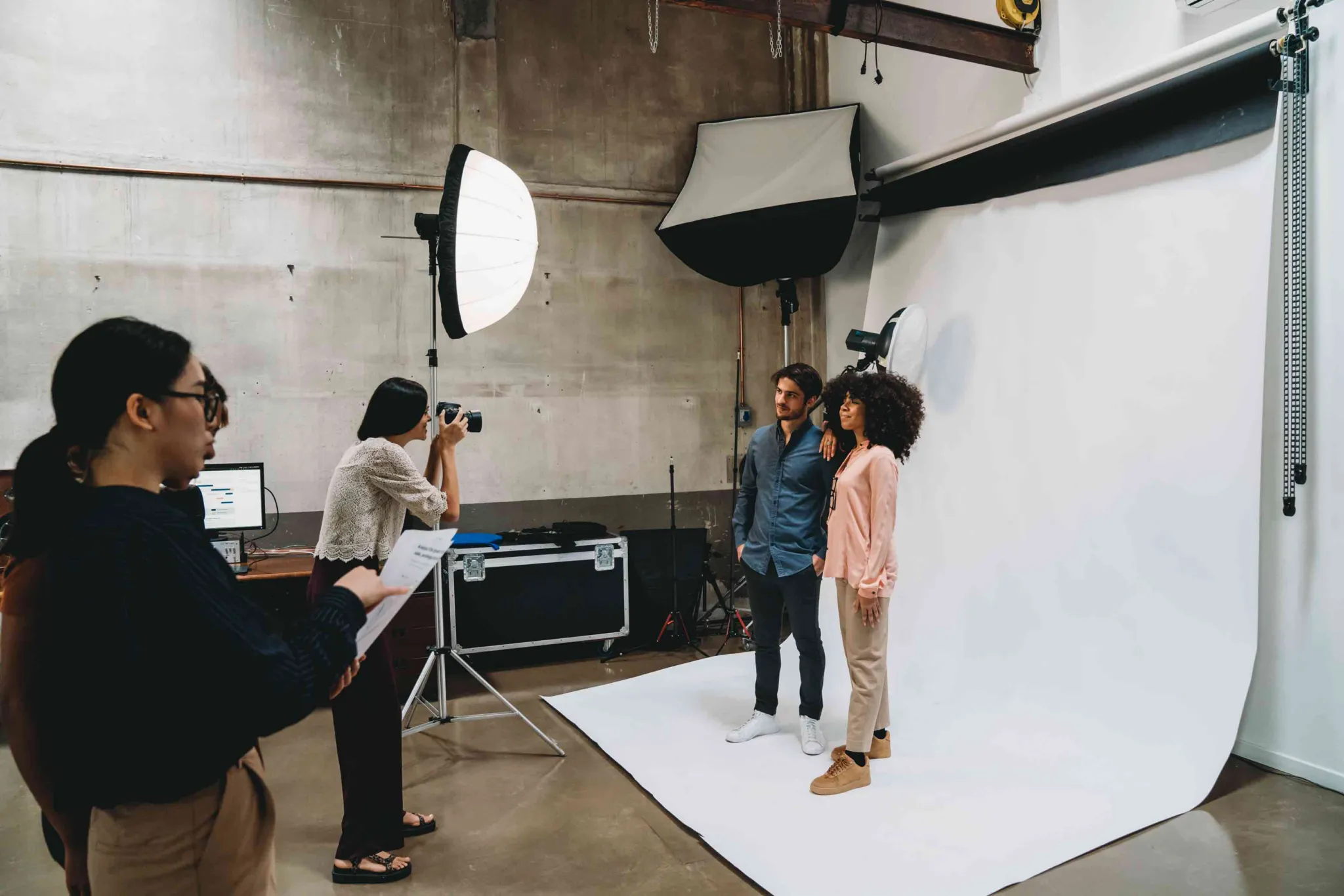
It doesn’t take a studio’s worth of equipment to ace lighting and create polished images. Ultimately, this boils down to a few essentials — including a light source (specifically, a flash unit) and something to keep that light source in place (typically, a stand). Additionally, you’ll need the right modifier—an attachment like an umbrella, softbox, or grid that alters the direction, focus, or softness of the flash— so you can shape the quality of the light.
Speedlight vs. Strobe and Which Fits Your Workflow
A strong setup begins with a simple yet critical decision: speedlight photography or strobe. Compact speedlights—small, lightweight flash units that mount directly onto a camera’s hot shoe or a small stand and run on AA or lithium batteries— are favored for their portability and can easily be brought with you to shoot on location. However, strobe lighting—larger, heavier studio flash units that typically require external power or large battery packs but offer much higher power outputs and faster recycling times— is often more powerful and opens the door to creative possibilities within controlled studio environments.
Strobe selection is closely tied to the intended shoot setting, with trusted names such as Godox flash offering options to accommodate every setup. Profoto flash takes this a step up with exceptional color accuracy. The choice between speedlight and strobe (and the specific gear purchased) is a matter of personal preferences and your desired workflow.
Triggers, Stands, Modifiers and Simple Support Tools
Numerous tools provide valuable support for flash units, further enhancing the precise control associated with off-camera flash. Triggers make it easy to fire the flash remotely, while stands hold light sources securely in place. These may be accompanied by other support tools, such as clamps. Modifiers (e.g., softboxes or umbrellas) influence the light’s quality, as do reflectors by bouncing light.
Not all of these supports are required for every shoot. They can be selected strategically based on the type of photography or the desired mood. When in doubt, a flash trigger, stand and modifier should be enough to accompany a flash unit.
Start With Exposure Basics Before Adding Style
Exposure forms the foundation for every exceptional photo. This functions much like the canvas that is built upon, setting the stage for technically sound imagery. A failure to account for exposure could prompt imbalances that undermine stylistic decisions.
Balancing Shutter Speed, Aperture, ISO and Flash Power
The renowned exposure triangle influences the lens opening, timing and sensitivity, aiming for an optimal balance. This, in turn, supports well-exposed images that preserve detail. Off-camera flash can complicate this delicate balance but can also deliver precise control.
A key decision involves the Through-the-lens (TTL) vs. manual flash discussion.
- TTL functions a lot like auto mode and can be helpful for beginners.
- Manual provides greater control over flash power but may call for extra metering time to ensure the best possible exposure settings.
Flash exposure compensation builds on this by offering the chance to fine-tune brightness.
Separating Ambient Light From Flash for Better Control
Emerging from sunlight or lamps, ambient light will always be present to some extent, and it can play a valuable role in shaping the atmosphere. Flash provides more precise control — but not if ambient light is allowed to compete. Their interactions must be carefully managed to make the most of both light sources. Shutter speed determines ambient exposure while flash power shapes subject illumination.
Learn the Three Most Useful One-Light Modifiers
The one-light modifier is the key to a versatile and portable photography setup. Choose the right modifier, and you can uncover unlimited creative possibilities for shaping and directing flash.
Of course, with so many options available, choosing the ‘right’ modifier can be difficult. These options offer maximum control and convenience:
Softbox for Controlled Soft Light
Mimic the beauty of the golden hour with a softbox that confines light as well as sends it through layers of diffusion. This enclosure is placed around artificial light sources. Although less portable than umbrellas, softboxes are often viewed as an industry upgrade because the quality of light they produce is so visually pleasing.
Umbrella Lighting for Fast, Flexible Setups
Favored for its versatility and ease of use, the photo umbrella is among the most recognizable photography tools. Portability plays heavily into the perennial umbrella vs. softbox debate. Here, umbrellas win out because they can easily be broken down or folded into compact shapes that travel well.
These umbrellas are available in many sizes, offering customizable control over the spread of light. Shoot-through umbrellas soften light sources to create an effect that’s pleasing to the eye, while reflective umbrellas use opaque coverings to bounce light onto the subject.
One-Light Portrait Setups That Work Almost Anywhere
One-light setups are meant to boost versatility, and yet, many modifiers actually introduce layers of complexity that feel confining. Finding the right setup begins with identifying equipment and processes that, though versatile, are also repeatable.
45-Degree Key Light for Clean, Flattering Portraits
The key light —the primary and dominant source of illumination used to light a subject and establish the overall exposure and mood of an image—is the star of the show, especially in portrait photography. This is what allows one-light setups to shine. Key light strategy becomes extra important when fill lights or back lights aren’t available; this forces the key light to become the jack-of-all-trades. Hence, the appeal of the flattering 45-degree angle is that it captures much of the softness associated with clamshell lighting.
This go-to setup allows the individual key light to overcome deficits that might otherwise call for secondary light sources. At 45 degrees, shadows are softened but not eliminated, with just a hint of directional light carving out the shape of the subject.
Side Light and Short Light for Mood, Shape and Depth
When light reaches a subject from a specific side (and at 90 degrees), it creates contrast by illuminating a single side of the face. This is known as side light — and it certainly makes an impression, especially in dramatic black-and-white photography. Meanwhile, short lighting photography (contrasting broad lighting) illuminates the side of the face that is farther from the camera.
Throughout history, many legendary photographers have relied on these strategies to evoke a sense of mystery or a hint of drama. Still, there’s a caveat when using just one light: Side and short lighting are far less forgiving than classic 45-degree angles. Without fill and without the right angle, the shadow side could be too dark, or the subject may compete with the background.
One-Light Product Setups for Clean, Professional Results
Commercial shoots remind us that, in photography, less is often more. A single light can create polished images, showcasing products while calling attention to their best or most notable features.
Lighting Small Products With Soft Directional Light
Product photography lighting aims to give the impression that the viewer could reach through the page or screen and interact with the product on display. This means adding just enough texture without introducing harsh shadows. This effort becomes even more complicated when small products are involved. When proportions are tight, there is little room for forgiveness.
In jewelry photography, for example, softbox lighting captures the beautiful details in gemstones but avoids distracting shadows and glare. Jewelry photographer Ella Sophie favors “bright indirect light,” adding that direct sun can produce harsh shadows.
Creating Background Separation
Products are more likely to capture a viewer’s attention and spark fascination if they are not continually competing with evocative backgrounds. This is why commercial photography tends to favor simplified studio lighting setups. Lighting can amplify this sense of separation to make products ‘pop,’ even when shoots move beyond the conventional plain white background.
This can absolutely be accomplished with just one light, and in many cases, the single-light setup is preferable. As photographer Stuart West advises, “Keep it simple. Food should look natural and beautiful. I often only use one light source for my images.”
Placement and Power Ratios Made Simple
One-light setups influence our understanding of lighting ratios because the single light source serves as the key light, without a fill light explicitly defined. As the environment bounces or softens light, though, fill is naturally created. Lighting ratios reveal the intensity of the key light in comparison to that of the fill.
How Distance, Height and Angle Change the Look
A desired mood or atmosphere doesn’t happen by chance. It’s the result of precise decisions that determine how light falls and how shadows form. In general, images with high lighting ratios tend to feel moodier, whereas those with low ratios are perceived as softer. One-light setups provide precise control over this ratio by enabling easy changes to the distance, height and angle of the light.
The Inverse Square Law and Brightness
The inverse square law is broadly used across engineering and astrophysics but holds great sway in photography, too. This shows how the intensity of the light lessens as the flash moves farther away from the subject.
An easy-to-understand example: holding a flashlight near any object. This will appear bright when you’re nearby and dimmer as you move farther away. This is relevant in photography because even small shifts in distance can shape contrast or determine whether images appear harsh.
Common Problems and Fast Fixes
Off-camera flash promises its perks but accompanies a few challenges worth noting. If not overcome, these may undermine the otherwise strong potential of simplified setups, even leading photographers to explore complex alternatives that do not ultimately yield superior images.
Harsh Shadows and Flat-Looking Light
While deep shadows are often tied to dramatic styling, these can easily cross the line from cinematic into downright unflattering. For example, in excess, shadows make subjects appear harsh. This can be prevented by using the right angle or with modifiers (such as softboxes) that diffuse the light.
If illumination lacks direction or contrast, light can begin to appear flat. Thankfully, the subtle repositioning of the softbox—enclosed fabric light modifiers that fit around a flash unit and use a translucent white front panel to diffuse and scatter the light— is often more than enough to bring dimensionality to an otherwise flat photo.
Missed Sync and Inconsistent Exposure
If the camera shutter and flash do not fire at the proper time, photographers may encounter partially exposed frames or dark bands. Even if photographers achieve the desired timing, they may deal with inconsistent exposure in response to varying brightness levels.
These issues are best avoided by using the correct shutter speed and testing flash timing. Novices may also need to lock settings to promote consistency.
Case Studies: Global Perspectives
Off-camera flash and one-light setups can play out differently depending on environmental conditions and cultural expectations. Case studies demonstrate just how much creativity and versatility can be uncovered when equipped with seemingly limited gear, particularly when adapting techniques to reflect the realities of specific settings or desired moods.
United States: Clean Headshots With Minimal Setup
Think corporate or entertainment headshots, delivering an aesthetic that is equal parts polished and approachable. Laibel Schwartz, for instance, has been referred to as the “headshot guru.” He explains that a headshot can “instill a little humanity into a company,” especially in our digital age.
Schwartz’s approach extends beyond the headshot to showcase connection in other everyday moments. In the series Street Studio, Schwartz emphasizes the power of natural light along with the ability to overcome harsh lighting with the simple use of a single off-camera flash softbox.
Japan: Minimalism and Doing More With Less
Japanese minimalism exemplifies the power of silence, described in Artmag as “the interval that allows perception itself to arise.” This replaces excess with contemplation, inviting us to pause.
Like many Japanese photographers, Hiroshi Sugimoto showcases creativity that relies on constraint. This approach even extends to his use of equipment, as he is known for bypassing typical tools — particularly in the iconic Lightning Fields series, in which limited gear transformed light itself into the subject.
United Kingdom: Editorial Portraits With One Light and Deep Shadow Shape
Renowned for his evocative photos of world leaders (including Bill Clinton and Vladimir Putin), British portrait photographer Platon reminds us that simplicity can be downright powerful. Platon favors a simplified portrait lighting setup, along with blank walls or other plain backgrounds. This allows him to fully capture the personalities of the fascinating individuals he photographs.
India: Small-Space Shoots Using Umbrellas and Simple Backgrounds
High studio costs force photographers in India to work creatively within small spaces. Many embrace these challenges to achieve polished aesthetics, all while capturing detail in areas such as jewelry and fashion photography. Small spaces and on-site shooting may not always accommodate multiple lights or modifiers, but that need not stand in the way of professional imagery.
Fashion photographer Varun Patel explains that one light can be sufficient when the photographer knows how to use it properly. For this reason, Patel highlights lighting as one of the most essential concepts for any photographer to understand.
Build a Repeatable Practice Routine
Off-camera flash skills improve with consistent practice. Consistency is best achieved by creating a simple, repeatable routine that allows for controlled experimentation.
A Shot List for Testing Portrait and Product Variations
Don’t assume that the simplicity of a single light will automatically streamline practice shoots. There are still a range of factors at play: modifier placement, flash power and ambient light, to name a few.
A bit of planning can make a world of difference. Use a shot list to create a photography roadmap, detailing every shot along with the equipment, sizing or angles that should remain consistent. Choose a specific factor to adjust and then systematically test variations of interest. Pay careful attention to understand how these small changes impact the final image.
How to Evaluate Results and Improve From Session to Session
True progress comes from reflecting on previous shoots to determine what went well and where improvement is needed. This demands an eye for detail, examining specifics such as exposure balance and color consistency. At other times, however, a broader perspective is valued, revealing the overall mood within various images.
Take notes during shoots; details captured could make later evaluations considerably more insightful. Observe several photos (and accompanying notes) from several shoots, and take note of any patterns that stand out.
Level Up Your Photography Lighting With RMCAD
Delve into the intricacies of flash photography with a degree program that introduces fundamental techniques but also encourages you to experiment. With Rocky Mountain College of Art + Design (RMCAD), students have the chance to establish technical expertise and creative confidence. Pursue your Bachelor of Fine Arts in Photography online or at the RMCAD campus. Either way, you will receive plenty of encouragement and feedback as you build your photography skills and portfolio.
Request more information today and take the next step toward a photography education that helps you realize your full creative potential.
FAQs: Off-Camera Flash
Q1: Is a speedlight enough for professional-looking off-camera flash?
Yes. A speedlight can create polished portraits and product shots when placement, modifier choice and exposure control are handled well.
Q2: What is the easiest one-light setup for beginners?
A softbox placed about 45 degrees from the subject and slightly above eye level is usually the simplest and most reliable starting point.
Q3: Should I use a softbox or an umbrella first?
A softbox gives more control, while an umbrella is faster and often cheaper. The best first choice depends on your space and how much spill you can manage.
Q4: Why does my flash look harsh even with a modifier?
The light is often too far away or aimed poorly. Bringing the light closer tends to make it softer and more flattering.
Q5: How do I keep product photos from showing ugly reflections?
Change the angle of the light, increase diffusion and watch how reflective surfaces respond before adjusting camera position or background.
Q6: What power level should I start with?
Start in the middle range and adjust from there. It is usually easier to set your camera’s exposure first, then adjust the flash power to match the look you want.
Q7: Can I mix off-camera flash with ambient light?
Yes. In fact, this is one of the biggest advantages of flash. You can darken or brighten ambient light separately from the flash for more control and mood.