Patterns are an omnipresent element in art and design, appearing in various forms such as posters, prints, textiles, fabrics, wallpaper, paintings, mosaics, ceramics, stained glass and stonework. Despite their prevalence, they often go unnoticed by the casual observer. Patterns are commonly used due to their high effectiveness. Humans respond on a deep, psychological level to repetition and patterns in design and art. They can be used to capture the eye, create rhythm in graphic design, evoke emotions, achieve a visual hierarchy in design and even to support visual storytelling in design.
When artists understand the psychology of visual art and patterns, they can harness the power of repetition in graphic design and fine art to create captivating, moving pieces that elicit strong responses from viewers.
Understanding the Psychology Behind Patterns
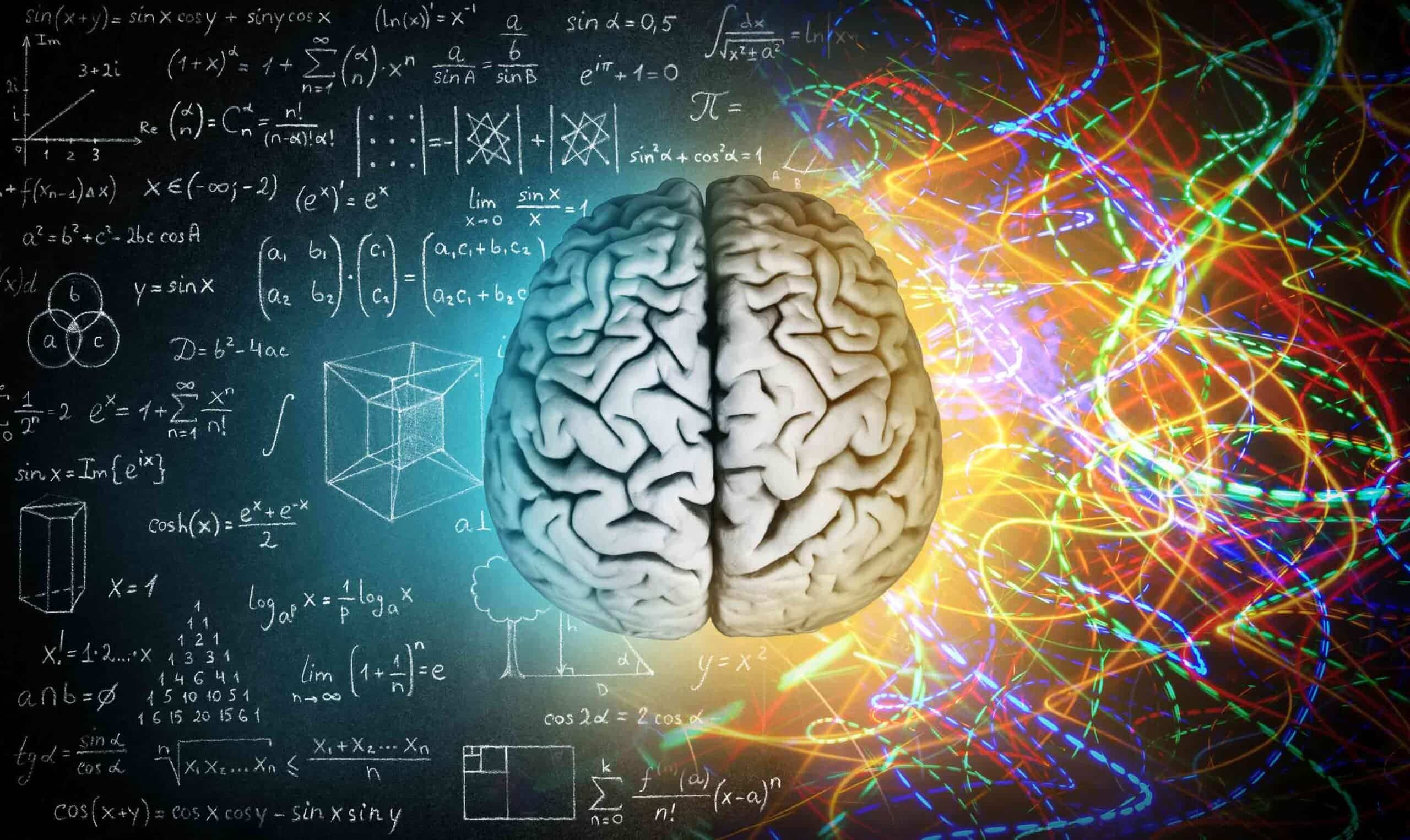
The connection between humans and patterns exists on a deeper level than psychology — it’s neuroscience. The ability to recognize patterns is physically wired into the neocortex of the human brain.
Why Humans Are Drawn to Repetition
Throughout millennia of human evolution, pattern recognition skills influenced natural selection. The ability to recognize patterns meant you could avoid eating poisonous plants and dying. You could notice where animals would herd at certain times of the year and not starve. Remember that dangerous animals, such as bears or venomous snakes, often inhabit specific types of dens, so avoid these areas to prevent encounters. As a result, humans who were able to recognize patterns lived long enough to have babies, and their babies were more likely to live long enough to have more babies. This consistent pattern-recognition-linked survival passed on these genes, reinforcing our ability to recognize patterns with each new generation.
As a result, humans can’t help but notice and be drawn to patterns. In fact, humans are so hard-wired to look for patterns that we sometimes perceive images or faces in abstract formations (pareidolia), such as seeing dinosaur shapes in the clouds or human forms in randomly splattered paint. Sometimes, humans suffer from conditions, such as apophenia, that cause us to “see” patterns in random data, picking out false positives where no true pattern exists.
Due to the innate structure of our brains, humans are naturally drawn to patterns and repetition in art because they appeal to our natural cognitive processes.
Patterns and Emotional Response
Artists manipulate patterns to elicit different emotional responses in viewers. Depending on the type of pattern used and the design elements and principles employed, the reaction and emotional response to an artwork will differ.
For example, a minimalist pattern design that utilizes regular repetition can generate calm, tranquil or serene feelings due to its predictability. On the other hand, patterns that incorporate irregularities or include disruptions can create feelings of discomfort and excited or tense emotions.
When artists pair repetition and patterns with deliberate stylistic choices with horizontal or vertical lines, geometric or organic shapes, colors, textures, symmetry, asymmetry and overall composition, they can lean into the emotion of a piece before conveying even deeper meaning using symbolism and metaphor.
Patterns as a Tool in Illustrative Design
Patterns in art can also be used to create movement or visual sequences that rely on repetition, variation and organization to enhance visual storytelling in illustration.
Guiding the Viewer’s Eye
Sequence is vital in visual storytelling, and artists can employ patterns to create a visual hierarchy that guides a viewer’s eye through an illustration. This can highlight specific elements of the image and build the perception of the sense of time or order of events in an illustration.
Creating Visual Texture and Depth
Patterns can be used to create layers, lending texture and depth to an illustration. As early iterations of a pattern fade into the background, other layers emerge to the foreground, adding dimensionality and movement to an image. Whether an artist creates backdrops and scenes using repeated shapes and colors or “animates” a character with progressive repetition, patterns create more interesting images that viewers can continue interacting with for as long as they look.
Balancing Repetition and Variation
For a pattern to be effectively used in visual storytelling and illustrative design, artists must strike the right balance between repetition and variation, while also determining when each is most appropriate based on narrative cues. When repetition is overly uniform, an image is pleasing to the eye, but it risks becoming like wallpaper and fading into the background. Excessive variation can lead to a sense of chaos, hindering viewers’ ability to understand and interpret the content or meaning of an illustration.
Case Studies in Pattern Usage
As stated above, seeing patterns is so innately ingrained in our brain structure that we aren’t always consciously aware of a pattern when we see it. However, when you look for patterns and repetition, you will find them everywhere, including copious examples throughout art history.
Classic Examples in Illustrative History
- William Morris and the Arts and Crafts Movement – Featured stylized designs with rich color palettes that drew inspiration from nature and balanced order with pleasant surprises in variation
- M.C. Escher and Mathematical Visual Illusions – Used tessellations (mathematically based repeating patterns) to create visual illusions and mind-bending illustrative designs
Contemporary Artists Using Pattern Intentionally
- Lisa Congdon’s Colorful Repetition – Pairs vibrant color palettes with geometric shapes and innovative lettering to create striking motifs
- Malika Favre’s Use of Minimalism and Pattern for Impact – Focuses on essential elements while using bold colors, shapes and geometric patterns to achieve major visual impact
Designing Your Own Pattern-Driven Compositions
To begin creating your pattern-driven compositions, study and consider the different types of basic pattern variations, which include:
- Regular Repetition – The pattern includes uniform, evenly spaced elements.
- Irregular Repetition – The pattern’s elements might be uneven, differently sized, varied in color or unpredictably placed.
- Alternating Repetition – The pattern features contrasting elements that alternate.
- Progressive Repetition – The pattern features variations that progress gradually, such as changes in color, value, shape or size.
- Radiating Repetition – The pattern is arranged around a central focal point, radiating outward, like in a mandala.
To support, create and feature a pattern, remain mindful of how you apply different artistic elements and design principles, such as:
Artistic Elements
- Color
- Form
- Line
- Shape
- Space
- Texture
- Value
Design Principles
- Balance
- Contrast
- Harmony
- Movement
- Proportion
- Rhythm
- Scale
- Unity
The choices you make regarding the artistic elements you use and the way you apply various design principles will affect your artwork’s visual impact, emotional response and structure.
Choosing the Right Motif
With respect to pattern, the term motif most commonly refers to a visual motif. It is the element that will repeat in your pattern, image or design. The repeated element in your image will largely depend on the purpose or goal of your artwork. Think about whether you want the motif to be the subject or main character of your illustration, if you want the motif to create a cohesive backdrop to the action of your illustration or if you want to use the motif to create movement in the image.
Understanding what you want your motif to be and how you want to use it will help guide your design process. Begin by sketching and refining your motif. Then, work on creating different variations by changing its scale, texture, color, perspective or size. Then play around with how you arrange the motif. Try putting it on a grid, rotating it or developing a repeated pattern within the variations for more depth. Depending on the pattern, you can change the way you repeat the motif (straight repeating, half-drop repeating, mirror repeating and tossed repeating).
Tools and Techniques for Pattern Design
The tools you use to create patterns will greatly depend on the technique you choose to use and whether you are creating a physical piece or making digital art. For creating patterns in traditional artwork, artists can use a variety of tools like drawing implements and paints paired with tracing paper and measuring tools such as French curves, compasses, squares and rulers. Other useful techniques in creating patterns include:
- Screen printing involves cutting images out of cardstock, placing them on fine screens and then pulling layers of paint through the prints to create an image.
- Relief printing involves carving a design into a linoleum or wooden block before using paint or ink to transfer and repeat the image on paper.
When designing patterns for digital art, artists can use an array of digital tools such as:
- Digital scanning and printing
- Fresco, Illustrator or Photoshop from the Adobe Creative Suite
- Procreate on a tablet
- Affinity Designer
- Digital cameras
- Canva
- Procreate
The tools you use for your pattern will have a big impact on the final piece you produce, so play around and experiment with different tools before you get in so deep that you don’t want to start over.
Testing Visual Impact
Step back from your piece to determine how your motif, pattern, repetitions and variations affect the overall visual impact. Does your pattern create a steady or broken rhythm? Does it generate movement in your piece? Does it achieve the right emphasis?
- Rhythm – When a pattern achieves rhythm, it’s easy to visually scan and work through a piece, bit by bit. Sometimes, viewing rhythmic art can feel slightly hypnotic.
- Movement – Patterns achieve movement when the motif is displayed with progressive repetition. This repetition achieves a natural flow or has a discernible direction.
- Emphasis – When a repeated motif jumps to the foreground, allowing everything else to fall away, it has successfully achieved emphasis through pattern.
In addition to the visual impact of your piece, consider whether it evokes the emotional response you intended. Do the colors, textures, line choices and other artistic elements align with the intended mood? Have you chosen the correct symbolic elements to tell a story or convey a deeper message? Does the piece demand engagement from the viewer, holding their attention as they interpret what’s being shown?
Break Your Pattern and Enroll at Rocky Mountain College of Art + Design Today
At Rocky Mountain College of Art + Design, students have the opportunity to study, explore and work with pattern while working toward earning a Bachelor of Fine Arts in Illustrative Design, with the flexibility of either studying on campus or online. To learn more about our flexible, on-campus or online programs in illustrative design, we welcome you to request more information today.