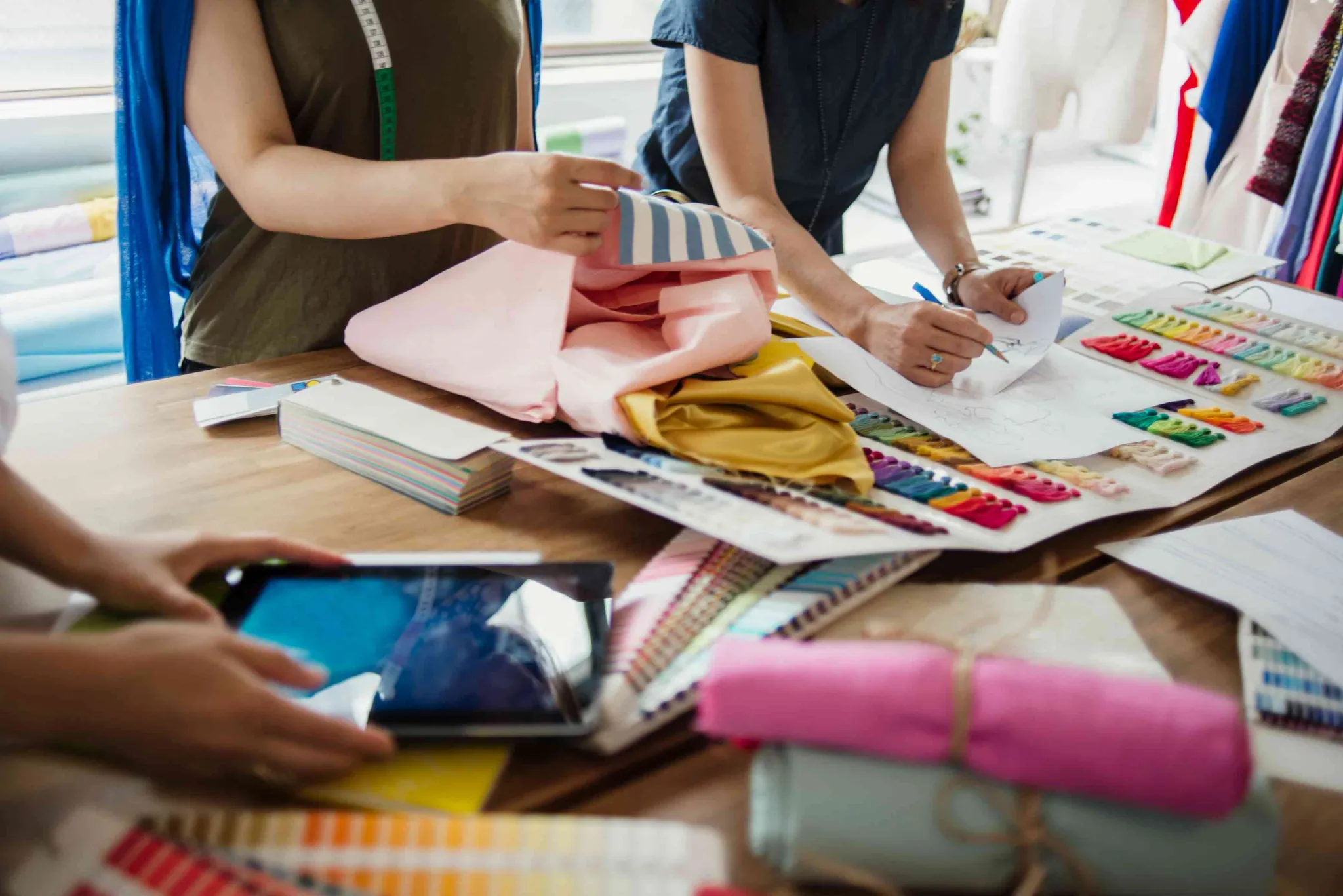
The right fabric can transform a fashion concept from a sketch into a garment that moves, fits and feels exactly as intended. Familiarity with a wide variety of fashion design materials gives designers greater control over shape, comfort and performance. Emerging designers who study textile science and fabric for fashion design are better able to make informed material choices that bring their creative ideas to life.
Why Fabric Science Matters for Designers
Fabric science is foundational to how to choose fabric, and fabric selection influences how a garment looks, moves, feels and performs over time. Understanding fabric characteristics and textile properties helps designers connect creative concepts with practical material choices. Knowledge of fashion textiles also makes choosing fabric a more deliberate process, allowing designers developing garments to consider factors like:
- Weight
- Structure
- Stretch
- Breathability
- Durability
- Intended use
What Is Fabric Science?
Fabric science examines how fibers and textiles are constructed and how their physical properties influence performance. For designers, it’s essential to recognize how different types of fabric respond to movement, moisture, heat, tension and wear. This knowledge helps connect material behavior with design decisions — from selecting a fabric for a flowing silhouette to choosing one that provides structure, stretch or durability.
What Are the Main Types of Fibers?
Fiber selection is foundational to how fabrics behave in finished garments. Designers encounter natural and manufactured fibers with distinct characteristics. Comparing those properties helps inform material choices for different silhouettes, climates and performance requirements.
Natural vs. Synthetic Fibers
- Natural fibers originate from plants or animals. Cotton and linen are plant-based, while silk, leather and wool come from animal sources.
- Manufactured or synthetic fabric options include polyester, nylon, rayon, viscose, modal and Tencel lyocell. Each of these is produced through different processes.
Designers may also encounter blends that combine fiber characteristics to achieve particular aesthetic or performance goals.
How Fiber Choice Affects Performance
Fiber composition influences characteristics such as:
- Moisture wicking
- Breathability
- Thermal comfort
Fiber thickness affects performance, too, and denier describes the linear mass (or weight) of fibers or yarns, helping indicate their fineness (or thickness). Having a grasp of these differences enables designers to consider how a material may respond to heat, moisture, movement and repeated wear before incorporating it into a garment.
What’s the Difference Between Weaves and Knits?
Fabric construction affects how material stretches, holds its shape and responds to movement. Considering woven vs. knit construction helps designers anticipate these behaviors to select materials that support a garment’s intended silhouette, fit and function.
Understanding Woven Fabrics
Woven fabrics are created by interlacing yarns in perpendicular directions, known as the warp and weft. Each produces different surface and performance characteristics. Common structures include:
- Plain weave
- Twill weave
- Satin weave
Jacquard weaving creates intricate, integrated patterns within the fabric. Woven fabrics generally provide stability and structure, making them useful for:
- Tailored garments
- Structured silhouettes
- Trousers
- Jackets
- Dresses
- Other designs where controlled shape is important
Understanding Knitted Fabrics
Knitted fabrics are formed by looping yarns together, creating structures that accommodate movement and stretch.
- Jersey knit typically has a smooth face and softer drape.
- Rib knit creates raised vertical ridges and greater elasticity.
- Interlock knit uses interlocking loops to produce a stable, smooth fabric.
These constructions are commonly suited to garments where flexibility and ease of movement are central considerations.
What Is GSM and Why Does It Matter?
Fabric weight provides designers with a measurable way to compare materials and anticipate how they may behave in a garment. Understanding grams per square meter (GSM) and fabric weight connects a fabric’s physical weight with practical design decisions — including structure, comfort, layering and intended use.
Measuring Fabric Weight
GSM stands for grams per square meter and indicates the mass of a fabric over a standardized area. A higher GSM generally means a heavier material, whereas a lower GSM indicates a lighter one. Fabric weight explained through GSM gives designers a consistent measurement for comparing materials, regardless of the fabric’s width.
However, GSM alone does not describe every aspect of fabric performance; fiber content and construction also influence how material behaves.
How GSM Influences Drape and Use
Fabric weight affects fabric drape, structure and suitability for particular garments. Lightweight materials may create fluid movement, while heavier fabrics provide greater body and support for structured designs.
Designers use GSM alongside other fabric characteristics when evaluating fashion design materials for dresses, outerwear, knitwear or layered garments. Considering weight in relation to silhouette helps designers select materials that reinforce the intended visual and functional qualities of a design.
How Do Drape and Hand Affect Design?
Two fabric qualities strongly influence how a garment looks and feels:
- Drape describes how material falls and responds to gravity.
- Hand describes its tactile character.
Understanding both helps designers evaluate materials beyond appearance to anticipate how they will perform in a finished garment.
Understanding Drape and Silhouette
Sometimes described in degrees of bending stiffness, fabric drape describes how readily a material bends, folds and hangs under its own weight. A fluid fabric creates soft folds and flowing silhouettes, while a stiffer material supports sharper shapes and defined lines.
Designers consider drape when selecting fabric for fashion design, ensuring the material supports the intended silhouette rather than working against it.
What “Hand” Tells You About Fabric
Fabric hand refers to how a material feels when touched, including qualities such as:
- Softness
- Smoothness
- Firmness
- Crispness
- Fullness
Since hand is experienced directly, it provides useful information about a garment’s potential comfort and tactile appeal. A fabric’s hand may also influence whether it feels appropriate for a particular garment, wearer or design concept. Designers assess hand alongside other textile properties when comparing materials.
How Do Stretch and Recovery Work?
Stretch and recovery are closely related but describe different aspects of fabric behavior.
- Stretch indicates how much a material can extend when tension is applied.
- Recovery describes its ability to return toward its original dimension.
Both elements help designers evaluate fit, movement, comfort and long-term performance.
The Role of Stretch in Comfort and Fit
Fabric stretch allows garments to accommodate body movement and contributes to ease and comfort. Fibers such as spandex and elastane are commonly incorporated into fabrics to provide elasticity. Stretch can occur in one direction or across both directions (i.e., 4-way stretch). This generally allows movement both crosswise and lengthwise.
Designers consider the amount and direction of stretch when developing fitted garments, activewear or designs that require greater freedom of movement.
Why Recovery Matters for Durability
Fabric recovery describes a material’s ability to return toward its original dimensions after being stretched. Strong recovery helps a garment maintain its intended fit and appearance through repeated movement and wear. Poor recovery may contribute to unwanted sagging, bagging or distortion in areas subjected to frequent tension.
Designers should evaluate recovery alongside stretch when considering fabric characteristics and selecting materials for garments that need consistent shape over time.
What Is Bias and How Do Designers Use It?
Fabric direction influences how material responds to gravity, tension and movement. Understanding the relationship between the grain and the bias gives designers another way to control fit and silhouette, particularly when working with fabrics that have fluid or flexible characteristics.
Understanding the Bias Grain
The fabric grain describes the direction of yarns in a woven fabric. The warp runs lengthwise, while the weft runs crosswise. The bias lies diagonally across these directions, typically at a 45-degree angle. Cutting fabric along this diagonal creates a bias cut, which allows a woven material to stretch and conform more readily to the body.
Designers must account for this behavior when positioning pattern pieces.
Designing With Bias for Movement and Fit
A bias cut creates fluid movement and close, body-responsive fit because diagonally cut fabric drapes differently from pieces aligned with the straight grain. This technique is often used for dresses, skirts and other garments where designers want graceful movement.
The resulting behavior depends on the material, but considering fabric drape and fabric stretch helps designers anticipate how a bias-cut garment may hang, move and respond to the wearer.
How Do You Test Fabrics Before Choosing Them?
Beyond the visual impression of a fabric, testing lets designers evaluate how a material is likely to perform in an actual garment. Simple hands-on checks, measurements and standardized tests reveal important differences in strength, weight, stiffness, elasticity and dimensional stability before fabric becomes part of a finished design.
Common Fabric Testing Methods
- GSM and fabric weight – Measure fabric mass to compare lightweight, medium-weight and heavier materials to assess whether the weight suits the intended garment.
- Tear strength – Evaluate how well fabric resists a tear once an initial cut or opening occurs. This can be especially relevant for garments exposed to repeated stress or abrasion.
- Bending stiffness – Assess how readily a fabric bends under force. This provides useful insight into structure and potential silhouette, complementing visual assessment of drape.
- Fabric recovery – Stretch a sample and observe how closely it returns to its original dimensions. This indicates whether a material can maintain its shape after repeated movement.
- Stretch testing – Measure how far a fabric extends under controlled tension and whether stretch occurs in one or multiple directions. These results help determine suitability for fitted or movement-focused designs.
- Dimensional stability – Compare measurements before and after laundering or another treatment to identify shrinkage or distortion. This allows designers to anticipate changes that could affect fit and construction.
What Can Designers Learn from Global Textile Traditions?
Textile traditions around the world demonstrate how materials, techniques and cultural meaning impact design choices.
Diverse Approaches to Fabric and Design
- Japanese Yuki-Tsumugi Silk Weaving – This Japanese tradition combines hand-spun silk, resist patterning, dyeing and weaving.
- Indian Ikat – Ikat demonstrates how yarns can be resist-dyed before weaving, allowing patterns to emerge through the arrangement of yarns during construction.
- Indonesian Batik – Indonesian batik uses hot wax as a resist during dyeing, creating intricate patterns while connecting textile techniques with cultural traditions.
- Ghanaian Kente – Kente is constructed from woven strips using silk, cotton or rayon, with colors and designs carrying social and cultural meaning.
- Peruvian Taquile Textiles – Taquile’s textile traditions include both woven and knitted fabrics made using techniques rooted in pre-Hispanic Andean cultures.
- French Jacquard Weaving – The Jacquard system introduced punched-card programming to weaving in the early 19th century, expanding the technical possibilities for complex woven designs.
Weave the Fabric of Your Fashion Design Future
A working knowledge of fabric construction, weight, drape, hand, stretch, recovery and grain gives designers greater control over how their creative ideas become finished garments. Building this knowledge alongside creative and technical skills prepares students to make thoughtful choices about fashion design materials, as they learn how to choose fabric for different designs.
At Rocky Mountain School of Art + Design (RMCAD), our Bachelor of Fine Arts in Fashion Design offers the opportunity to develop these skills through either online or on-campus study — supporting creative exploration and practical preparation for careers in fashion. To learn more, request information today.
Frequently Asked Questions: Fabric Science
Why is understanding fabric science important for designers?
Understanding fabric science helps designers choose materials that support their vision for silhouette, comfort and durability. Knowing how fibers, weaves, weight and stretch behave allows designers to predict how a fabric will look and perform. This knowledge leads to better design decisions and higher-quality finished garments.
What is the difference between woven and knitted fabrics?
Woven fabrics are made by interlacing threads at right angles, creating a stable, structured material with little natural stretch. Knitted fabrics are made by looping yarn, which gives them flexibility and stretch. The choice between woven and knit affects a garment’s drape, fit, comfort and movement.
What does GSM mean in fabric?
GSM stands for grams per square meter, a measurement of fabric weight. It indicates how heavy or light a fabric is, which influences its drape, feel and suitable uses. Lightweight fabrics have a lower GSM and tend to drape more fluidly, while heavier fabrics with a higher GSM offer more structure.
What is fabric “hand”?
Fabric “hand” refers to how a material feels to the touch, including qualities like softness, smoothness, stiffness or texture. It matters because hand affects both a garment’s comfort and its perceived quality. Designers evaluate hand to ensure a fabric matches the intended look and feel of their design.
What is drape in fabric?
Drape describes how a fabric hangs and falls when worn or displayed. It affects a garment’s silhouette and overall look. Fabrics with fluid drape flow softly around the body, whereas stiffer fabrics hold their shape and create more structured forms. Understanding drape helps designers achieve the silhouette they envision.
What is bias in fabric, and why is it useful?
Bias refers to the diagonal direction of a fabric, at a 45-degree angle to the grain. Cutting on the bias gives woven fabrics more stretch and fluidity, allowing garments to drape and move in unique ways. Designers use bias cutting to create flattering fits, graceful movement and distinctive silhouettes.
How do designers test fabrics before using them?
Designers test fabrics to understand how they behave in terms of stretch, recovery, drape, durability and more. Common methods include handling the fabric, stretching it to check recovery and observing how it drapes. Testing helps ensure a fabric will perform as needed for comfort, fit and longevity in the final garment.