If you dream of becoming a professional artist, a solid foundation across a variety of artistic media is key. A Bachelor of Fine Arts (BFA) in painting and printmaking not only explores artistic theory but also provides studio art experience — letting you build technical skills while engaging in creative experimentation.
A fine arts BFA degree supports a range of art careers, but you should evaluate the scope of the program and the studio time included before enrolling.
What This Degree Is Really Designed to Do
Art school blends theoretical knowledge with practical training. This helps ensure that students who are enrolled in BFA degree programs graduate with an impressive portfolio they can leverage to launch their careers.
How a BFA in Painting and Printmaking Differs From Broader Art Degrees
As you begin exploring academic pathways, you may find yourself considering a BFA degree or a Bachelor of Arts (BA) in Art. Deciding between a BFA vs. BA in Art degree involves understanding the difference in the scope of these programs. A BFA focused on painting and printmaking will provide tailored instruction and studio time in these specific media, whereas a broader undergraduate art program will focus on art history and theory.
Why Studio Practice, Critique and Material Study Sit at the Center
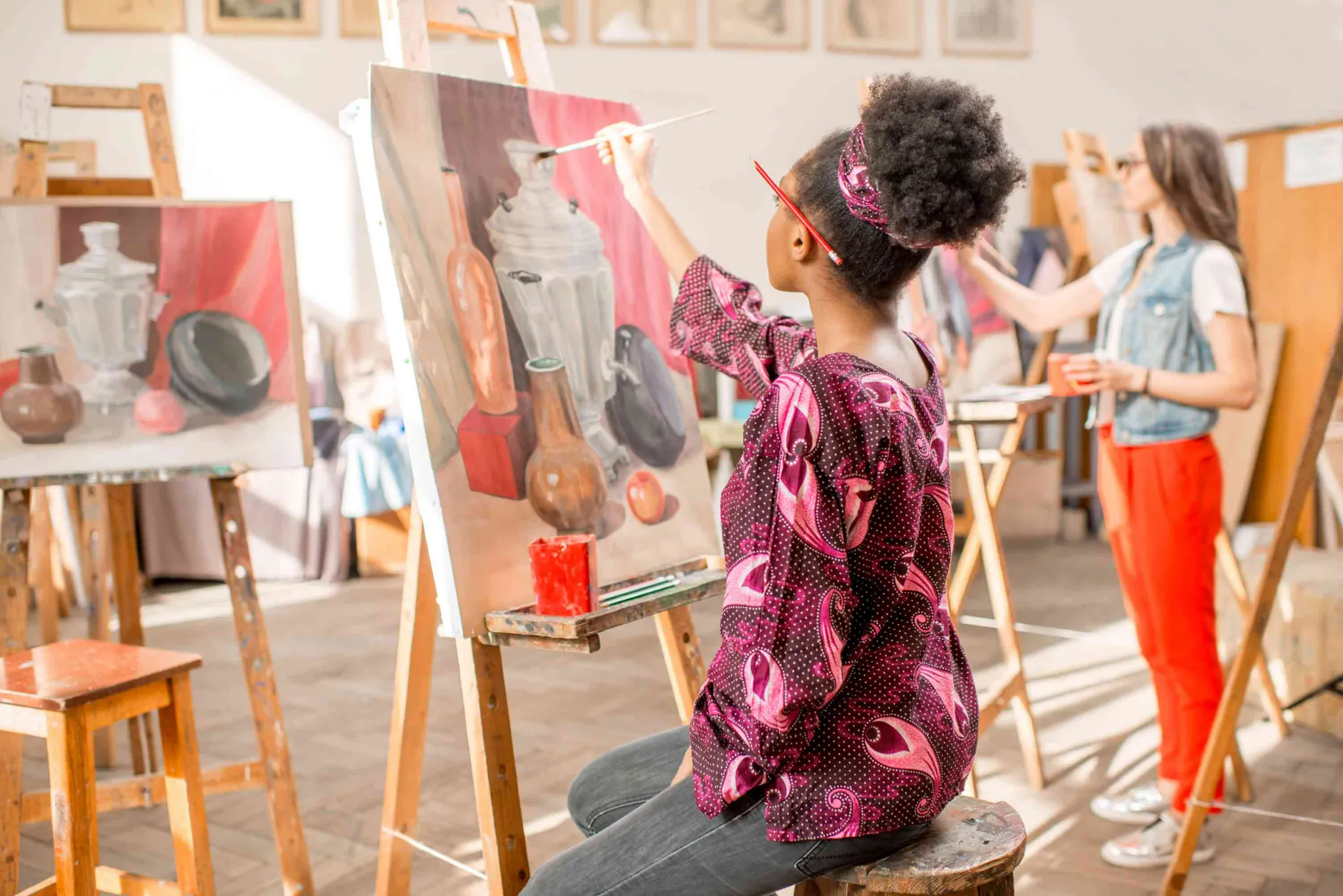
The BFA is a studio art degree, so hands-on instruction and practical training are core facets of the curriculum. While some didactic coursework is required, students spend a considerable amount of time learning mixed-media art techniques in the studio. While honing artistic skills, they also develop the critical thinking and creative expression skills essential for establishing a standout portfolio.
What You Will Spend Your Time Doing
Pursuing a BFA degree program entails a college experience that looks distinct from that of other students who opt for a traditional undergraduate degree program. The BFA curriculum is designed to be immersive and engaging, presenting students with the opportunity to dedicate substantial time in the studio learning painting fundamentals and printmaking skills.
Building Skills in Painting, Printmaking, Drawing and Visual Development
Rather than sitting in a lecture hall listening to information about a particular topic, you spend your time in the studio learning the practical and technical skills needed for artistic expression.
Exploring Process, Experimentation and Contemporary Image-Making
Through studio-based instruction and hands-on training, you explore the artistic process and the importance of creative experimentation. It’s a time when you can discover processes that work well for you, all while allowing yourself the freedom to make mistakes and move forward. In the studio, you can develop both agility and resiliency, which are integral to any art career.
Who Tends to Thrive in This Degree Path
A visual arts degree appeals to aspiring artists who want to pursue their passion at a professional level. Those who do well in a fine arts BFA program include:
Students Who Want Intensive Studio Time and Hands-On Making
If you consider yourself a tactile learner, and you welcome constructive feedback throughout the artistic process, you may benefit from a fine arts degree program. The bulk of the coursework is completed in the studio as you take painting classes and work directly with alternative media.
Students Interested in Visual Culture, Concept Development and Artistic Voice
Artistic expression rests at the core of any medium, whether you are focused on contemporary painting or digital fabrication. In a studio-based BFA program, you can connect art theory and history to your own concept development while learning to share your own artistic voice.
How to Know if the Studio Experience Fits You
The BFA is a critique-based art program. In the studio, you are working under the guidance of experienced artists and instructors who will push your boundaries and, in turn, help you mature as an artist.
Critiques, Revisions and Portfolio Development as Part of Growth
Pouring your heart and soul into a piece can be refreshing and rewarding, yet it can make receiving constructive feedback more difficult. In art school, though, it is important to welcome critiques and revisions. Your instructors are not trying to diminish your work or damage your ego; rather, they know that feedback and guidance is the only way to grow as an artist.
Comfort With Process, Risk and Long-Term Skill Building
These initial encounters can feel uncomfortable, as it is challenging to accept that your work requires ongoing refinement. However, embracing this feedback is essential to the creative process. Over time, you will become better equipped to push your boundaries, evolving into an artist who is comfortable taking risks and creating works that reflect your unique perspective.
What Career Paths This Degree Can Support
A painting and printmaking degree can provide you with the practical training needed for a wide range of art careers, such as:
Studio Practice, Exhibitions, Commissions and Independent Art Careers
Professional artists rely on extensive training during art school to develop their voice and improve their craft. With a BFA in painting and printmaking, you can begin building a body of work you may later use for studio display and art exhibitions. As you grow your brand as an artist, you will be positioned to take on more commissions and forge an independent pathway.
Related Paths in Arts Education, Galleries, Creative Industries and Cultural Work
In addition to pursuing your own art career, you might consider roles in related areas like:
- Art Education and Outreach: If you are passionate about pedagogy, you might pursue roles as a museum educator, community outreach coordinator, or arts instructor. These positions allow you to bridge the gap between complex historical narratives and diverse audiences. Whether designing programming for K-12 students or facilitating lifelong learning workshops, you help foster the next generation of visual thinkers and cultural participants.
- Gallery and Museum Management: The institutional side of the art world relies on professionals who understand both the aesthetic and logistical needs of art. Careers in curatorial assistance, registration, exhibition management, and visitor services allow you to steward collections and shape the environments in which art is viewed. These roles require a unique blend of organizational precision, legal awareness (including provenance and insurance), and a deep understanding of historical and contemporary contexts.
- Nonprofit and Cultural Advocacy: Cultural work often takes place outside of traditional white-cube galleries. Working for arts nonprofits, foundations, or community-based arts organizations involves advocacy, grant writing, and community development. In these roles, you act as a facilitator, securing the resources and public support necessary for artistic movements to thrive. This path is ideal if you are interested in systemic change, such as decolonial curatorial practices or promoting equity in the arts.
- Creative Industries and Media: The skills gained through art and art history programs—such as visual storytelling, digital fluency, material research, and aesthetic analysis—position you well for roles across publishing, cultural journalism, media production, and design industries. Whether you are writing exhibition catalogs, producing digital content for cultural platforms, or designing visual communication assets, these careers allow you to translate scholarly insights into engaging narratives for broader public audiences.
How the Degree Can Support Graduate School Goals
Aspiring artists earning a BFA degree may have their sights set on graduate school. A Master of Fine Arts (MFA) can prepare them for higher-level roles, such as working as an art professor. An excellent first step in any art career, the BFA provides a foundation for advanced study.
Portfolio Quality, Research Habits and Conceptual Development
Throughout the BFA program, you can create and refine your portfolio as you learn more about conceptual development and the importance of selecting the just-right pieces for your collection. You begin to establish the research skills needed in a graduate degree program.
Why Material Exploration and Critical Thinking Matter for Future Study
Critical thinking rests at the heart of the fine arts BFA program. Students are expected to analyze both their own work and the works of others to discover opportunities for growth and improvement. This is a powerful transferable skill necessary in any graduate degree program.
Why Painting and Printmaking Still Matter Now
Painting and printmaking may be traditional artistic mediums, but they remain relevant, even in a world becoming ever-dependent on digital technology and virtual experiences.
Material-Based Practice in a Digital and Hybrid Creative World
Material-based practice is essential for creating works that inspire and engage viewers. To produce outstanding art, one must move beyond theory and gain a profound understanding of how objects are physically constructed. This requires a rigorous foundation in the materials, technical processes, and tactile methods that transform raw substance into meaningful expression.
How Traditional Processes Connect to Contemporary Visual Culture
Traditional processes — such as intaglio printmaking, relief printmaking and monotype printing — still have a place in the contemporary art world. Students who engage in practical training and actively work to understand traditional approaches to printmaking can utilize their knowledge of the past to create innovative works in the future.
Questions to Ask Before You Commit
Are you still asking yourself, “Is a BFA right for me?” Below are some questions to consider as you reflect on this program and determine if it’s the right fit:
Do You Want Depth in Studio Practice or a Broader Creative Curriculum?
If you envision yourself spending countless hours in the studio perfecting photographic printmaking techniques or taking painting classes, then a BFA is an excellent option.
Are You Ready for the Time, Discipline and Self-Direction a BFA Requires?
The BFA program is designed to be an immersive learning experience, best for students who are ready to work independently yet still accept guidance, feedback and constructive criticism.
How to Decide if This Degree Matches Your Goals
Fine art career paths require a strategic investment in your education. Thus, it’s critical to choose the academic pathway that will best support your personal goals and your artistic style.
Comparing Your Interests, Career Plans and Learning Style
The BFA program provides a solid foundation for students who want to pursue art careers and practice at a professional level. Independent learners are well-suited to this program, which is anchored by studio time.
What to Look For in a Program Before You Apply
Selecting the right academic home is the first step toward a fulfilling career in the arts. As you research potential programs, look beyond general prestige and focus on the practical resources that will translate your passion into professional expertise. Here are the pillars of a robust art education:
- A Comprehensive, Skills-Based Curriculum: Seek programs that balance conceptual exploration with technical rigor. A strong curriculum should provide a firm grounding in the fundamentals—such as composition, color theory, and material science—while remaining flexible enough to allow you to delve into specialized techniques. The goal is to build a toolkit that is both adaptable and enduring, ensuring you can tackle any artistic challenge that comes your way.
- Ample Studio Time: Art is a discipline of practice. Ensure the program provides significant, dedicated access to physical studio spaces where you can experiment, iterate, and refine your work. High-quality facilities—whether they are traditional woodshops, digital media labs, or painting studios—are where you move from understanding a concept to mastering its execution.
- Expert Faculty: Your mentors are your most valuable resource. Look for programs where faculty are not only accomplished educators but also active practitioners within the arts. Engaging with professors who are currently exhibiting, researching, or publishing ensures that you are learning relevant, contemporary methods and gaining insight into the professional realities of the art world.
- Portfolio Development Opportunities: Your portfolio is your professional calling card. A high-quality program will emphasize the importance of documentation, curation, and the critical refinement of your best work. Look for opportunities for critique sessions, student exhibitions, or capstone projects that teach you how to present your creative voice in a way that resonates with galleries, employers, and curators.
Earn Your Bachelor of Fine Arts Degree at Rocky Mountain College of Art + Design
At Rocky Mountain College of Art + Design (RMCAD), our Bachelor of Fine Arts degree explores a variety of artistic forms — including painting, sculpture, photography, ceramics and printmaking. Students select an artistic medium in which specialize, so they can prepare for professional practice while developing a keen sense of artistic perception. They learn to connect art history and theory to their own creative process.
Request more information today about RMCAD’s BFA degree.
FAQs: Is a Bachelor of Fine Arts in Painting and Printmaking Right for You?
Q1: What is the biggest difference between a BFA in painting and printmaking and a general art degree?
As opposed to a more general art degree, this BFA is more focused on intensive studio practice, critique, portfolio growth and material exploration in painting and print-based processes.
Q2: Is this degree only for students who want to become full-time fine artists?
No; the degree can also support paths in arts education, galleries, creative industries, cultural organizations and future graduate study.
Q3: Do I need to already be strong in both painting and printmaking to apply?
Not necessarily. What matters more is your interest in studio practice, willingness to experiment and commitment to developing skills over time.
Q4: How important is critique in this kind of program?
Critique is crucial to helping students refine ideas, improve technical choices and build confidence when discussing their work in professional settings.
Q5: Can this degree still be useful in a digital creative world?
Yes. Painting and printmaking build strong visual thinking, material awareness and process discipline that translate well into contemporary and hybrid practices.
Q6: Is this a good degree for students considering graduate school later?
Yes. The degree can help students build the portfolio, conceptual depth and studio habits often needed for advanced fine art study.
Q7: How do I know if this degree is the right fit for me?
It is often a good fit if you want significant studio time, enjoy hands-on making and are excited by developing your own visual voice through sustained practice.