
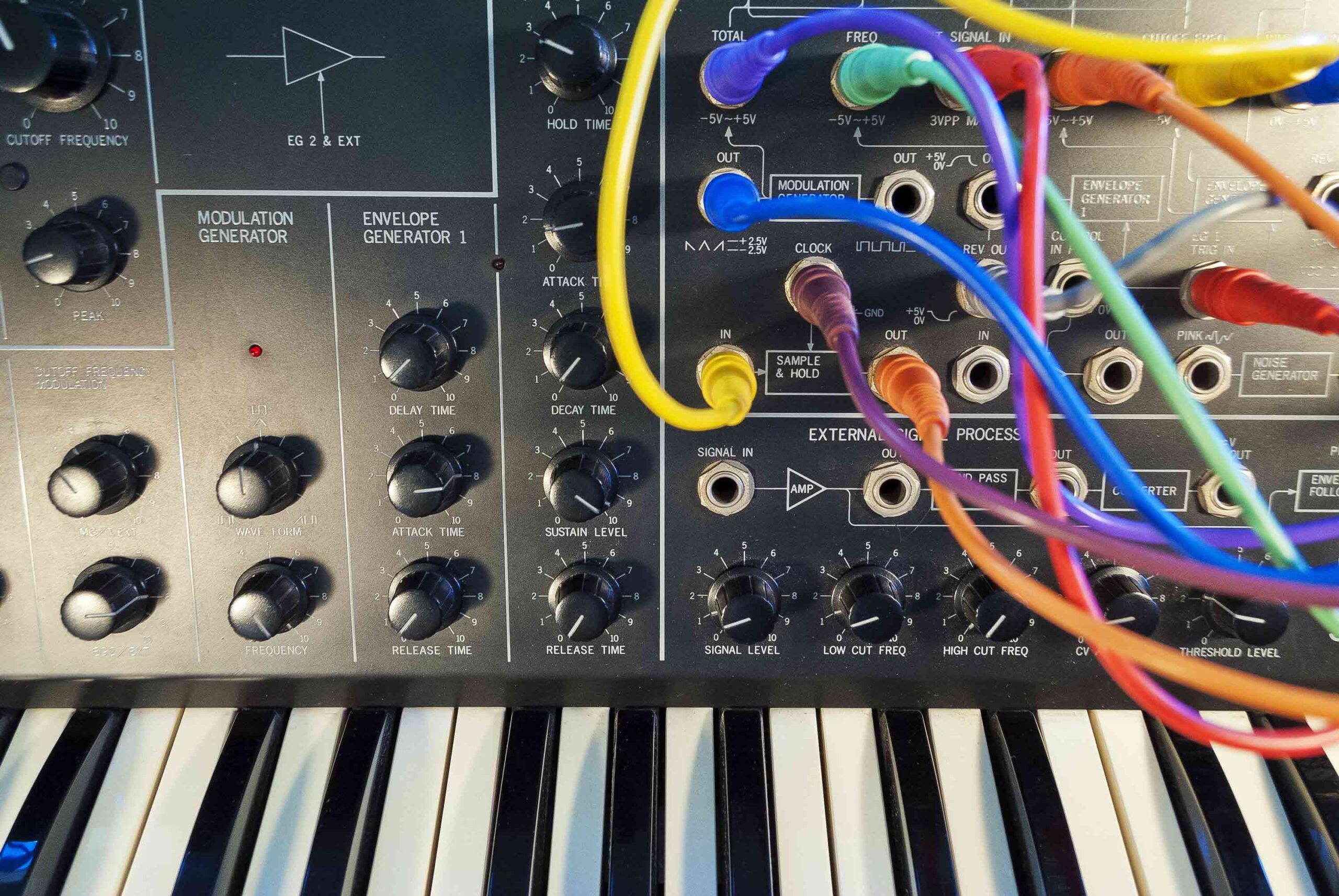
Few instruments are as wonderfully versatile as the synthesizer. This remarkable device can produce a myriad of sounds, moving beyond the fixed tones of traditional instruments to incorporate filtering and modulation. The result? Infectious, gritty and downright ethereal sounds that fuse creativity and technology.
A single synthesizer can deliver impressive opportunities for musical expression, but these expand exponentially as different types of synthesizers enter the mix. Like genres, these fall in and out of favor, with different synthesizers proving trendy at different times.
The ultimate example is the modular synthesizer, which was a big deal in the 60s but less prominent near the end of the 20th century. Now, modular synthesis appears to be in the midst of a true renaissance.
Using multiple components (known as modules) to produce a wide range of electronic sounds, modular synthesis allows sound designers and engineers to create customized signal paths. Modular capabilities are truly astounding, as we will explain below.
A Brief History of Modular Synthesis
Electronic instrumentation existed before modular synthesis, but was nowhere near as prominent. The theremin, for example, produced intriguing electronic sounds as early as the 1920s, but remained limited in terms of tone.
A huge breakthrough arrived as electronic instruments gained the ability to combine diverse components — the core functionality that sets modular synthesizers apart. Once this superpower was uncovered, synthesizers took off. The history of this instrument is arguably just as intriguing as the music it has produced:
The Birth of Modular Synths in the 1960s
Modular synthesis took over during the 1960s, largely spurred by two musical geniuses: Don Buchla and Robert Moog. These innovators worked separately and adopted distinct philosophies, but interestingly, they maintained similar timelines, releasing early modular systems seemingly in tandem. Understanding their contributions is key to recognizing what makes modular synthesis so special.
- Don Buchla. As one of the most recognizable names in electronic music, Don Buchla made an indelible impact on the West Coast’s experimental music scene. His original contribution to the synthesis movement involves the Buchla 100, which was released around the same time as Robert Moog’s modular systems.
- Robert Moog. Originally focused on building theremins, Bob Moog pioneered what is now known as “East Coast synthesis.” In many ways, Moog’s modular systems resembled traditional instruments, reflecting an overarching desire for these synthesizers to be seamlessly built into prior musical routines or practices. He is credited with creating the voltage-controlled oscillator.
The Wendy Carlos spectacle Switched-On Bach popularized the Moog synthesizer, reaching impressive heights on the Billboard charts simply by recreating well-known compositions via synthesizer. Meanwhile, the Buchla 100 was showcased in Morton Subotnick’s Silver Apples of the Moon, one of the most influential records in electronic music history.
Decline in the Digital Age
The modular synthesis trend was relatively short-lived, emerging in the music scene during the 1960s but quickly giving way to analog solutions that were more portable and, therefore, far more convenient. The Minimoog provided an early example of this inevitable transition, condensing modular systems but expanding opportunities for bringing unique sounds to live performances.
Follow-ups such as the ARP 2600 expanded the reach of subtractive synthesis, favored by the likes of Stevie Wonder and even used to create R2-D2’s voice in Star Wars. By the 1980s, FM synthesis was the go-to option for creating the decade’s signature metallic sounds.
Why Modular Synthesis Is Gaining Popularity Again
Modular synthesis is in the midst of a much-deserved comeback, sparked by a widespread desire for warm, personality-filled sounds. This nostalgia-driven revival accelerated with the onset of the COVID-19 pandemic, with beloved synth-pop musician Vince Clarke capturing the mood with Songs of Silence, while novices used lockdown as an opportunity to finally commit to exploring Eurorack synthesizers.
Beyond COVID, the return of modular synthesis reflects a widespread desire for creating distinct sonic soundscapes that shake up the status quo. Sometimes, the best way to achieve this is to return to older technologies, incorporating new ideas to make them feel fresh. Modular synthesis facilitates this with a few distinct qualities:
Creative Freedom and Customization
Removing the inherent limitations of pre-wired signal paths, modular synthesizers promise the ultimate in creative freedom. These open-ended systems allow for the addition of modules as desired. Each additional module promises unique sounds that would be difficult to replicate if dependent on fixed architecture.
Tactile, Hands-on Sound Design
In a digital world, some sound designers and engineers often express nostalgia for the tactile opportunities of yesteryear. Modular systems help to recapture this magic, bringing an appealingly hands-on approach to the art and science of shaping sounds. Sound designers struggling with feelings of disconnection may find a new spark simply by experimenting with modular synthesis in a hands-on and deeply immersive manner.
Unique and Unrepeatable Sounds
Sound designers are always on the search for new and unusual sonic opportunities, but when fixed architecture is involved, sounds can begin to feel limited or even stale. This is where modular synthesis can shake things up.
By combining and customizing stand-alone modules, creators can experiment with innovative sound design techniques. These distinctly physical setups can amplify a concern that some may find troubling, but others enjoy: the inability to save or repeat sounds. Since modular sound design requires a physical setup of synthesizer components that may be difficult or impossible to replicate, the sounds that are created may be here today and gone tomorrow.
Key Components of a Modular Synth Setup
While every DIY modular synthesizer setup is unique, these diverse systems share a few core components that enable them to create sound in the first place. While there is no de facto standard for the cases that house the modular components, most creators regard the Eurorack synthesizers as the go-to solution.
Many hardware manufacturers have designed their electronic music gear to fit within the specifications created by Eurorack, making the process of creating a modular setup surprisingly simple and straightforward. Other components (such as oscillators and filters) play a huge role in shaping sounds, producing raw audio waves and then adjusting these by manipulating frequencies.
Oscillators and Sound Sources
Every analog modular synth needs an oscillator, which is the piece of hardware that generates the sound waves we hear. Each oscillator offers its own unique sound profile, created by generating a fast and repeating sound wave. Other sound sources, such as noise generators and drum modules, generate a baseline sound that can then be manipulated via experimental sound design.
Filters and Effects Modules
The core sound created by an oscillator can be tweaked, tuned and otherwise altered by filter modules, which are used to remove specific sound frequencies. Meanwhile, effects modules bring different sound profiles and patterns into the mix. These can function a lot like guitarists’ effects pedals.
Sequencers and Control Modules
Sequencers act as the conductor in the modular synth experience, keeping everything running on time and in order. This can be achieved through voltage control, which dictates sound elements such as the pitch. The sequencer provides precise control, enabling the creation of critical patterns and melodies.
Techniques for Crafting Unique Sounds
Setting up the modular synthesizer is only the beginning. Experimentation is key to unlocking the modular synthesizer’s creative magic. This means exploring a wide range of rhythms and timbres to reveal sounds that can be further manipulated with different modules.
Experimenting With Patch Cables
As we’ve mentioned, the modular synthesis produces a wonderfully tactile experience, achieved, in part, by physically plugging cables into various modules. Many creatives enjoy the process of routing waves through boxes via patch cables, as this is often where they discover fresh sounds.
Although now associated with experimental sound design, this actually relates to the patch panels used in early telephones — a process that, in many ways, reflects the modular synthesis workflow. To the novice, these patch cables can seem overwhelming, but with continued exposure, they are reframed as intuitive and diverse tools for shaping sounds.
Layering Modular With Digital Tools
Adding digital elements to the modular synth experience can open up new possibilities that cannot be achieved with strictly traditional methods. To that end, some creators use digital strategies to control hardware, while others utilize external devices such as MIDI keyboards. Hybrid solutions expand modular capabilities and may also help to make modular systems more accessible to a broad audience.
Generative and Evolving Patches
Despite the creative possibilities of modular synthesis, many sound designers require some element of structure to keep them on track. This often involves creating a detailed process or algorithm that dictates how the music will be created and played. Ambient music legend Brian Eno describes this as “a system or a set of rules which, once set in motion, will create music for you.”
Notable Artists Using Modular Synthesis Today
There’s no denying the dominance of modular synthesis in the electronic music scene of the ’60s and ’70s. Still, several inspiring stories reveal how today’s modular synth artists continue to bring classic synthesizers into the modern musical landscape. Many draw on a long history of using modular synthesis, having refused to give it up even after it fell out of fashion.
Suzanne Ciani
Legendary sound designer Suzanne Ciani worked closely with synth genius Don Buchla. This expertise is evidenced in her inspiring work, including live recordings that showcase mesmerizing textures. Ciani tells VICE, “I was proselytized with [Buchla’s] unique vision of electronic music instruments,” adding that she committed well over a decade to “manifesting the live performance possibilities of the Buchla 200.”
Caterina Barbieri
Italian musician Caterina Barbieri is fascinated by minimalism in music — a concept that is easily explored through modular synthesis. Describing her commitment to exploring the “philosophy of sound,” she tells MixMag that she often feels “enchanted in this choreography with the machine. It’s very gestural.”
Richard Devine
Atlanta-based electronic musician Richard Devine tells CLOT Magazine that he began experimenting with modular synthesis at the age of 17, but adds that he now enjoys playing with cutting-edge technologies. He provides the ultimate proof that old school tools can be used in tandem with newer solutions, with diverse technologies and effects complementing one another to create inspiring sounds.
Getting Started With Modular Synthesis
Interested in exploring the fascinating world of modular synthesis? This experimentation-friendly method of creating music offers intriguing opportunities to explore diverse sounds. Getting started does not need to feel overwhelming. Equipped with a few modules and some foundational concepts, anyone can fulfill their artistic vision via modular synthesis.
Choosing Your First Modules
Even the most complex analog modular synth setups begin with a humble and basic set of modules. These include the case that contains each module, plus the oscillator that provides the sound — and, of course, the amplifier that shapes the volume of the signal.
An envelope generator module is also a must, as it shapes the sound wave to move beyond static signals. Finally, an output module can be used to patch hardware to an external device such as an audio mixer or headphones.
Understanding Signal Flow
Success in modular synthesis relies on an in-depth understanding of signal flow. After all, every sound created in a modular synth setup goes through a signal flow process that begins with an oscillator, is tweaked and changed by filters, and is then pumped out via the amplifier.
The term “signal flow” may describe the path of the audio signal. In the context of modular synthesis, this concept encompasses control voltage. This determines not only the sound that comes out of the mixer, but also how modules can interact with one another to shape tones.
Learning Resources and Communities
There are many ways to explore creative opportunities via modular synthesis. Simply experimenting can provide a strong start, although many sound designers and engineers crave additional guidance or instruction. Many concepts central to modular synthesis are covered through structured college programs or explored in academic publications like the Journal of Music Production Research.
Events can prove even more illuminating, offering synthesis insights along with valuable networking opportunities. Knobcon, for example, draws synthesizer enthusiasts from all around the world, promising extended exposure to industry professionals and the hardware manufacturers responsible for the latest and greatest synth modules.
Many Knobcon attendees are also members of the ModularGrid community, which specializes in Eurorack synthesizers and features more than half a million different rack builds from its site’s dedicated user base. Modular on the Spot also brings synth music to diverse communities, even hosting outdoor concerts that feature local synth artists.
The Future of Modular Synthesis
The modular synthesis revival may prove more than a passing fad. Advanced technologies make it possible to overcome the limitations that shortened the original modular craze. Exciting possibilities include:
Integration With Digital Music Production
Modular synthesis and digital production need not feel like an either-or situation. Both possibilities can be blended to capture the dual advantages of hands-on creativity and digital precision.
Expanding Accessibility
Skeptics worry about gatekeeping in the modular synth community, especially as modular synthesis has a (perhaps undeserved) reputation for elitism. This is beginning to change, however, and as new equipment and technologies enter the picture, there will be more opportunities for novices to get in on the evolving modular synthesis movement.
Semi-modular systems, for example, offer an appealing middle ground, promising out-of-the-box functionality that may appeal to novices without entirely sacrificing the flexibility that experienced sound designers appreciate. As we’ve mentioned, digital integrations can further expand accessibility, in part by diminishing what could otherwise feel like a major learning curve.
The Role of Modular in Modern Genres
Modular’s fall from grace occurred before the rise of hip hop and electronic dance music, so its full potential has only been realized in a few narrow genres. Moving forward, we can expect to see modular synthesis expand its reach, delivering new sounds and ideas across the entire musical spectrum.
At the forefront of this movement is Corry Banks, who aims to bridge the gap between hip-hop and music technology. Banks wants to help artists find new (and more accessible) ways to explore effects that would have previously felt out of reach. As these and other resources enter the fray, we can expect to see modular synthesis incorporated into a far wider range of genres and musical traditions.
Explore the Wide World of Synthesis With RMCAD
Discover a whole new world of sonic possibilities while studying sound design with Rocky Mountain College of Art + Design (RMCAD). Our online Bachelor of Fine Arts in Music Production introduces you to music fundamentals but also offers hands-on opportunities to experiment with mixing, mastering and so much more.
At RMCAD, we offer immersive online instruction, along with access to the Rocky Mountain Sound Lab (RMSL) for those who live locally in Denver, CO. Learn more about our Music Production program or take the next step towards an inspiring journey in experimental sound design.