Lighting illuminates modern society, fueling our early-morning productivity and allowing us to socialize after sundown. When the days are short in winter, lighting keeps us cheerful and connected. Those opportunities expand greatly as we bring greater intentionality to how lighting is designed and where it’s used.
Different lights serve different purposes, bringing distinct moods or aesthetics to various spaces while also supporting a range of human activities. Today’s intelligent solutions go even further by incorporating adaptive features that take lighting to the next level. Read on to explore lighting design tips that detail how human-centric lighting can elevate comfort, productivity and efficiency.
Designing Light Around People
Lighting intentionally illuminates the diverse spaces that humans occupy, improving visibility while supporting a whole host of everyday activities. At surface level, it seems intuitive that interior lighting design would be driven by the individuals who navigate lit spaces — and yet, lighting often feels haphazard or ill-suited to the situation at hand.
When lighting is an afterthought, otherwise beautiful spaces can feel less welcoming or simply seem ill-suited to their intended purpose. The impact can be especially profound in high-stakes environments (like healthcare facilities), where lighting helps professionals carry out complex tasks with precision.
What Is Human-Centered Lighting Design?
Human-centered lighting encourages designers to purposefully create illumination that reflects human realities, drawing upon biology along with social practices or routines to create spaces that are both functional and comforting. This calls for a thorough understanding of how lighting impacts individuals and how it can be adjusted to support other critical design elements.
When lighting is human-centered, it is distributed according to human needs as well as adjusted to provide the appropriate intensity or color temperature for the demands of the moment. This extends the broader concept of human-centered design to fully consider and address the needs of real people. As contract furniture brand KI points out while supporting the International Contemporary Furniture Fair (ICFF), “Designs tell a story not through appearance alone, but through how they function, feel and support the human experience.”
Building Lighting in Layers
Many individuals think of lighting in terms of specific fixtures, but in the aggregate, this involves a purposeful blend of light sources. If properly layered, these reduce harsh shadows to make light more balanced and natural. Lighting design basics include three main layers:
Ambient Lighting for Overall Illumination
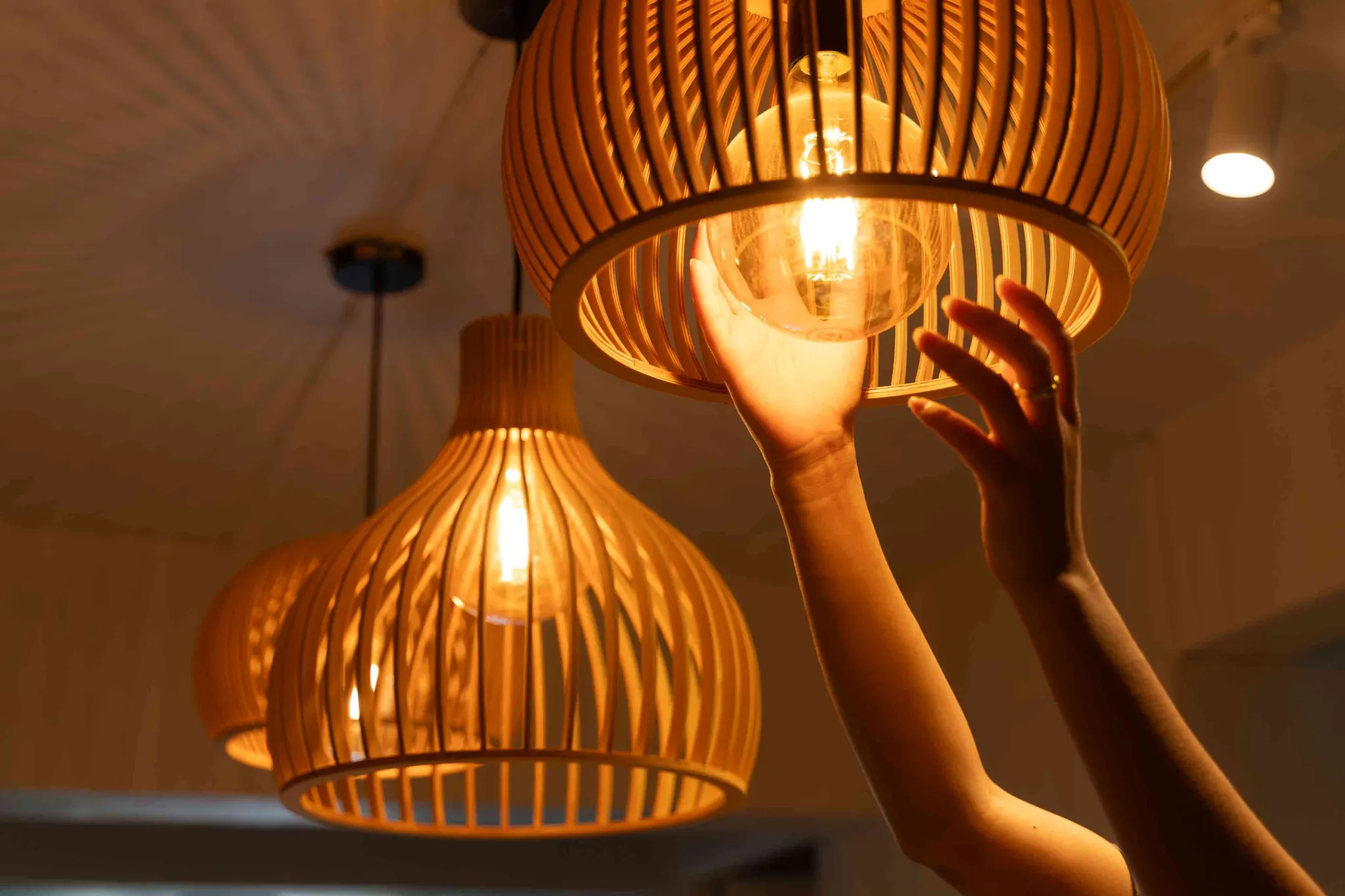
General illumination is known as ambient lighting, and it is arguably the most important to get right. Ambient lighting sets the stage, providing a solid baseline that enables people to see objects and navigate spaces easily, even without support from task lighting. This can be natural or artificial, but it must hold true to the core purpose of the space at a given point in time. Ceiling fixtures (such as pendants and chandeliers) are among the most familiar, although floor lamps and wall sconces can also be used for ambient purposes.
Task Lighting for Focus and Function
Task lighting provides direct illumination during activities such as reading, drawing, cooking or sewing. Designed to prevent shadows, task lighting limits eye strain and brings crisp illumination to targeted spaces.
Desk lamps are the go-to, with flexible arms or bars directing light as needed. Other spaces may call for creative solutions such as under-cabinet lights (particularly useful in kitchens) or recessed directional lights (helpful for limiting clutter). Cooler, brighter lights are often favored when precision is a priority, but adaptability is where task lights truly shine.
Accent Lighting for Depth and Mood
Accent lighting is not merely aesthetic; it fosters stronger emotional connections while building on the functionality established by ambient and task lights. As with task lighting, however, accents are focused. The difference lies in where the individual is meant to look and why. Accent lighting draws attention to beautiful pieces of art or intricate architectural features. These focal points gain clarity without compromising the room’s overarching mood.
Understanding Color Temperature (CCT)
Color temperature describes the perceived warmth of a light’s color, based on how much red or blue hue is present. This simple tool makes it easier for interior designers to quantify light quality and then match it to the space in question. Measured in kelvins, interior CCT ranges from around 2,500K to 7,000K. Lights under 3,000K are more likely to be perceived as ‘warm,’ while higher values tend to feel cooler.
How CCT Lighting Affects Mood and Perception
There is no ‘ideal’ CCT, and preferences for lights that appear warm or cool can vary between individuals as well as depending on the function of the room or the tasks carried out within that space. In general, though, lower CCT tends to feel cozier or more calming. Meanwhile, a higher CCT creates a crisp feel but risks coming across as sterile.
Choosing the Right CCT for Each Space
When determining the preferred CCT for a given space, consider what is meant to be accomplished within that area. Preferred illumination may be different from office lighting, compared to, say, a bedroom or a hotel lobby. While many people favor warm yellows, cooler light can be helpful when precision is a priority. Function should be the guide, but aesthetics can also be considered and further shaped through other lighting choices.
The Importance of Color Rendering (CRI)
The color rendering index (CRI) shows how various light sources can make colors come across to the human eye. Specifically, this represents how faithfully lighting showcases objects’ genuine colors, especially compared to how objects appear in natural light. This is important because some artificial lights distort certain hues, creating a perception of dullness that influences how skin or finishes appear.
What CRI Lighting Measures
As a 0-100 scale, CRI describes how lights impact perceived colors. High scores are preferable, with natural light achieving a CRI of 100. Incandescent bulbs also produce high CRI results, while some fluorescent bulbs have lower CRIs that make items appear washed out. Precise CRI measurements require tools such as spectrometers, which analyze how light is produced by a given source, then compare the result against colors from standard light sources.
Why High CRI Matters for Human Spaces
CRI helps improve visual comfort. When people view low-CRI spaces, they may feel disconcerted without knowing why. This discomfort, though often subtle, can detract from otherwise enjoyable experiences. High-CRI lighting determines whether food appears appetizing or skin tones appear natural. In residential lighting design, high CRI improves comfort, and in commercial lighting design, it showcases products or services.
Circadian Lighting and Human Health
Humans abide by 24-hour cycles that determine how we rest and when we’re active. Known as the circadian rhythm, this acts as an internal clock. Lighting plays a central role, either activating or suppressing the hormone melatonin. Adjusting lights accordingly helps humans stay true to their circadian rhythm, even in a contemporary world dominated by artificial lighting.
How Light Influences the Body’s Rhythms
Sleep challenges and ensuing fatigue can be addressed through exposure to sunlight — and then by limiting such exposure in the evening. Natural light tells the body it’s daytime, and through a practice known as sun gating (heading outside soon after waking), the circadian clock can be reset. This effect can be mimicked, to some extent, through full-spectrum bulbs and by maximizing natural light sources through daylighting. In the evening, light can be dimmed to create a soft, warm glow that helps the body begin winding down.
Supporting Wellness Through Tunable Lighting
Although it’s best practice to reduce overall light exposure at night, certain types of light are more disruptive to sleep. Blue light, in particular, has been shown to interfere with circadian rhythms and to hinder sleep quality. Consider all that time spent scrolling on your smartphone before tossing and turning at night. Unfortunately, even if you set your phone aside, the wrong interior lighting could echo this effect.
Warm lights can be helpful but may feel limiting during the day, especially when focused activities demand brighter lights. Tunable circadian rhythm lighting removes this either-or discussion. Through tunable white lighting, users can adjust the light temperature based on the needs of the moment. In the evening, this means shifting toward warmer lighting that feels cozy. Tunable lighting allows for adjustments to support different populations, too, such as seniors or children.
Adaptive Control Strategies
Lighting need not feel static. Adaptive controls let you adjust lighting to match in-the-moment needs or preferences. This can be helpful when different household members have different ideas of the ‘ideal’ lighting setup. It also accommodates different activities, providing the chance to level up task lighting for focused activities or to dim when added ambiance is desired. This goes beyond dimmable lighting to include diverse sensors or other controls that make lights easier to orchestrate.
Using Lighting Scenes to Shape Experience
Pre-programmed settings (known as scenes) bypass the process of individually setting each light or dimmer based on a preferred mood or function. As a result, spaces can shift as needed, making occupants feel as if they’ve been transported to new atmospheres. Multi-purpose spaces emerge — which support focused tasks in one moment and socializing or relaxation in another.
Sensors for Responsive, Efficient Lighting
Today’s advanced systems use lighting sensors to improve multiple facets of illumination: adjusting brightness or color temperature and even localizing lighting based on detected proximity. These features make lights highly responsive to human activity. Occupancy sensors limit the use of lighting when people are not present and adjust based on different activities or social contexts. When lighting is more responsive, it’s also more efficient, as lights don’t need to constantly run at full power (or at all).
Lighting for Mood and Productivity
Research shows an indisputable link between lighting and mood, not to mention overall well-being. It’s clear that natural light makes us feel happier and more energetic, but the right interior lights can capture this effect, too. Additionally, lights can be adjusted to support or even foster desired states of mind.
Designing Spaces That Support Focus
Task lighting is a must when studying or participating in other activities that demand maximum focus. Ideally, however, focus-enhancing lights will go above and beyond to create uniquely productive spaces. Brightness is a key factor, as dim lights strain eyes and may limit concentration. Brighter lighting improves clarity and can sharpen focus. Concentration also improves as color temperature becomes cooler and glare or shadows are minimized.
Creating Comfort and Emotional Impact
Home should offer spaces that invoke healing or restoration, and lighting can be a key part of this experience. In some spaces, this might involve natural lighting, made available through expansive windows that allow light to stream in. Elsewhere, lighting may be dimmer or warmer, casting a gentle glow to place occupants at ease. Layered sources soften shadows to make illumination more gentle and calming.
Energy Savings Through Smart Lighting
Smart lighting looks beyond the immediate quality of lighting to consider how and when spaces are lit. Intelligent systems gather information about occupants’ everyday behaviors, using these details to automatically adjust lighting according to routines or preferences. There are many ways to promote energy-efficient lighting while also keeping illumination human-centered.
Reducing Waste with Adaptive Controls
LED lighting offers undeniable environmental benefits, but adaptive controls promise the ultimate in sustainable lighting design. While human users tend to leave lights on long after they’re needed (especially in public or commercial spaces), intelligent systems exemplify how responsive lighting can truly be. Sensors and timers verify when spaces are empty and adjust lights accordingly. This means that lighting only utilizes energy when it’s actually needed.
Balancing Efficiency With Human Needs
The quest for greater efficiency need not hamper efforts to improve comfort and focus alongside it through high-quality lighting. Both are possible, especially when spaces include a blend of natural light sources and adaptive controls. Balance comes with determining how people actually use lighting and where waste is most likely to occur. From there, designers can tailor systems that conserve energy but also maintain a desired perception of warmth or clarity.
Global Approaches to Human-Centered Lighting
Like many elements of interior design, lighting is culturally driven. Lighting strategies dominant in some regions may be less prevalent elsewhere due to local traditions or practices. That said, lighting trends have a way of taking on new meaning as they are recontextualized across borders.
Learning From Diverse Design Practices
There are numerous ways to approach lighting, and no one fixture or color temperature is universally desirable. Individual preferences should fuel space-specific lighting strategies, but cultural practices may also come into play. Global interior designers offer plenty of inspiration, exploring fresh lighting ideas while also grounding illumination in heritage or identity.
- South Korea – Rather than limiting smart lighting to the home, South Korea is bringing adaptive controls outdoors, where city lights are equipped with adaptive features. Embedded with Internet of Things (IoT) devices, South Korea’s smart security lights address both efficiency and safety concerns, bringing lighting to alleys without drastically increasing energy usage.
- Denmark – Layered lighting is a big deal in Danish homes, where open spaces capture the beauty and freedom of the natural world. Holding fast to the cherished idea of hygge, Danish interior designers strive for warmth, blending light sources to make spaces feel calm.
- Brazil – The aesthetic power of curated lighting includes the fixtures themselves, which can be used as artistic accents even as they draw attention to other visual details. In Brazil, many designers favor textured light fixtures that also function as sculptural pieces. Trailblazers such as Lucas Recchia show how lighting can form a “dialogue between transparency and matter.”
Lighting That Serves People
Explore creative lighting solutions that make spaces inviting and how these play into the big picture of interior design. Rocky Mountain College of Art + Design (RMCAD) details the technical and human-centered sides of interior design with a degree program that prepares future designers to support real people.
Accredited by the Council for Interior Design Accreditation (CIDA), RMCAD’s Interior Design program examines the many facets of sustainable design. Learn more about our online and on-campus Bachelor of Fine Arts in Interior Design programs and begin your journey toward cultivating gorgeous, welcoming spaces.
Frequently Asked Questions
What is human-centered lighting design?
Human-centered lighting design focuses on how light affects people’s comfort, mood, health and productivity, rather than simply illuminating a space. It considers factors like layering, color temperature, color rendering and circadian rhythms to create environments that support well-being while also meeting functional and aesthetic goals.
What are the three layers of lighting design?
The three layers of lighting design are ambient, task and accent lighting. Ambient lighting provides overall illumination for a space; task lighting supports specific activities that require focus; and accent lighting adds depth, highlights features and shapes mood. Combining these layers creates balanced, flexible and functional lighting.
What is CCT, and why does it matter?
Correlated color temperature (CCT) describes whether light appears warm or cool, measured in kelvins. It matters because color temperature influences mood, perception and how a space feels. Warmer light often feels cozy and relaxing, whereas cooler light can support focus and alertness, making CCT an important design consideration.
What is CRI, and why is it important?
Color rendering index (CRI) measures how accurately a light source reveals the true colors of objects compared to natural light. High CRI is important in human spaces because it ensures colors appear vivid and true, which supports visual comfort, accurate perception and a more pleasant environment.
What is circadian lighting?
Circadian lighting is designed to support the body’s natural daily rhythms by adjusting light throughout the day. Tunable lighting can shift color temperature and intensity to mimic natural daylight patterns, helping support alertness during the day and relaxation in the evening. This approach can contribute to better well-being and healthier routines.
How do adaptive lighting controls work?
Adaptive lighting controls use tools like scenes and sensors to adjust lighting based on need and activity. Scenes allow preset lighting arrangements for different moments, while sensors respond to occupancy or daylight to automatically adjust light levels. These strategies enhance comfort, convenience and energy efficiency.
Can human-centered lighting save energy?
Yes. Human-centered lighting can reduce energy use through adaptive controls such as sensors, dimming and scheduling. By delivering the right amount of light only when and where it is needed, these strategies minimize waste while still supporting comfort and human needs, balancing efficiency with quality of experience.