
If you are considering a career in motion graphics, it is important to be aware of subtle yet distinct differences between motion graphics and the closely related mediums that surround and even encompass it. First, let’s take a look at animation and graphic design to see how they connect and intertwine with motion graphics.
What is Animation?
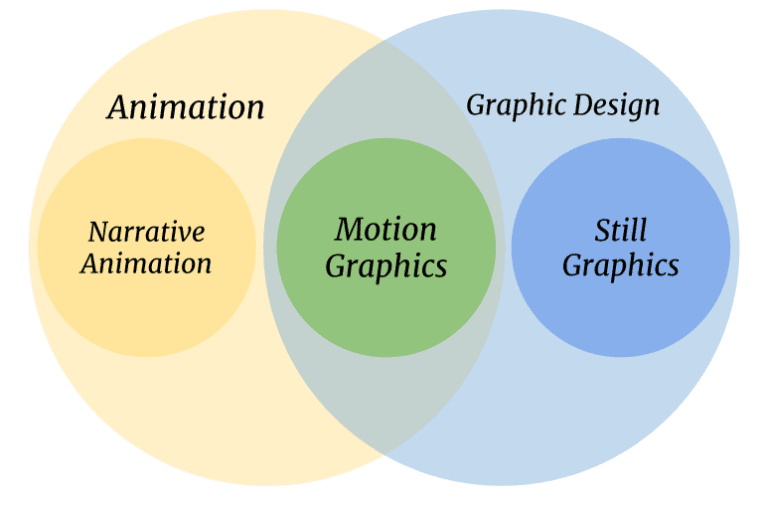
Animation is the artistic process of animating or bringing still art to life. Animation plays still images in rapid succession, where the subject appears to be moving, think back to the famous children’s cartoons you likely grew up watching. However, this is just one section of animation called narrative animation, this field is diverse and encompasses a variety of techniques across several industries. Whether it be in 2D or 3D, film production, game design, or user interface development, animators are broadly marketable and creative individuals. To learn more about career opportunities for animators, please visit here.
What is Graphic Design?
Graphic design prioritizes the exchange of information which makes the medium an ideal candidate for the creation of posters, infographics, and printed materials. This medium prioritizes color, composition, and typeface fundamentals to display information in often static positions called still graphics. Because of its lack of motion, still graphics are usually less time intensive and cheaper to produce than animation or other types of graphic design. As such, it is also more common and diversely utilized between industries. To learn more about career opportunities for graphic designers, please visit here.
What is Motion Graphics?
Graphic design motion, popularly known as motion graphics, can be considered the child of animation and graphic design. Motion graphics communicate information through visually engaging icons and text, which is inherited from graphic design. Then, motion graphics bring these components to life by way of motion, which it inherits from animation. Consider the design style you may associate with resources such as TedTalks, Powerpoint Presentations, or website tutorials. For this reason, motion graphics are commonly utilized in the industries of marketing, app development, and education.
Motion Graphics vs. Animation
Whereas narrative animation is story-based, motion graphics are information-based. For example, in narrative animation, the audience may follow the character of a salesman as he tells customers about his product. Still, they might not be interested until he says “our product requires 50% less energy” – which sways the customers into purchasing the product. In motion graphics, there isn’t the same need for a story. Instead, the same example might look like an icon of an electrical outlet being slashed in half to visualize the “50% less energy”. Both communicate the same information, but in different ways. This doesn’t mean motion graphics aren’t artistic; in fact, motion graphics have become synonymous with bright colors, geometric patterns, and dynamic gestures. Rather, the art is in simplicity and sleekness.
Motion Graphics vs. Graphic Design
The line between motion graphics and graphic design may be more distinguishable than between motion graphics and animation. The sole difference is the use of movement. Simply put, motion graphics move and still graphics are still. If you see an infographic with the recycling logo next to “25% of all trash is actually recyclable”, then it’s a still-graphic. However, if you saw the same infographic on Instagram, where the three recycling arrows were chasing one another in the shape of a triangle, then it’s a motion graphic.
We hope this article has answered your questions about motion graphics and its related disciplines. To dive deeper into these related subjects, we recommend reading about RMCAD’s online and in-person animation and graphic design programs, or check out other stories on the RMCAD blog.
FAQs: What’s the Difference Between Animation vs Motion Graphics vs Graphic Design?
What is the difference between animation, motion graphics, and graphic design?
Graphic design communicates information through static visuals like posters and infographics, focusing on color, composition, and typography. Animation brings still images to life by playing them in rapid succession, often to tell a story. Motion graphics sit between the two, taking the icons and text of graphic design and adding animation to communicate information in a visually engaging way. In short, graphic design is still, animation tells a story in motion, and motion graphics put information in motion.
What are motion graphics?
Motion graphics combine elements of graphic design and animation to present information through moving icons, text, and visuals. They inherit color, typography, and composition from graphic design, then add movement borrowed from animation. You commonly see this style in explainer videos, presentation slides, website tutorials, and content like TED Talk visuals. Because they communicate ideas clearly and engagingly, motion graphics are widely used in marketing, app development, and education.
Is motion graphics the same as animation?
Not exactly. The key distinction is purpose: narrative animation is story-based, while motion graphics are information-based. Animation typically follows characters and a storyline to engage an audience, whereas motion graphics convey a message or data point without needing a narrative. For example, an animation might follow a salesperson as they describe a product, while a motion graphic might simply show an icon splitting in half to illustrate “50% less energy.” Both are artistic, but motion graphics find their craft in simplicity and clarity.
What is the difference between motion graphics and graphic design?
The defining difference is movement. Graphic design produces still graphics, while motion graphics add motion to those same elements. An infographic stating that a quarter of trash is recyclable is a still graphic, but if those recycling arrows chase each other in a loop on social media, it becomes a motion graphic. Motion graphics essentially take the principles of graphic design and animate them.
Which is better to study, animation or motion graphics?
Neither is objectively better; the right choice depends on your interests and career goals. If you are drawn to storytelling, character work, and bringing imaginative worlds to life across film, games, or interfaces, animation may suit you. If you prefer to communicate information clearly through dynamic visuals for marketing, education, or app design, motion graphics could be a better fit. Because the two disciplines overlap, studying either builds transferable skills, and many programs teach both.
What skills do you need for motion graphics?
Motion graphics work draws on a blend of skills from both parent disciplines. Graphic design requires a strong command of color, composition, and typography to present information clearly. Animation requires an understanding of movement, timing, and visual rhythm to make designs feel dynamic. Familiarity with industry software, along with a sense of how to simplify complex ideas into clean, engaging visuals, rounds out the toolkit.
What careers can you pursue with animation or motion graphics?
Animation skills are broadly marketable across film production, game design, 2D and 3D work, and user interface development, making animators versatile creative professionals. Motion graphics specialists are in demand in marketing, advertising, app development, and education, where clear and engaging visual communication matters. Because these fields overlap with graphic design, professionals often move between roles or combine them, opening a wide range of creative career paths.
Popular Animation Articles:
- Stop Motion Revival: Why This Classic Technique Is Thriving in Modern Animation
- The Evolution of Animation Techniques: From Traditional to Digital
- Breaking Down the Animation Pipeline: From Concept to Screen
- Animation Software Showdown: Industry Favorites Reviewed
- Virtual Reality and Animation: The Next Frontier